Every word is like an unnecessary stain on silence and nothingness. Words are the fossils of thought. They say little to the mind […] compared to space thundering with images and crammed with sounds. Better to speak nearby than to speak about. Taken together, these statements belong to a long and evolving catalogue of skepticism toward language. Their authors include writers, playwrights, poets, essayists, and filmmakers.
These are the people who have honed language most carefully, devoted the greatest attention to it, laboured over it the longest. They are probably also the ones most grateful for it. And yet they are certainly among those who trust it least. Maybe this speaks to the nature of knowing more generally. And perhaps too loving, too.
Like them, Valentina begins by expressing a certain ambivalence toward writing systems.Then she starts talking about several authors she admires and works she has made in which language is anything but absent. We’re at a café and she keeps asking for milk. I keep thinking abstractly about it. A glass full forms in my mind and spills. I’m sleep-deprived. The conversation is already becoming a little kaleidoscopic.
Last year, she tells me, she travelled to Los Angeles. During her time there, she got her driver’s license and noticed that the streets felt unusually quiet because so few people walked them. In that relative silence, electric cars and leaf blowers seemed to come forward. I briefly thought driving would now allow her to read the streets. Her remarks on sound landed somewhere near the logic of a mixing desk, the way someone might arrange volumes, bringing one channel forward while letting another recede. She spent time wandering through the Fashion District, she says, where she was struck by the sheer amount of visual information on display: signage, advertisements, lettering, and the rest. This led her to a series of print and embroidery shops in the area. There, she began conducting audio interviews with employees.
She says she often begins works without fully knowing what they will be about. Meaning seems to arrive through the process rather than in advance of it. Perhaps this is why what remains are often fragments. In this case, she tells me one embroiderer explained that he reserved Helvetica exclusively for businesses. Another said that after completing his military service, he began writing only in capital letters. The conversations were not pursued much further. In total, she recorded fifteen minutes of audio.
The embroiderer’s capital letters and Valentina’s drift from lettering to speech—from the visual density of signs to recorded conversations—make me think of Hollis Frampton’s Zorns Lemma (1970), a film built from words photographed in the streets of Manhattan: shop signs, storefronts, advertisements, notices, and other forms of public lettering. Organized according to a twenty-four-letter alphabet, these fragments of language appear and reappear until they are gradually replaced by moving images—a bonfire, a wave, grasses in the wind—one by one. By the end of the sequence, language has given way entirely to images. The film concludes with a static shot of a snow-covered field accompanied by six women’s voices reciting a text adapted from Frampton’s English translation of De Luce (On Light), a thirteenth-century treatise by Robert Grosseteste. Language becomes primary elements: wind, water, fire, and snow, as if restored to the nothingness—or everythingness—from which it came.
It’s difficult to know exactly what Frampton’s feelings about language, written or otherwise, really were. Zorns Lemma nonetheless suggests a preference for its more effervescent forms, as though language might be reduced to energy and redistributed elsewhere. The film’s domino-like transformation of words into images is striking in this regard. Language gradually disappears from the screen, persisting only as inner speech, memory, or sound. Like the writers quoted earlier, Frampton appears suspicious of language’s claims to stability, treating it less as a fixed system than as something capable of passing into other states.
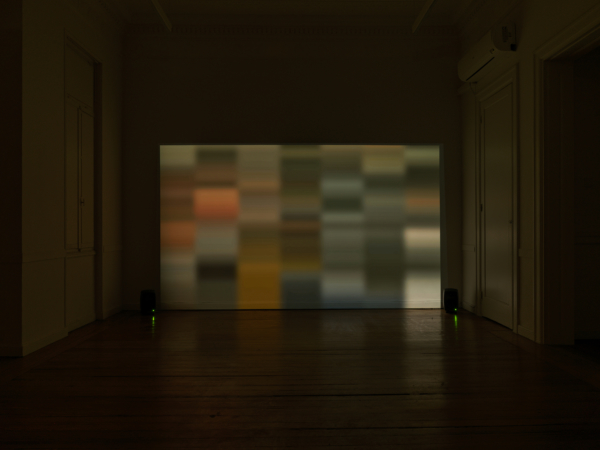
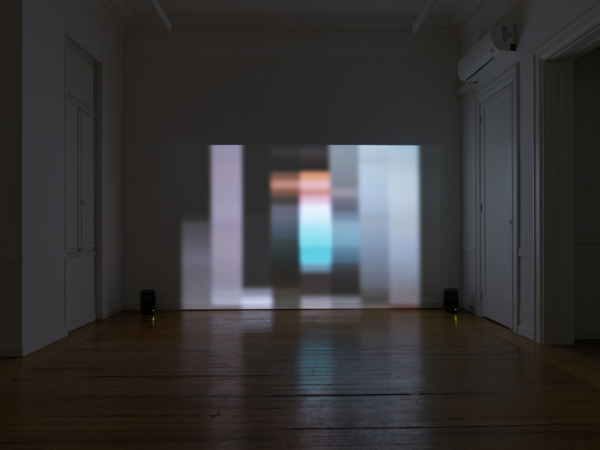
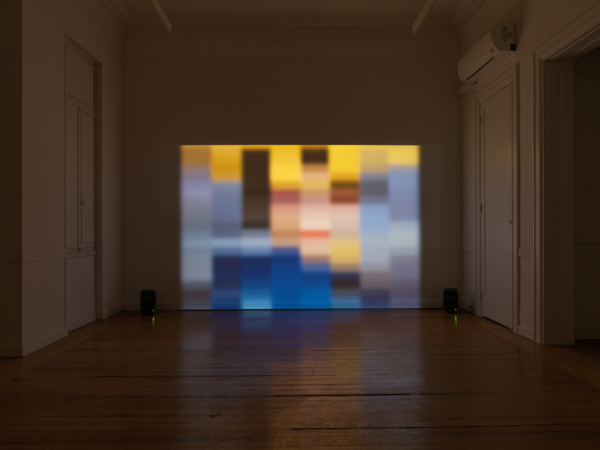
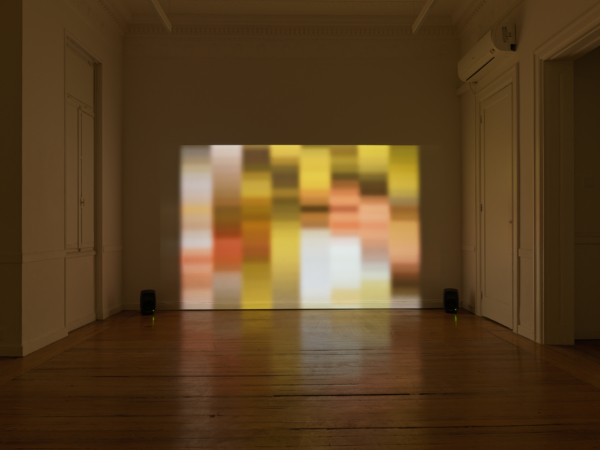
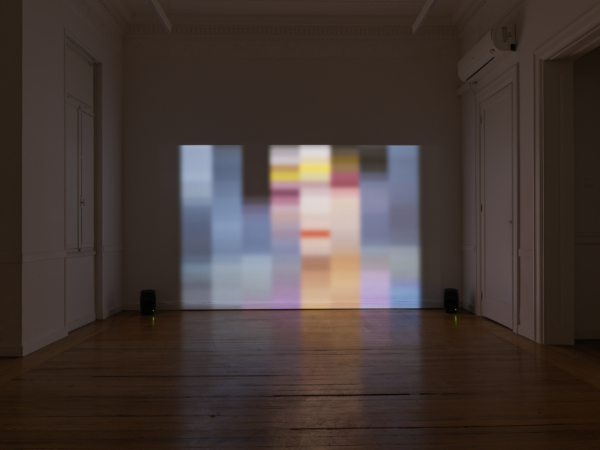
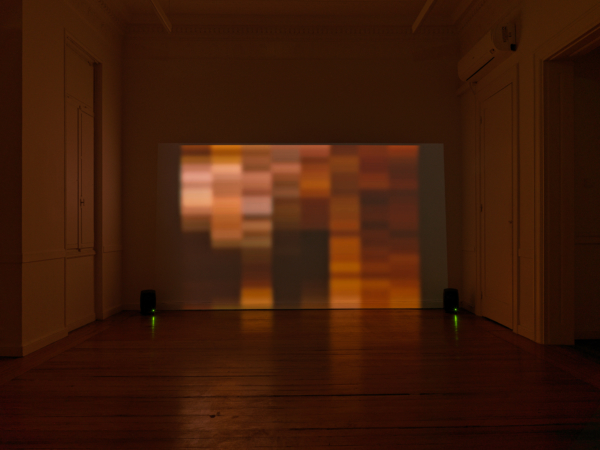
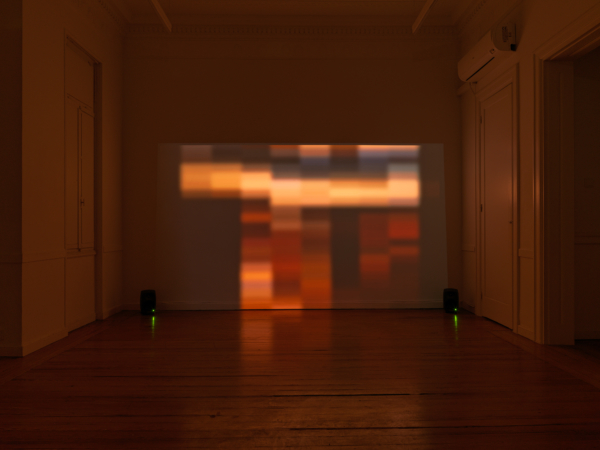
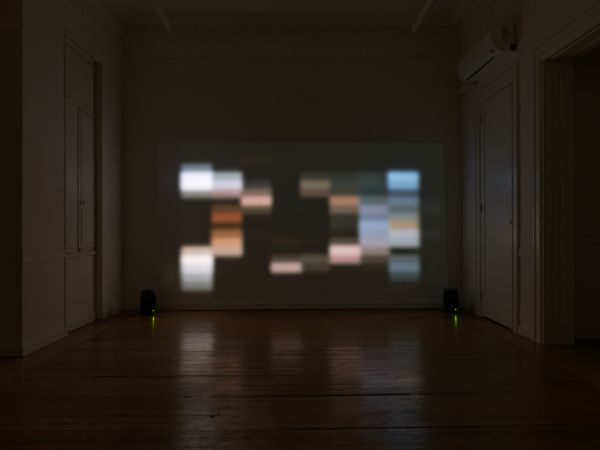
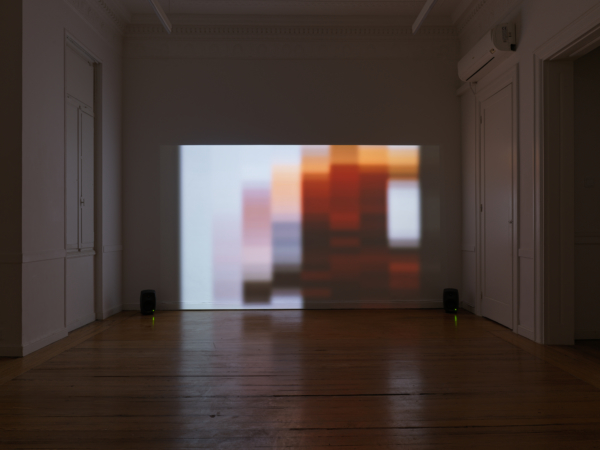
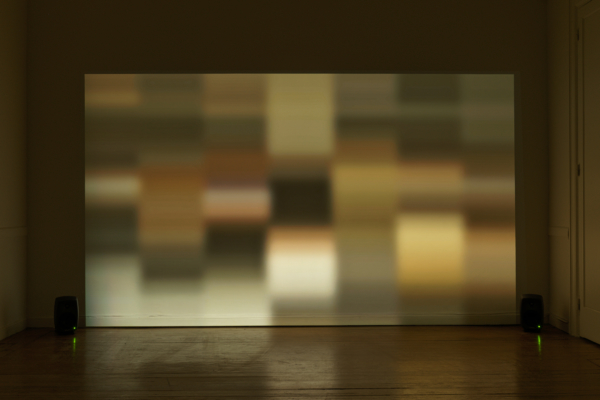
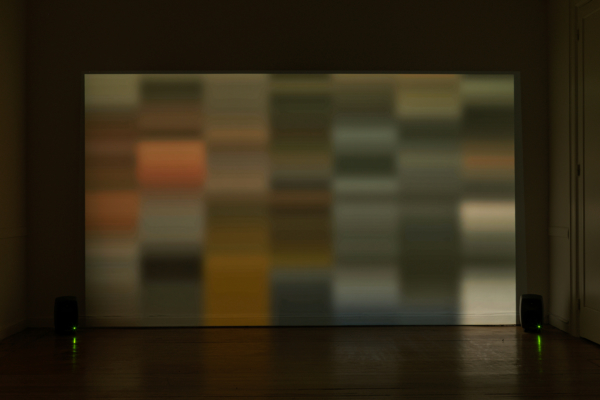
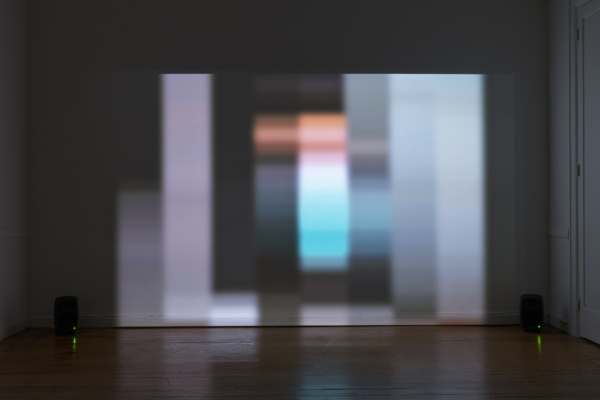
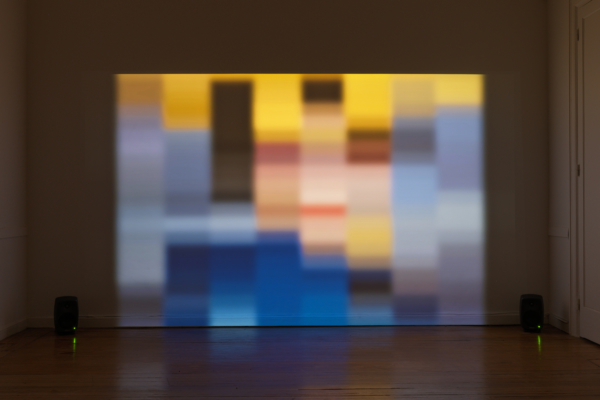
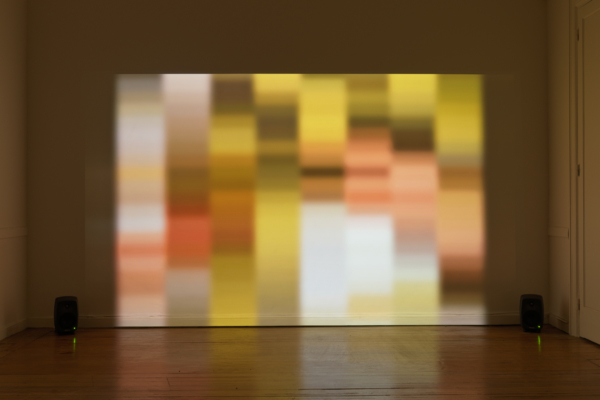
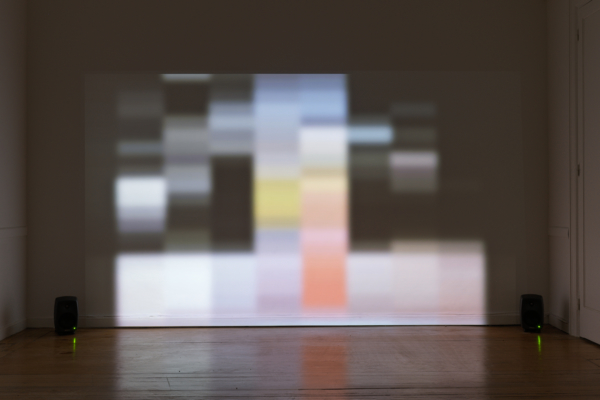
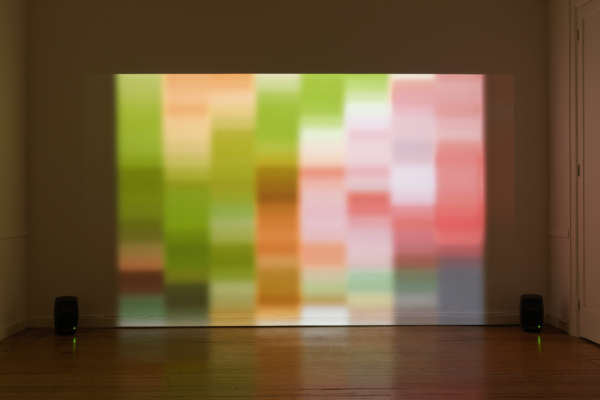
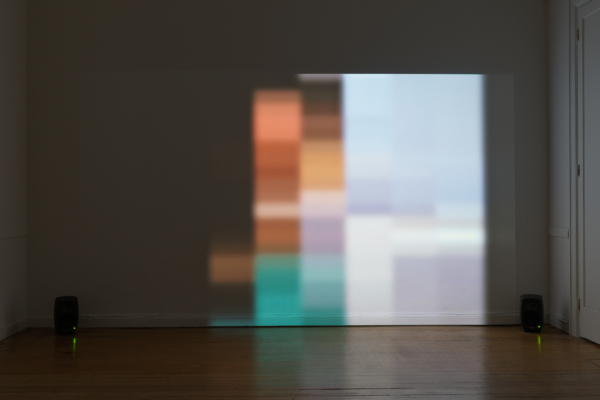
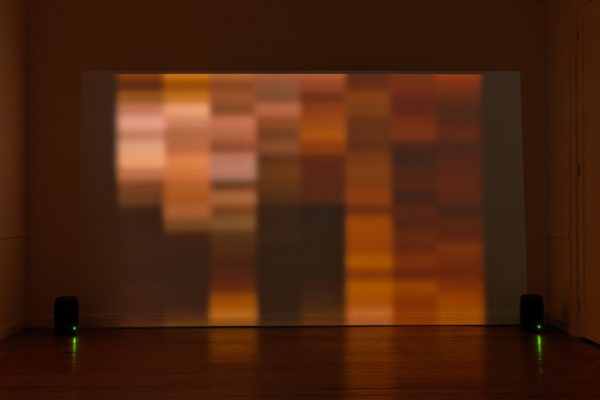
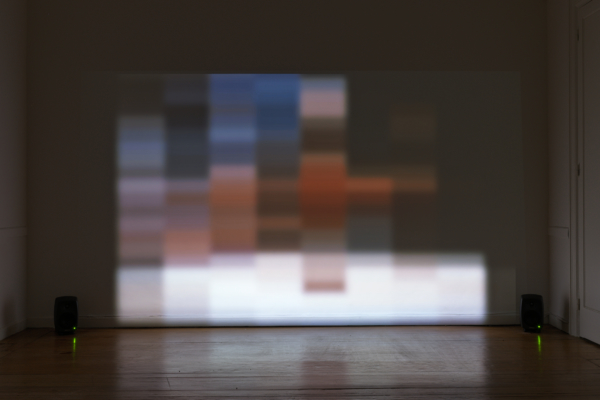
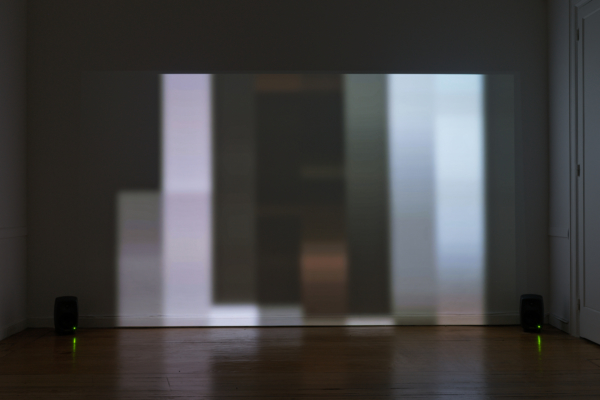
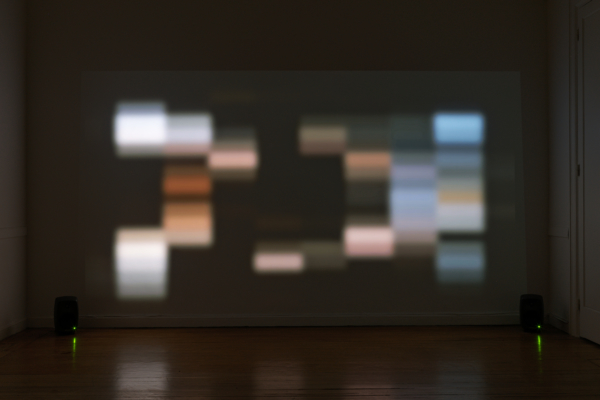
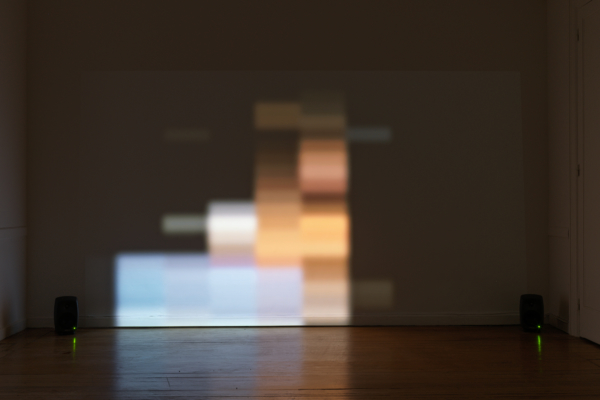
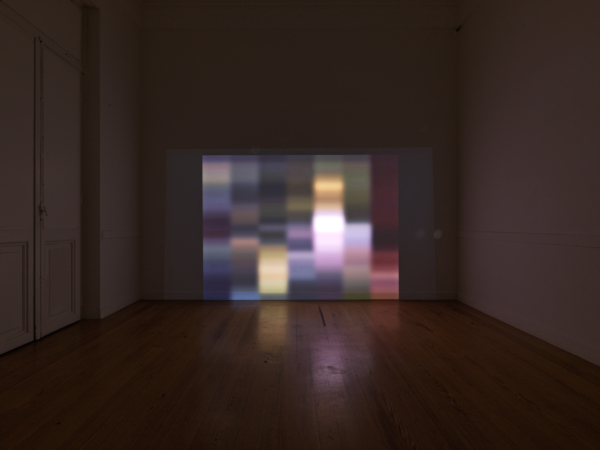
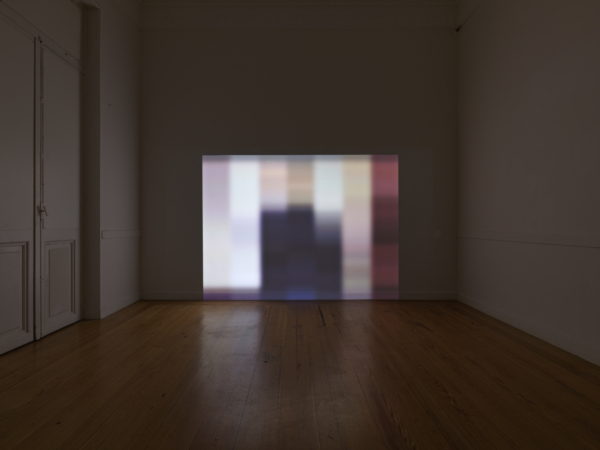
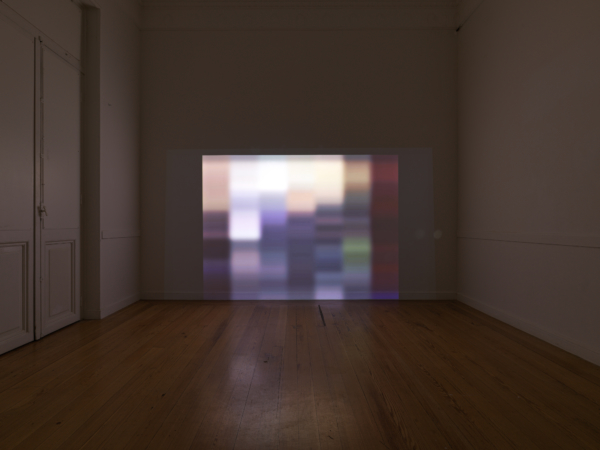
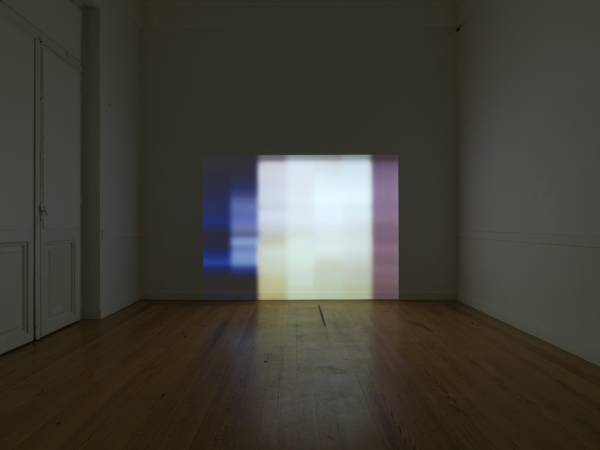
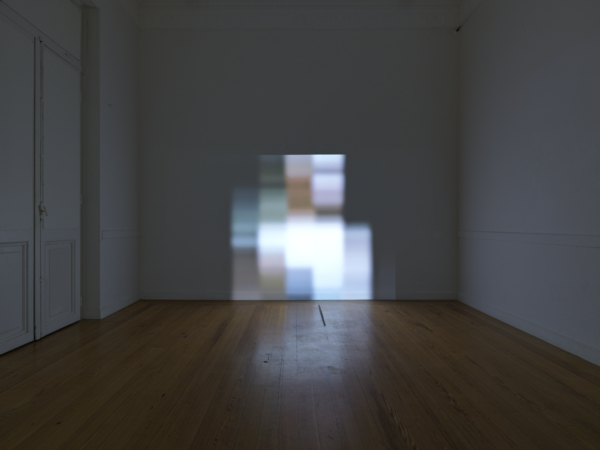
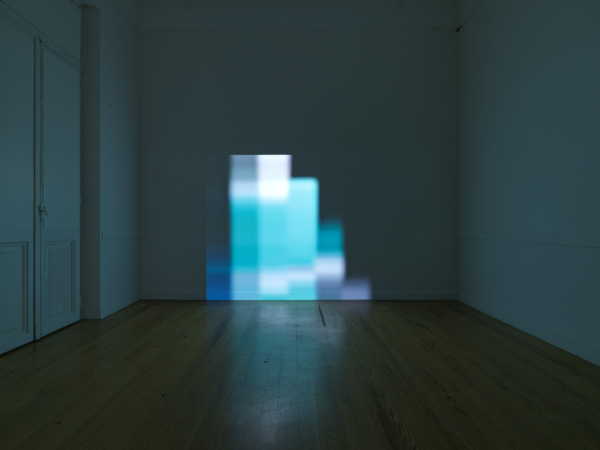
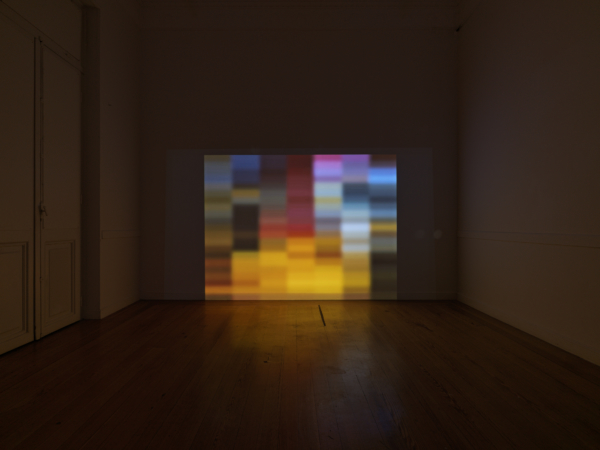
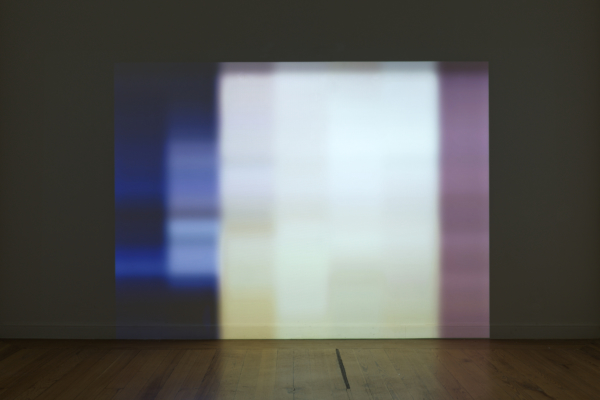
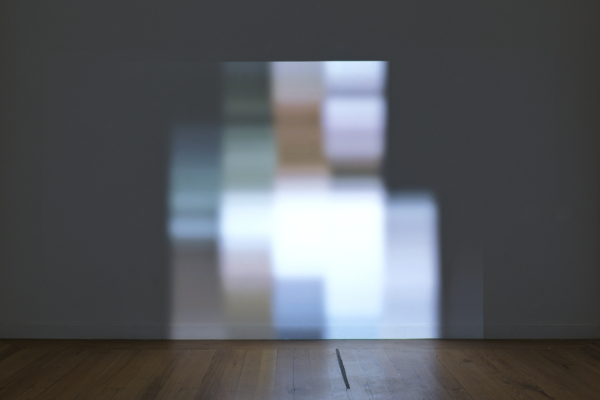
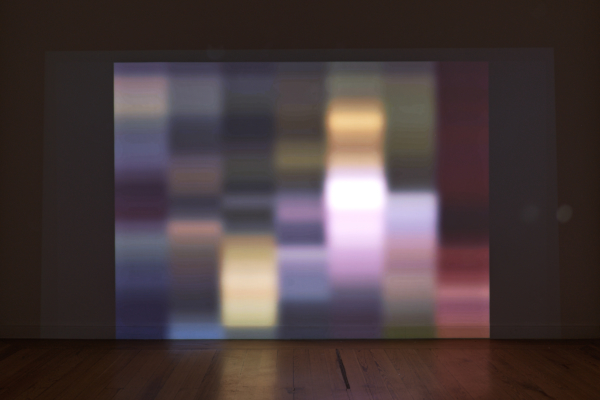
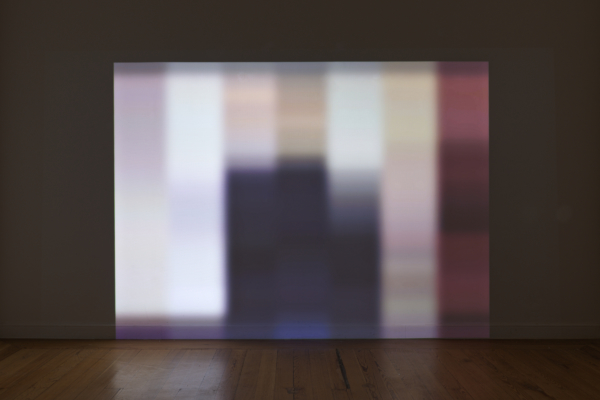
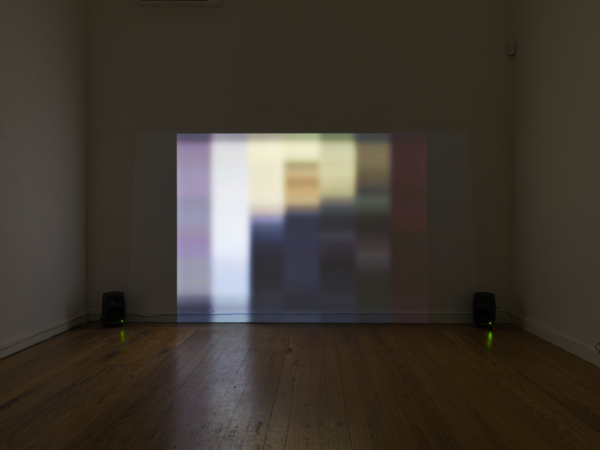
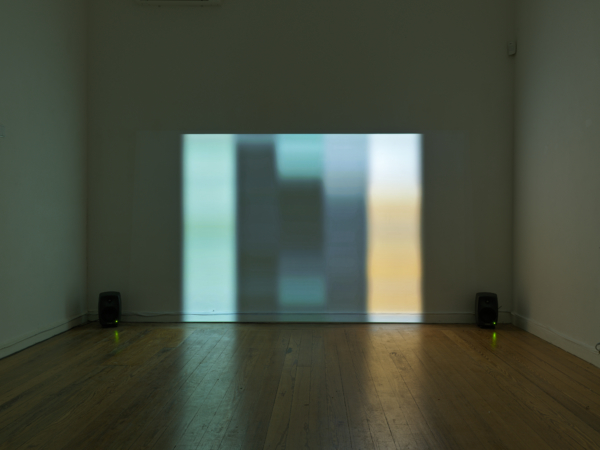
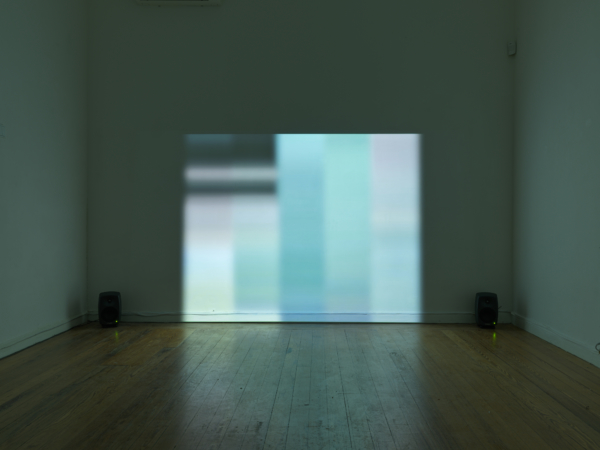
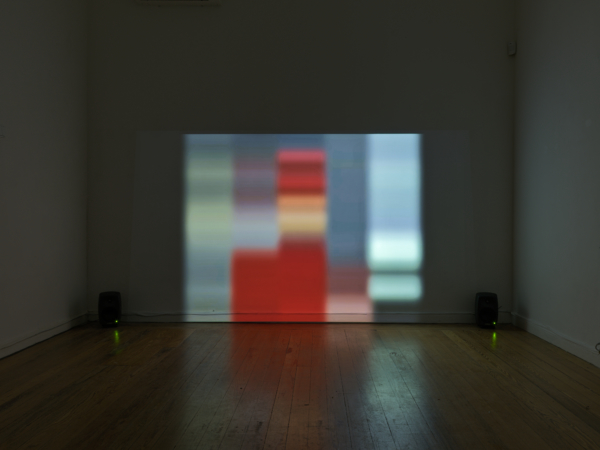
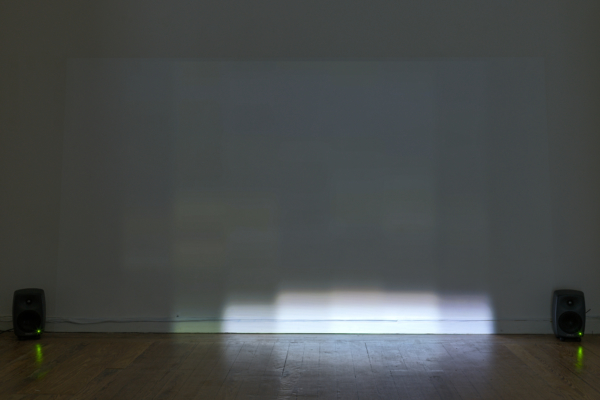
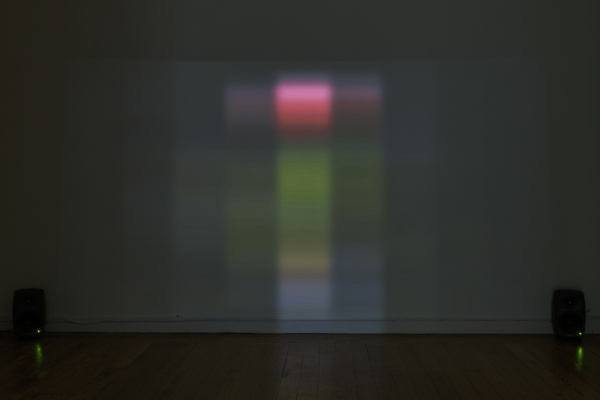
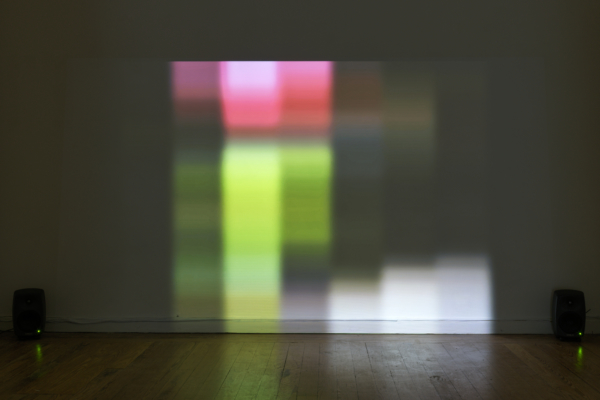
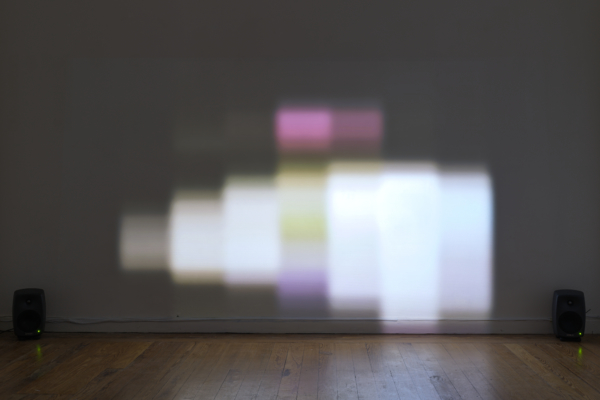
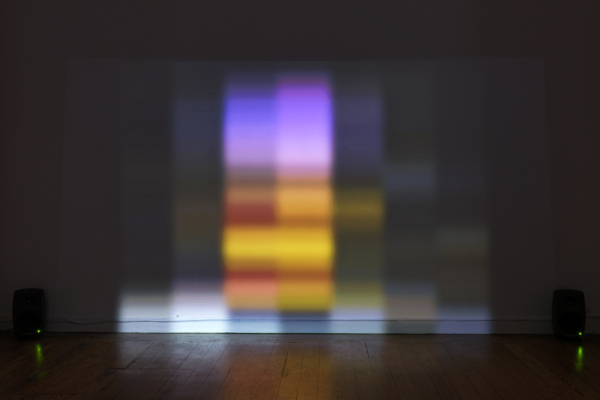
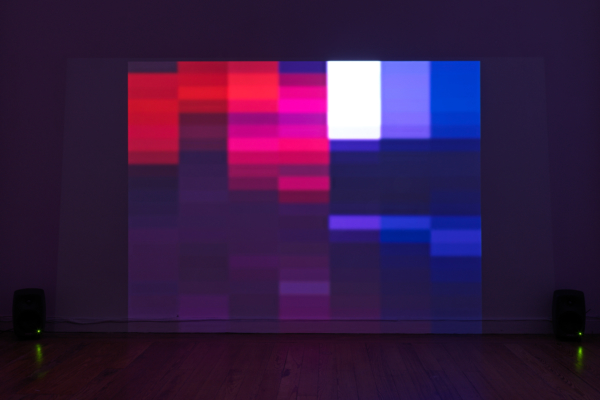
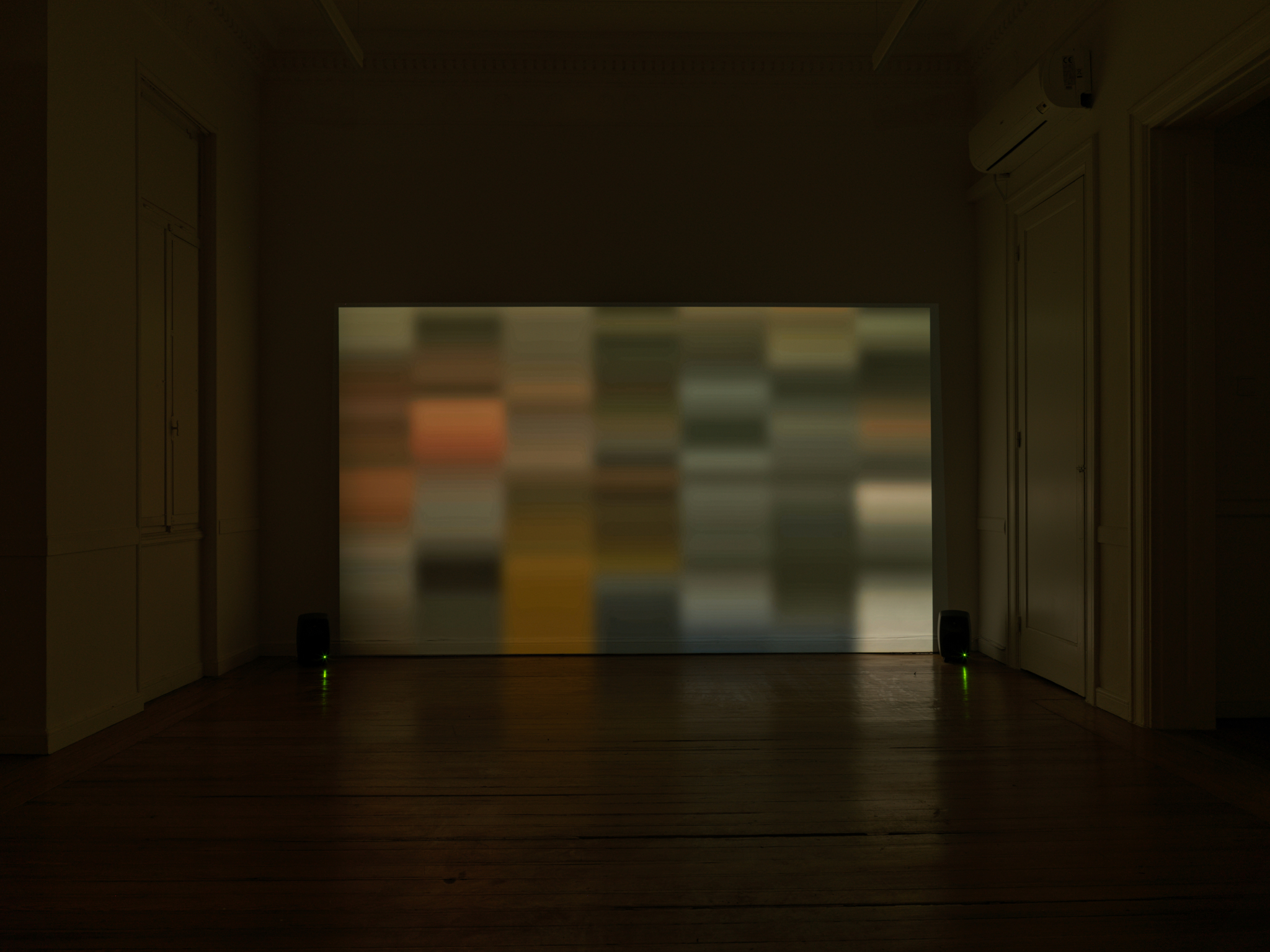
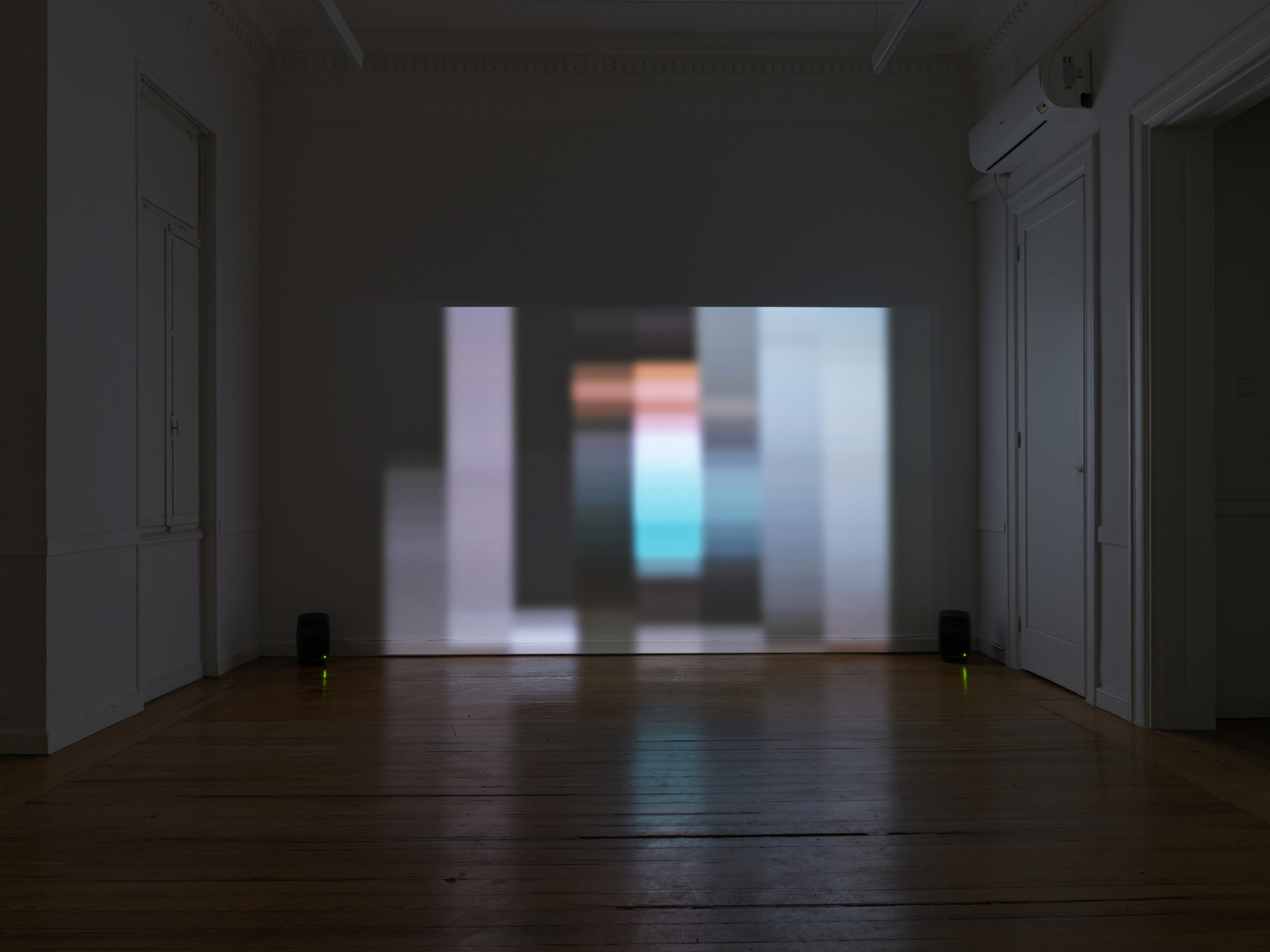
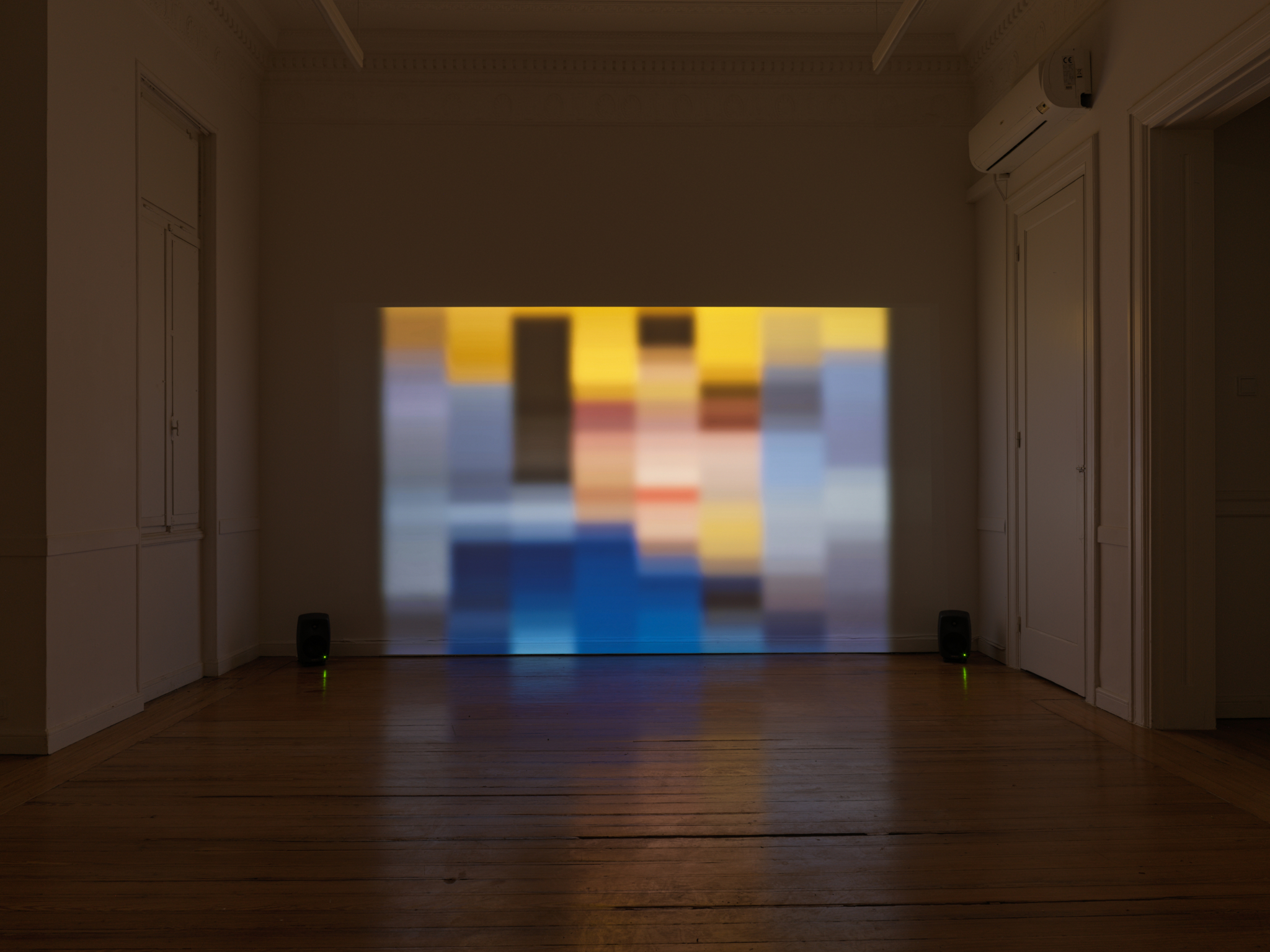
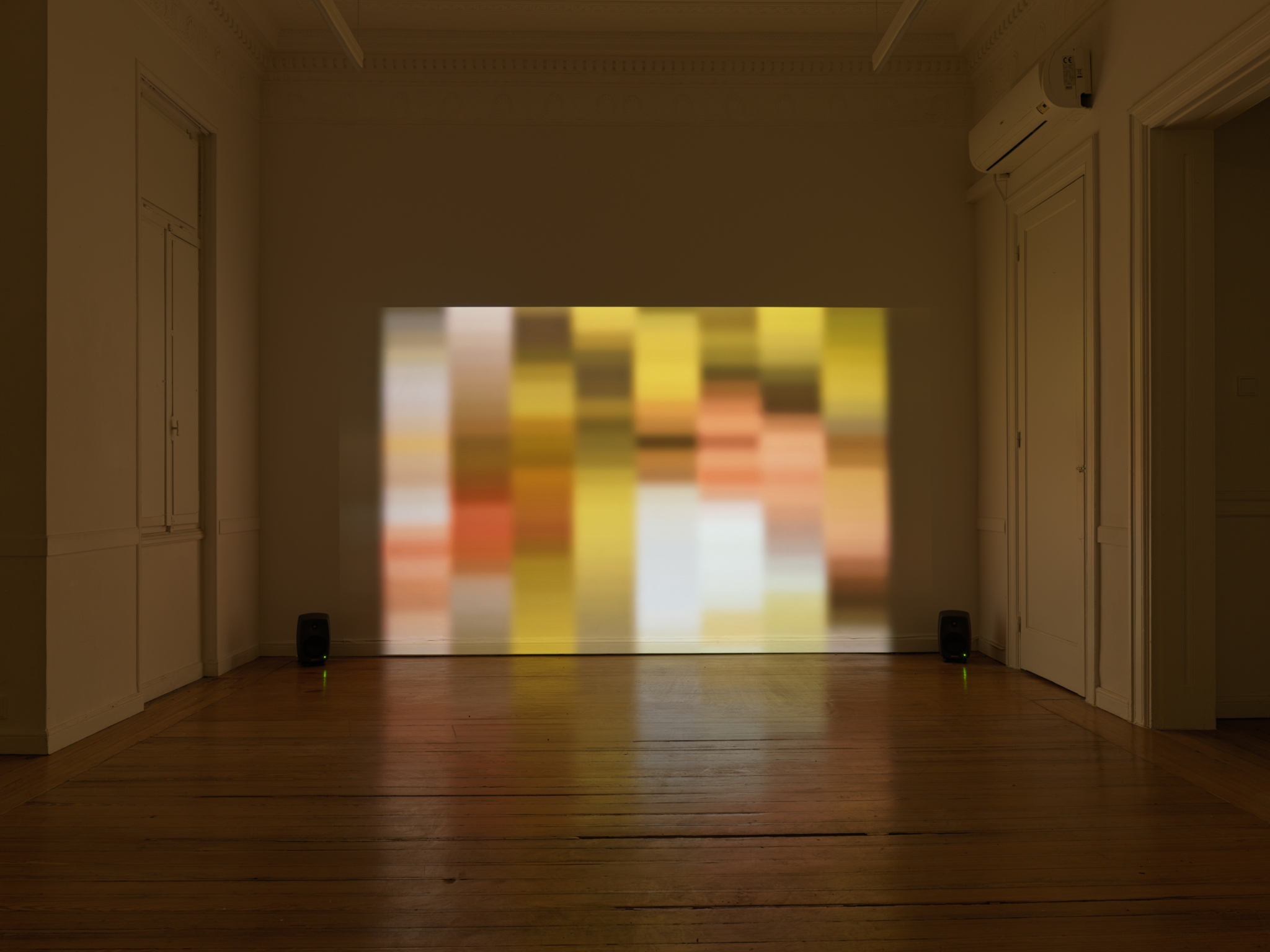
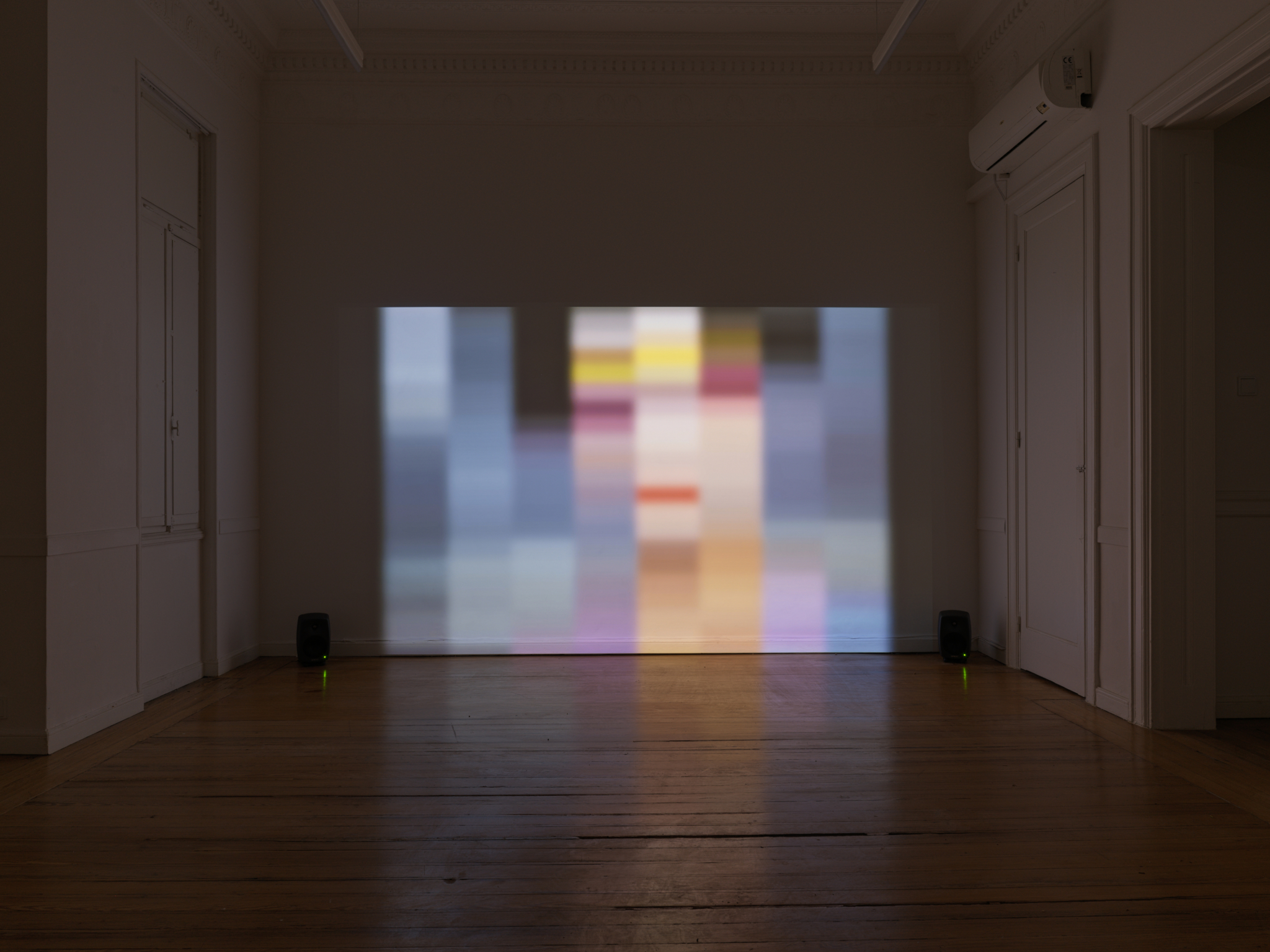
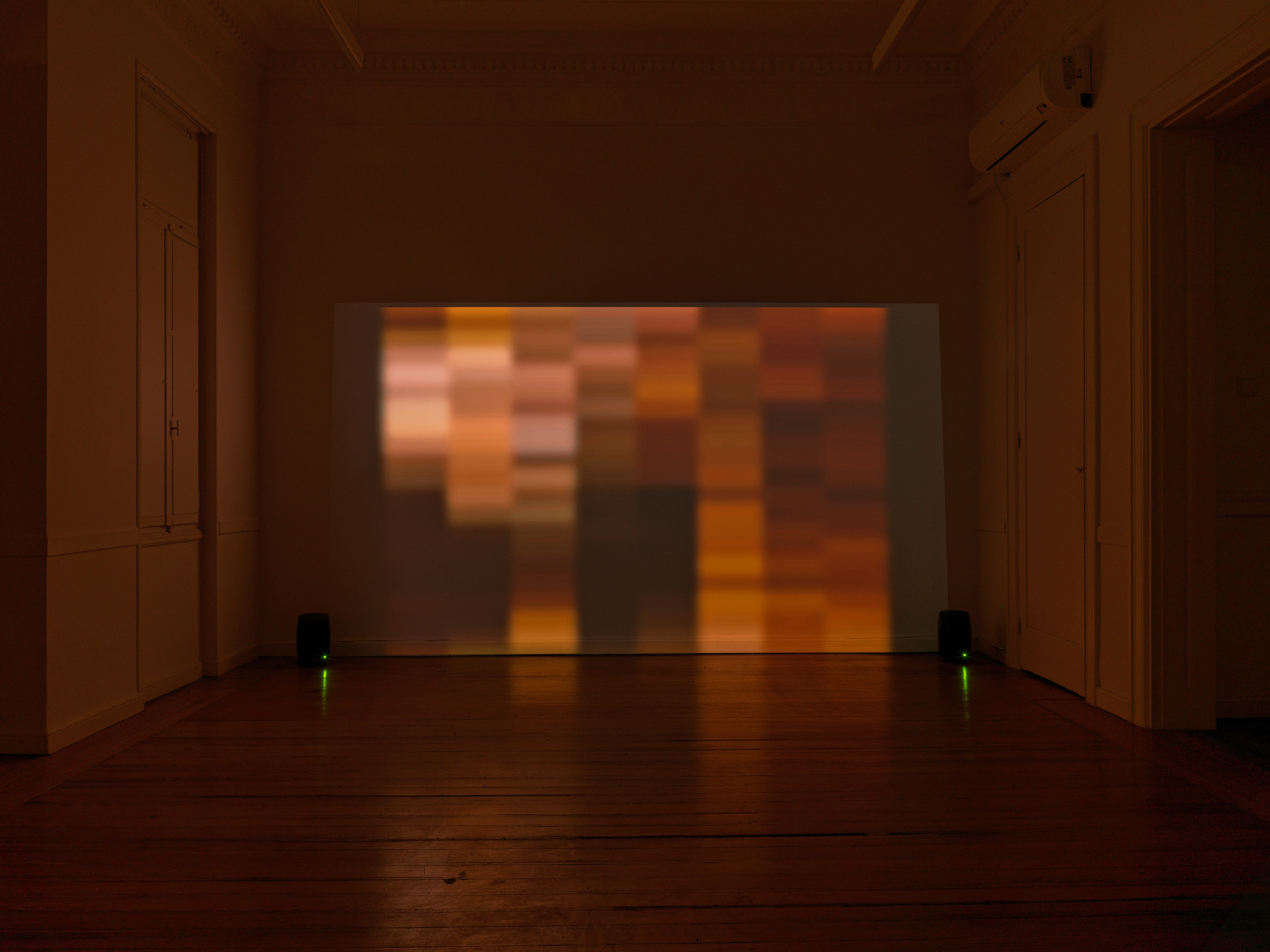
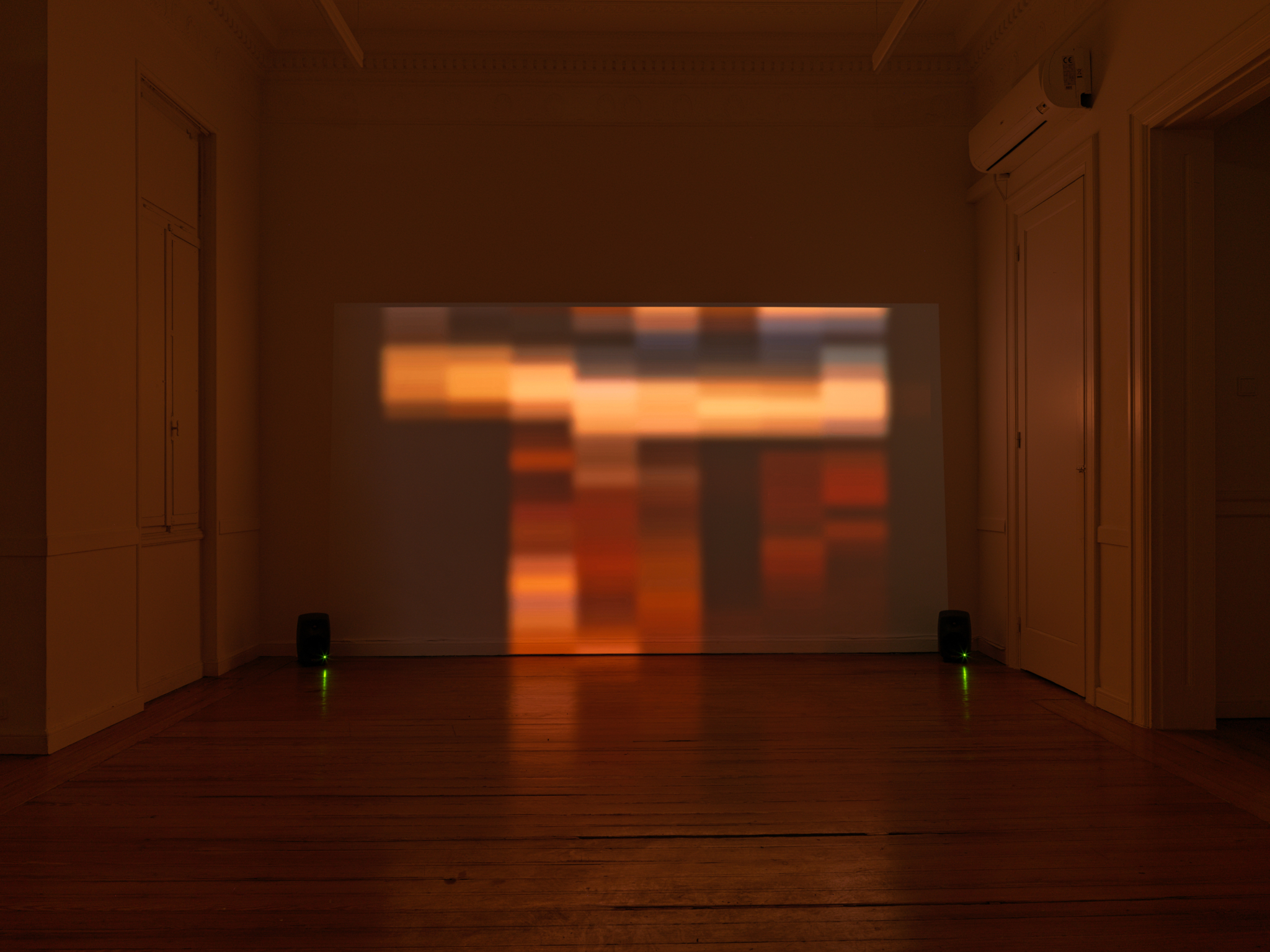
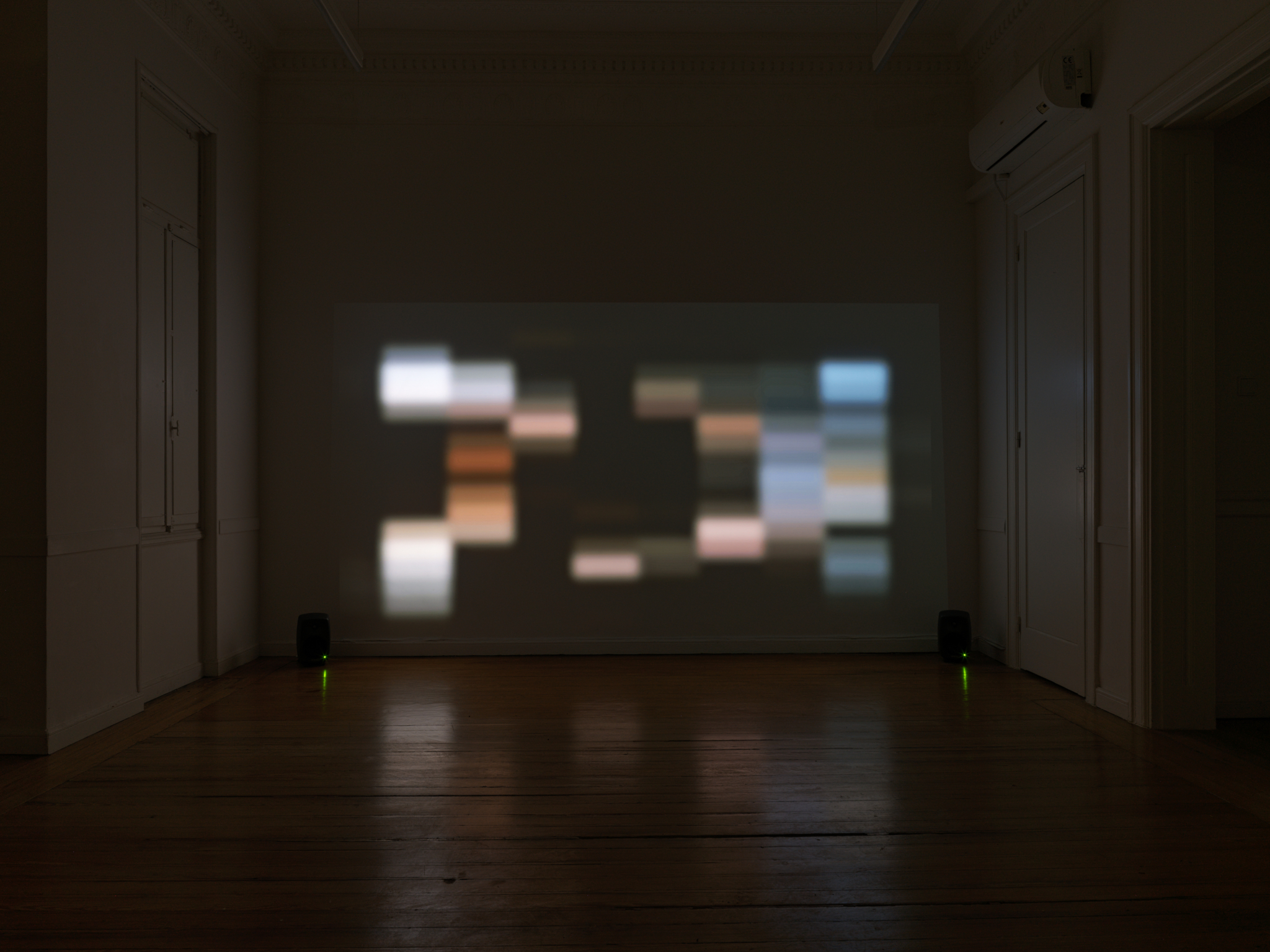
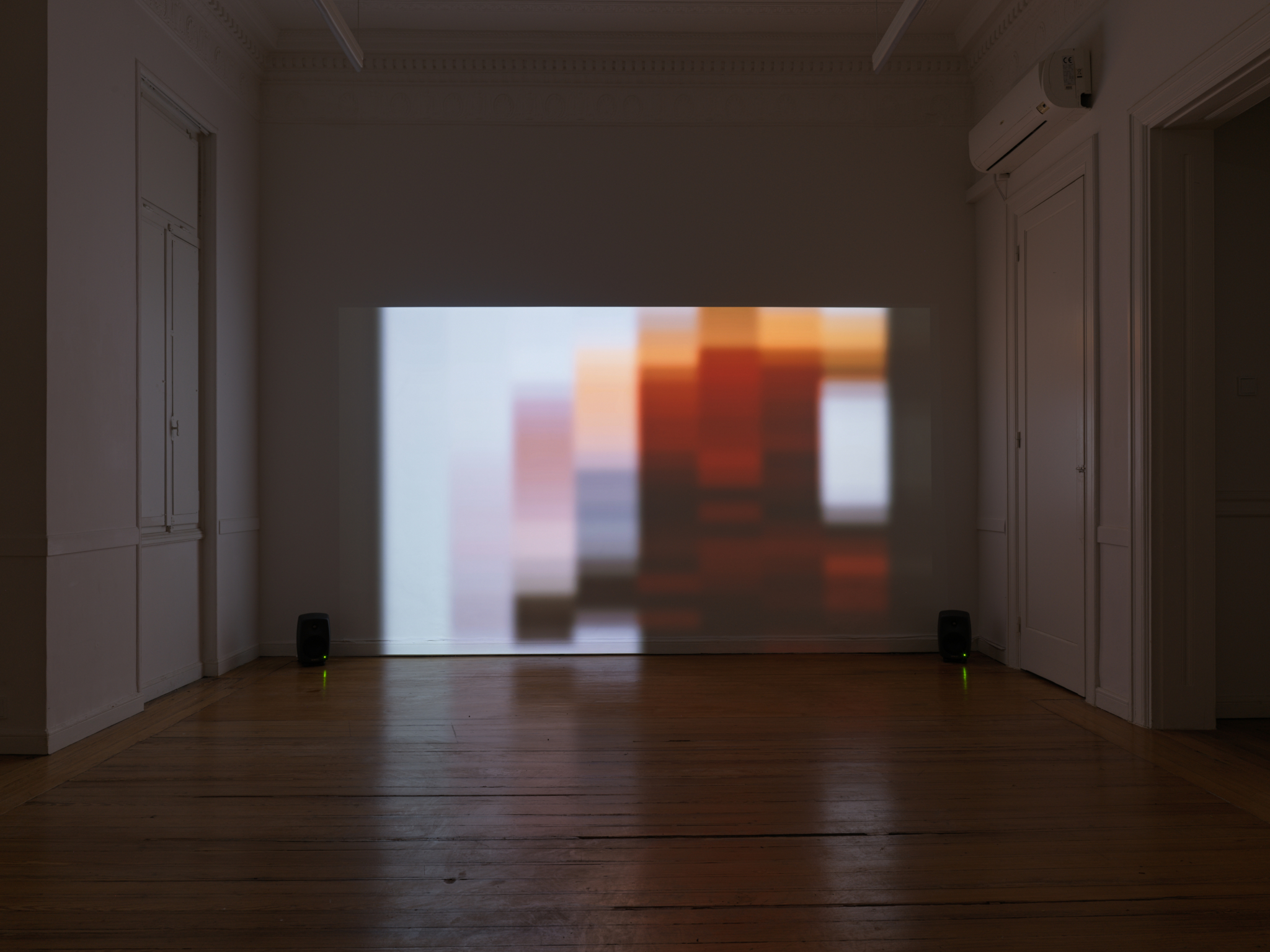
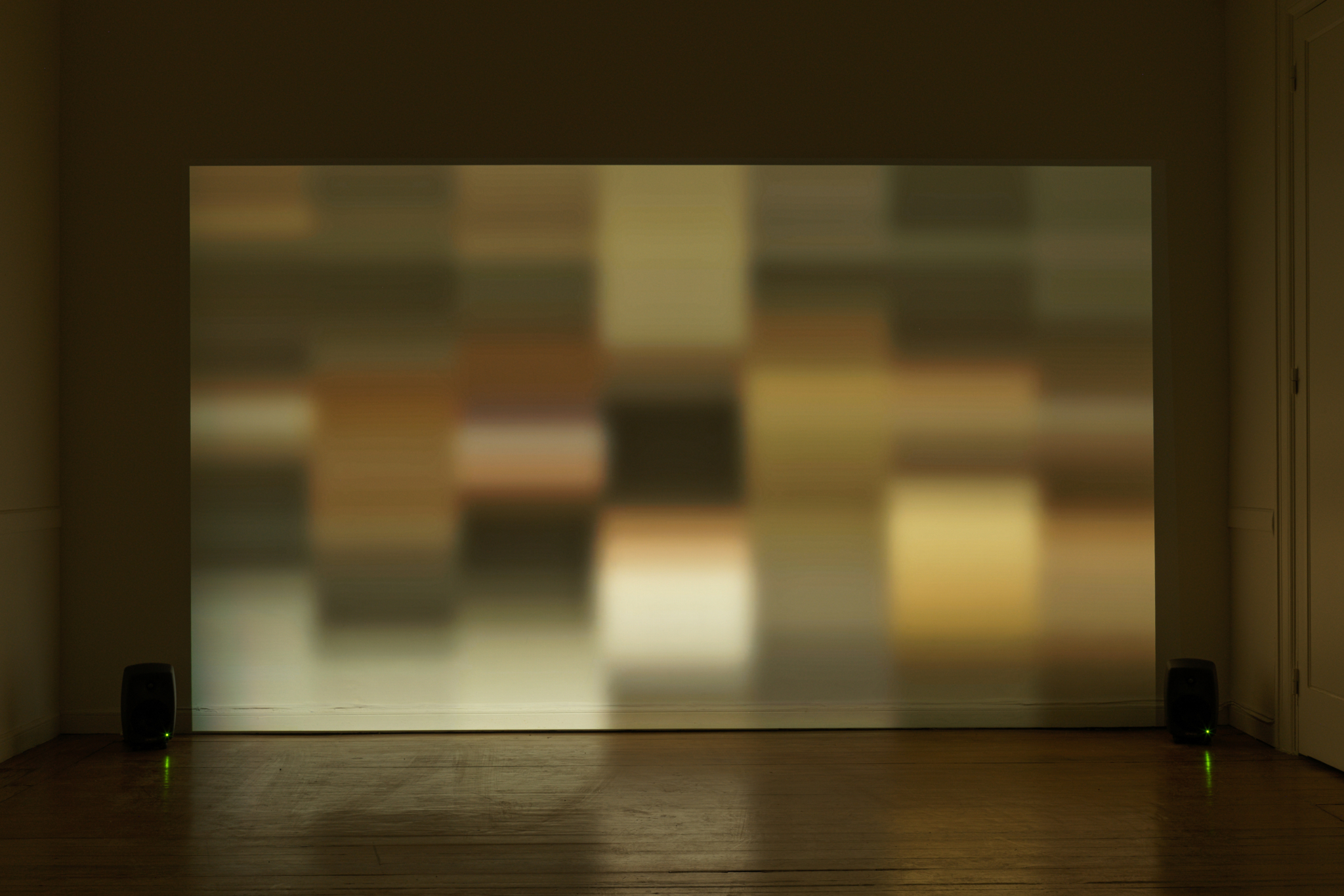
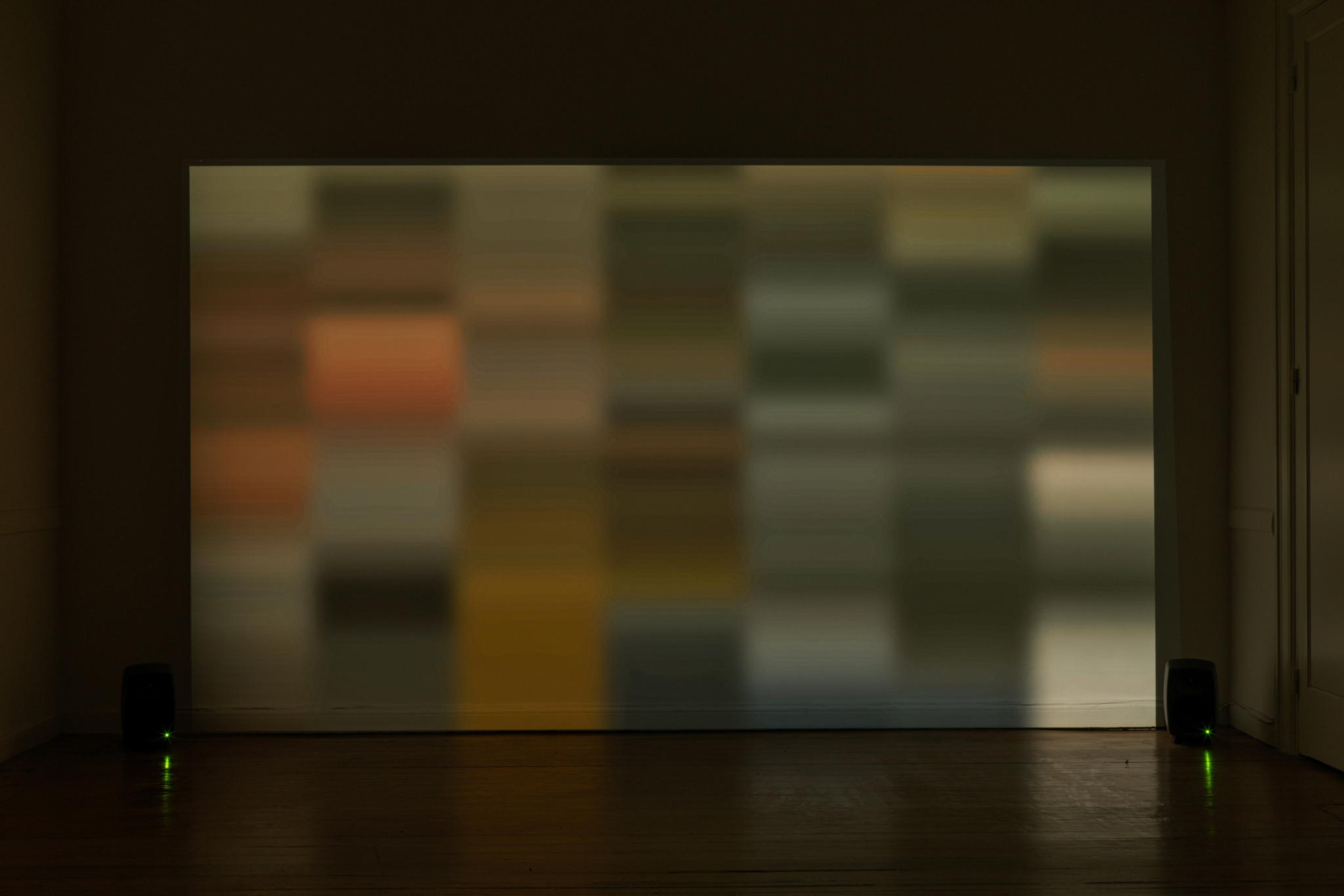
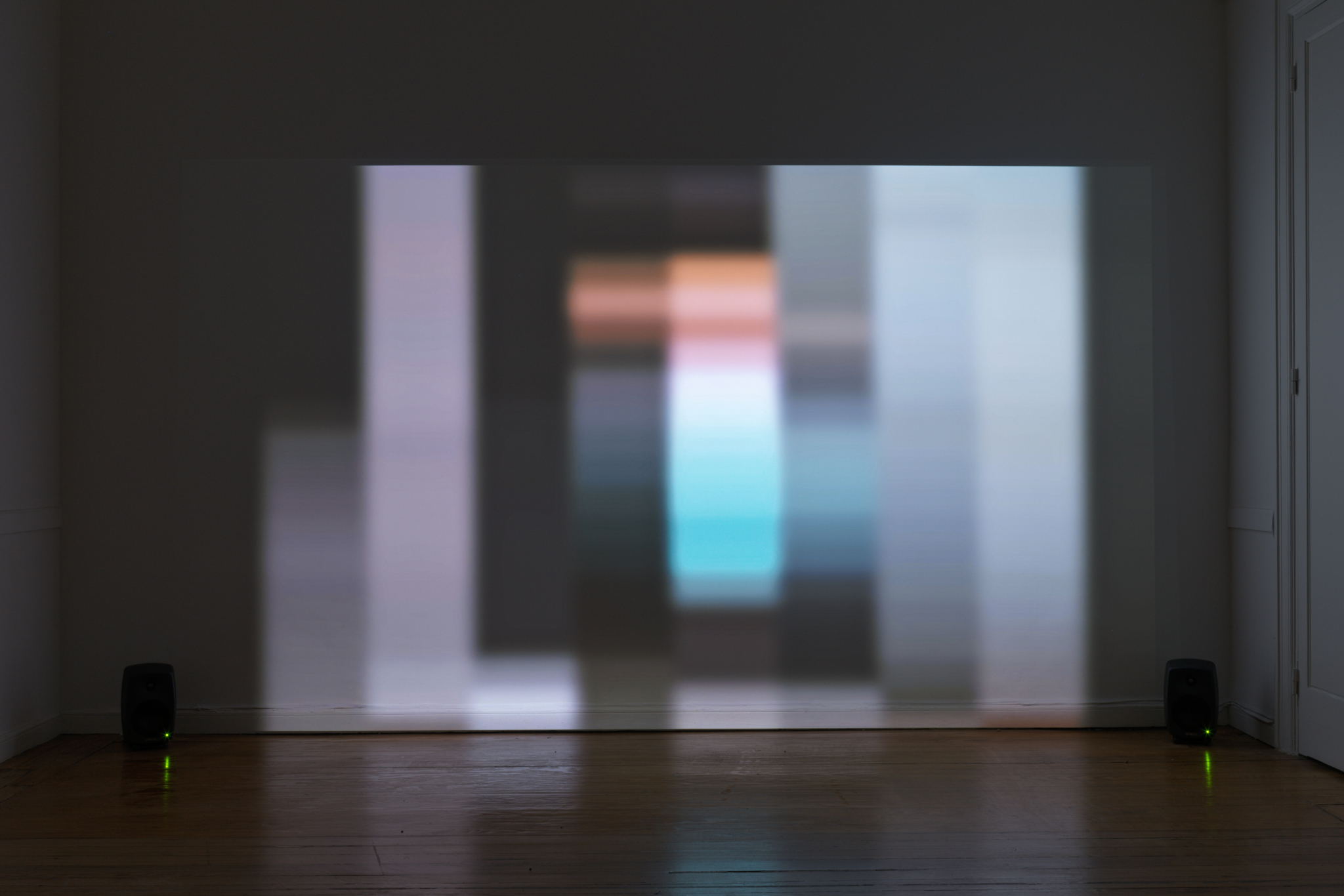
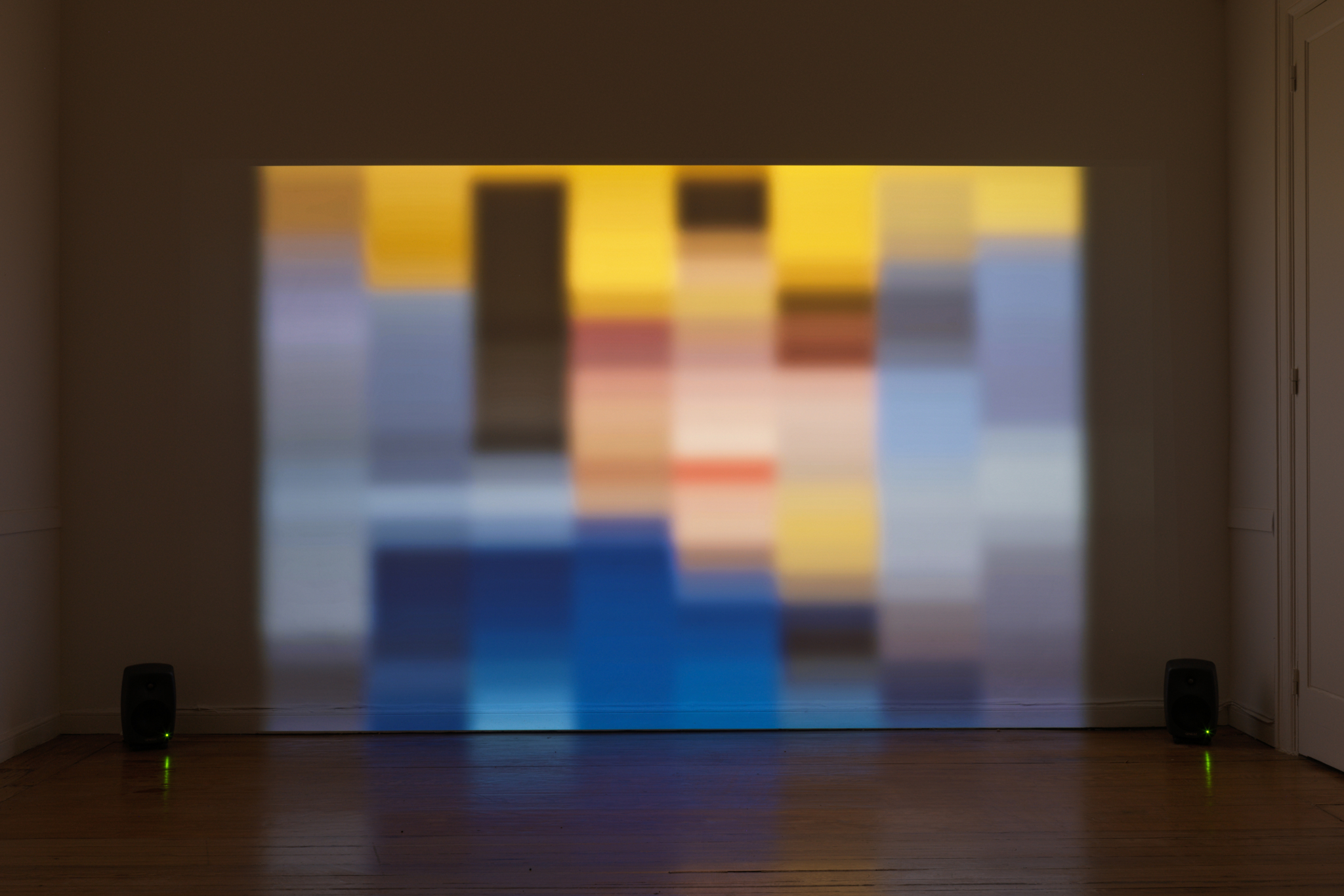
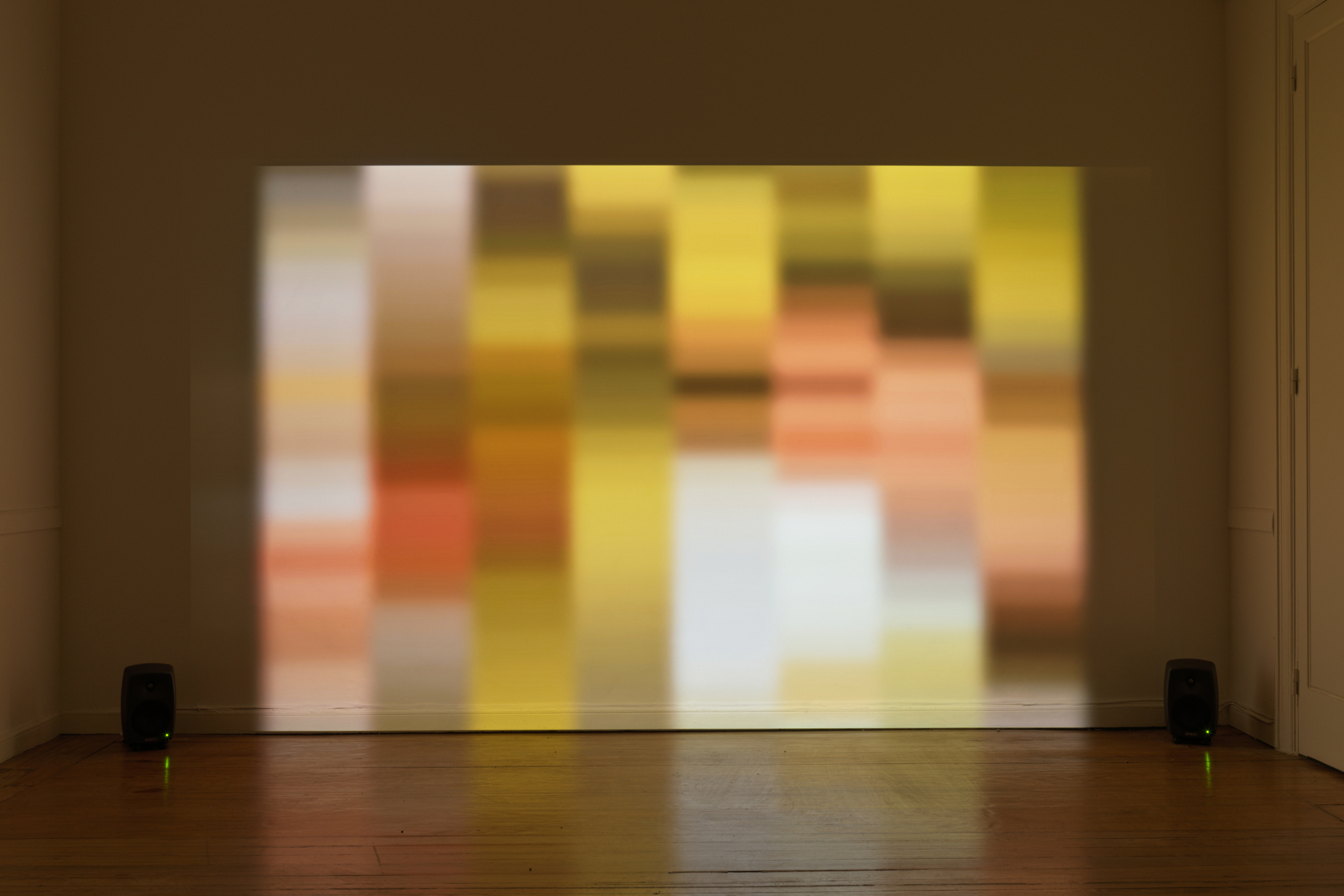
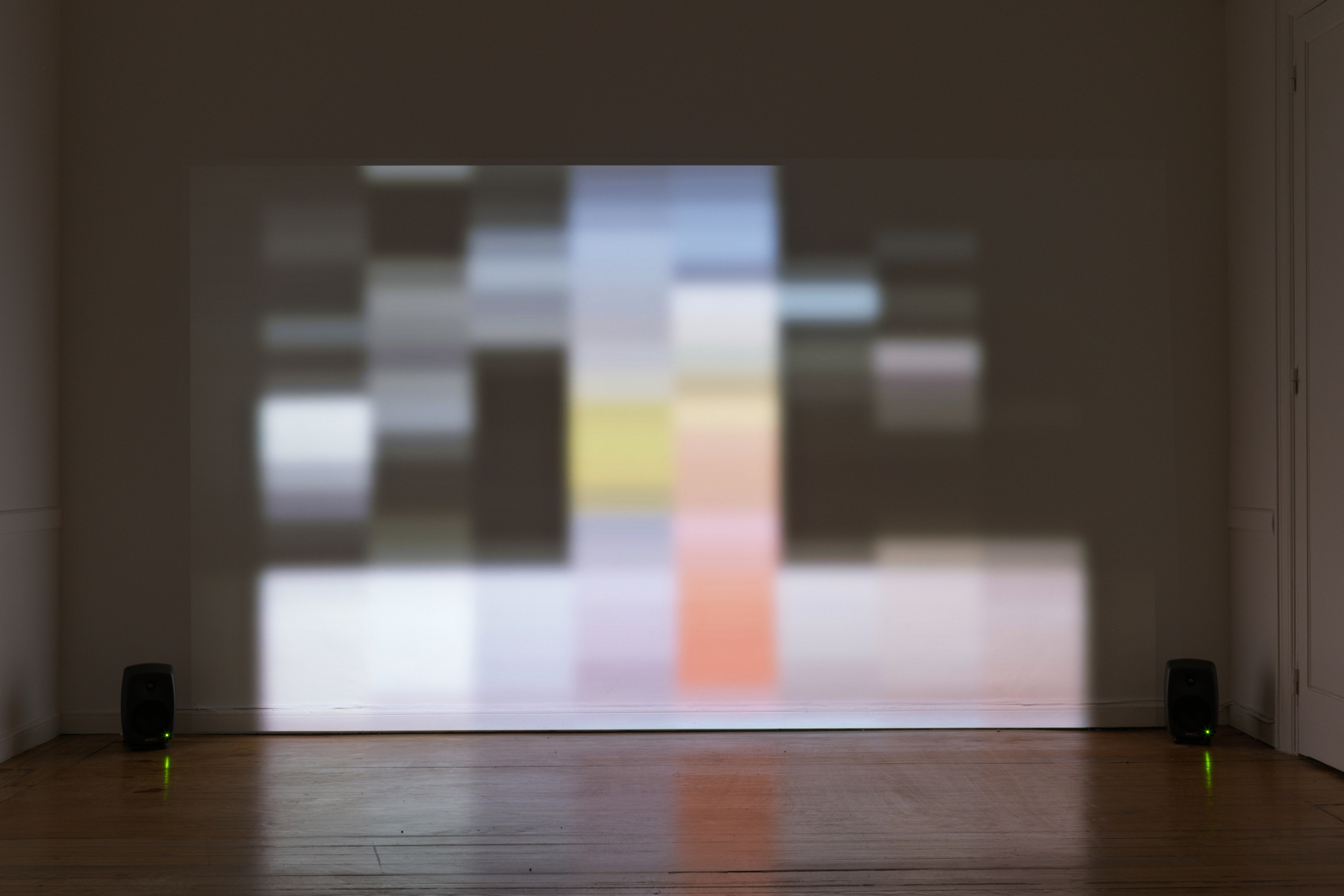
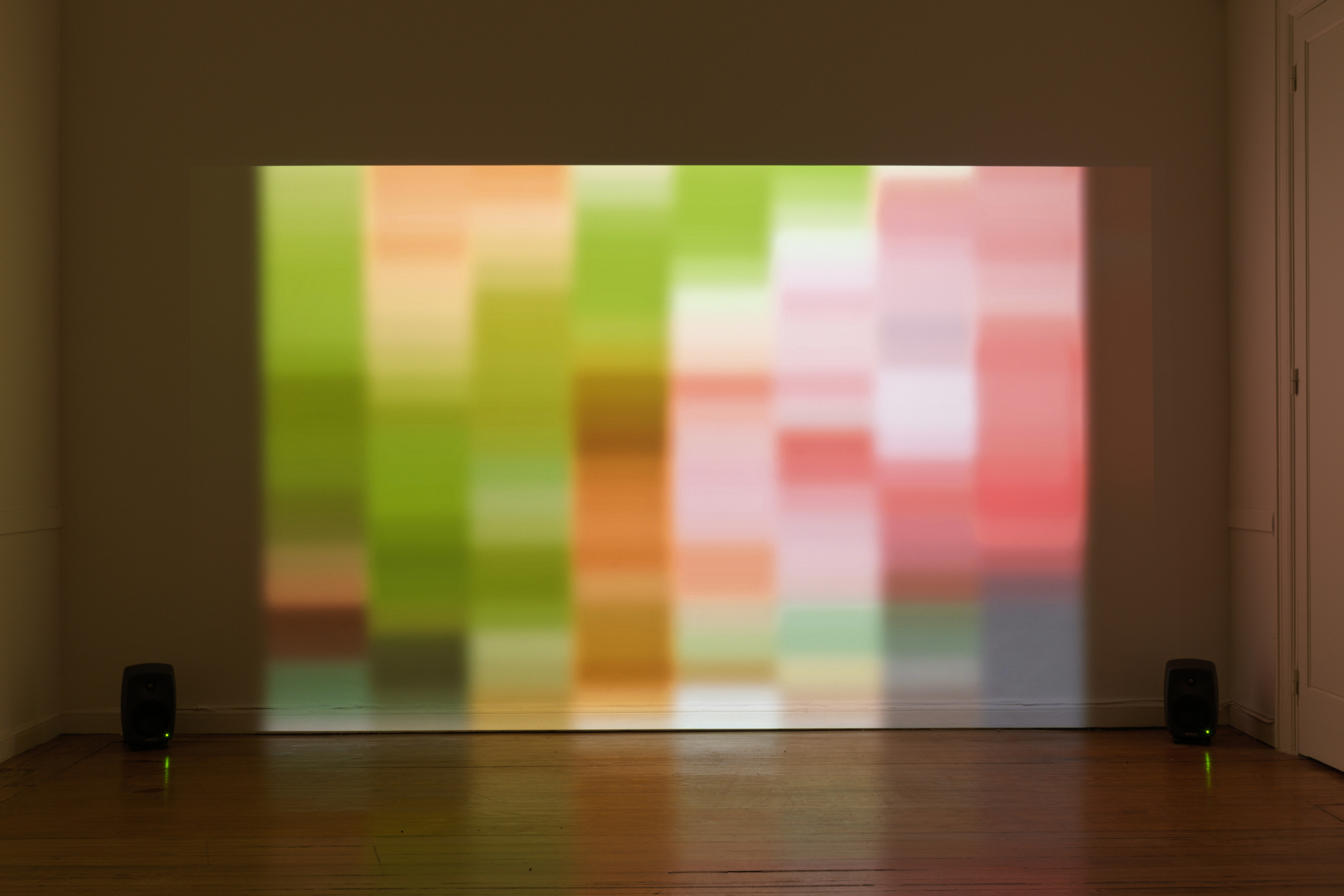
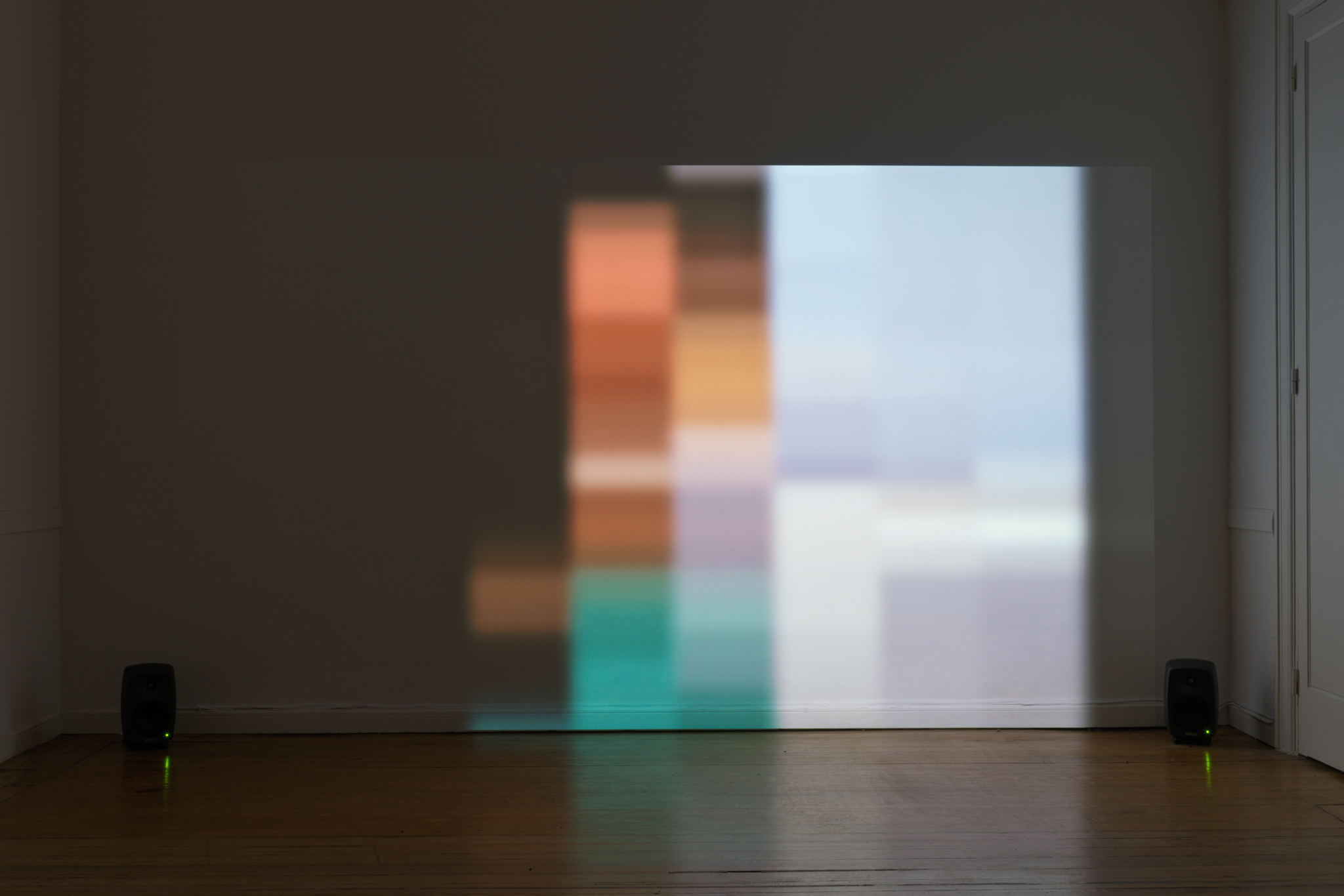
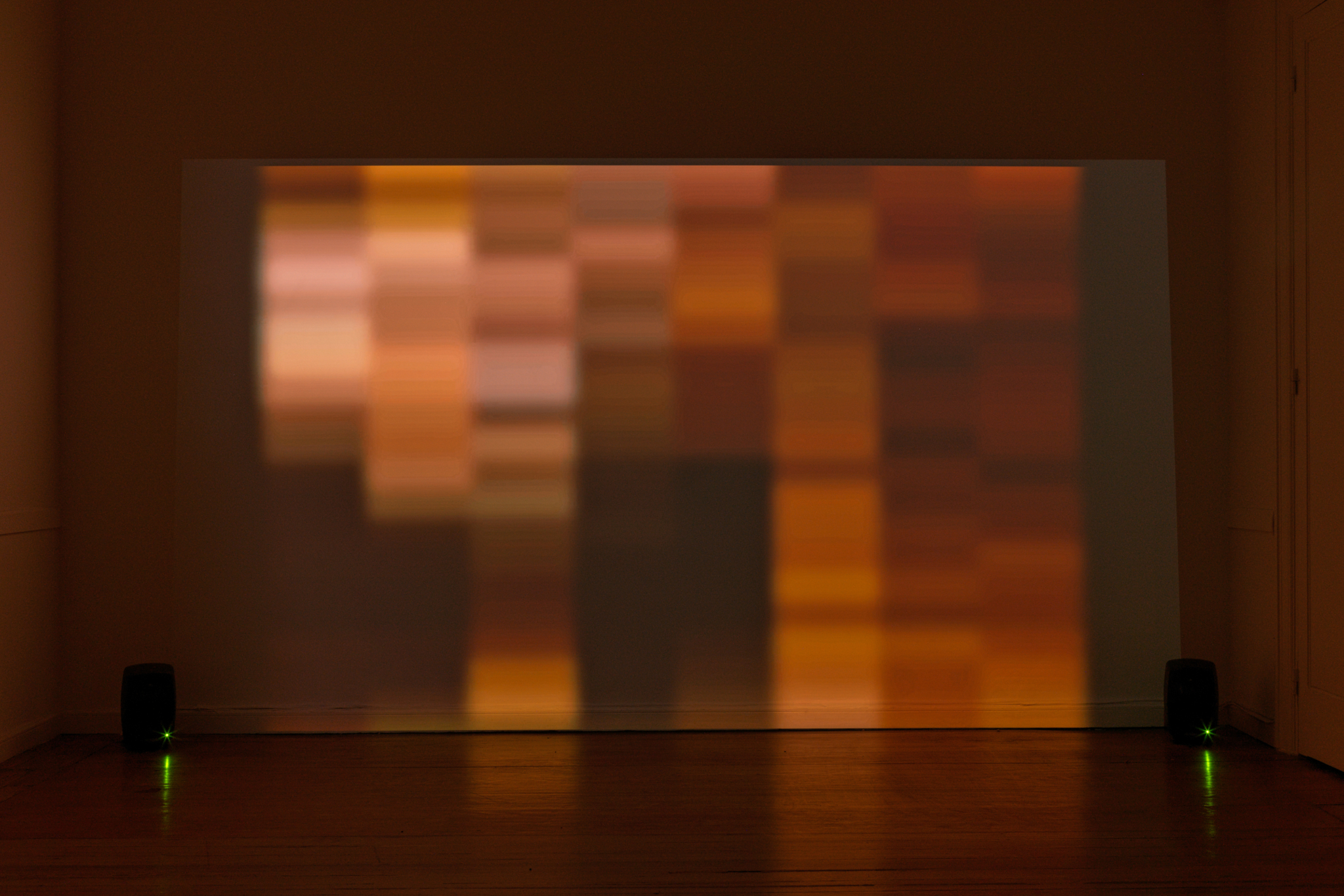
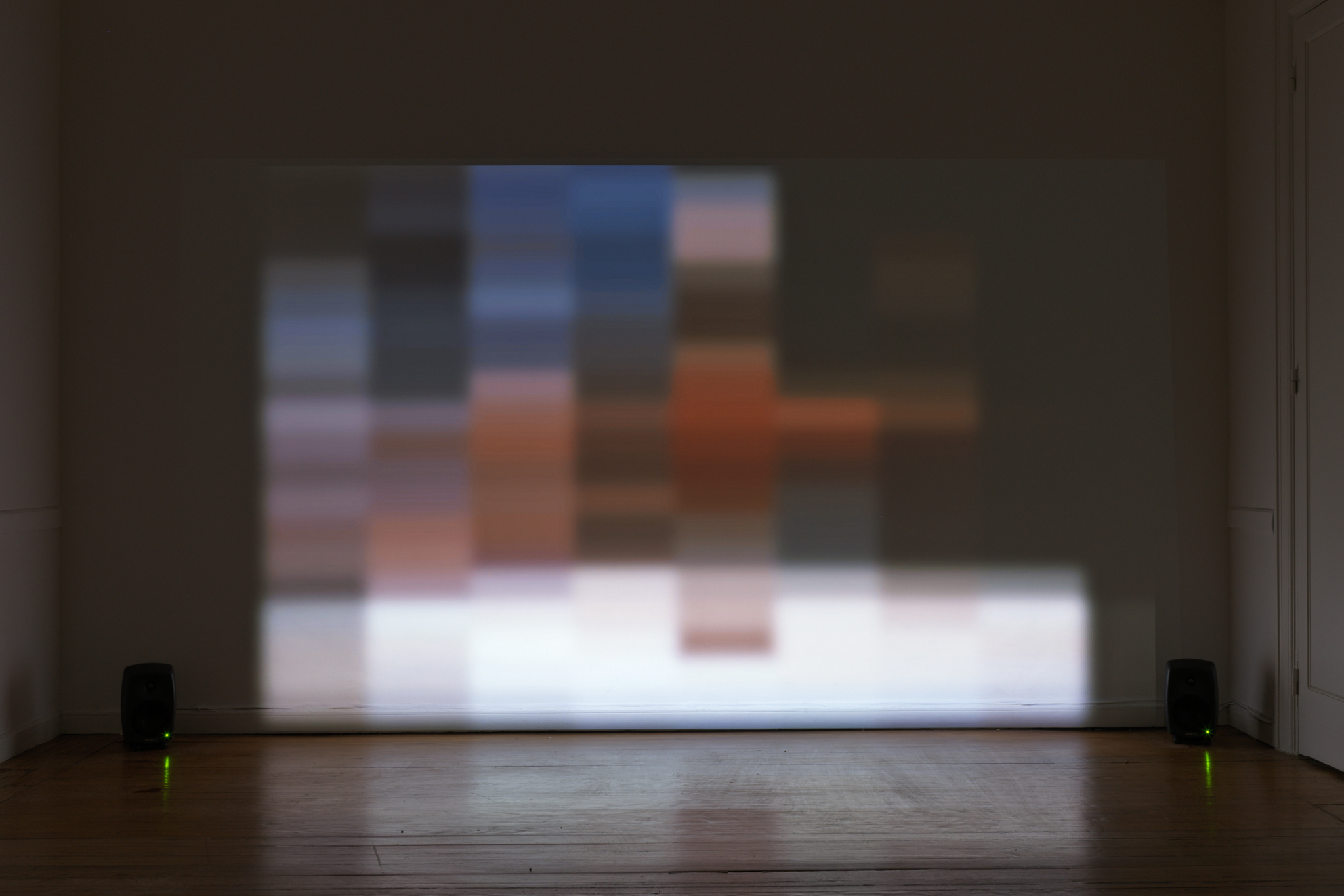
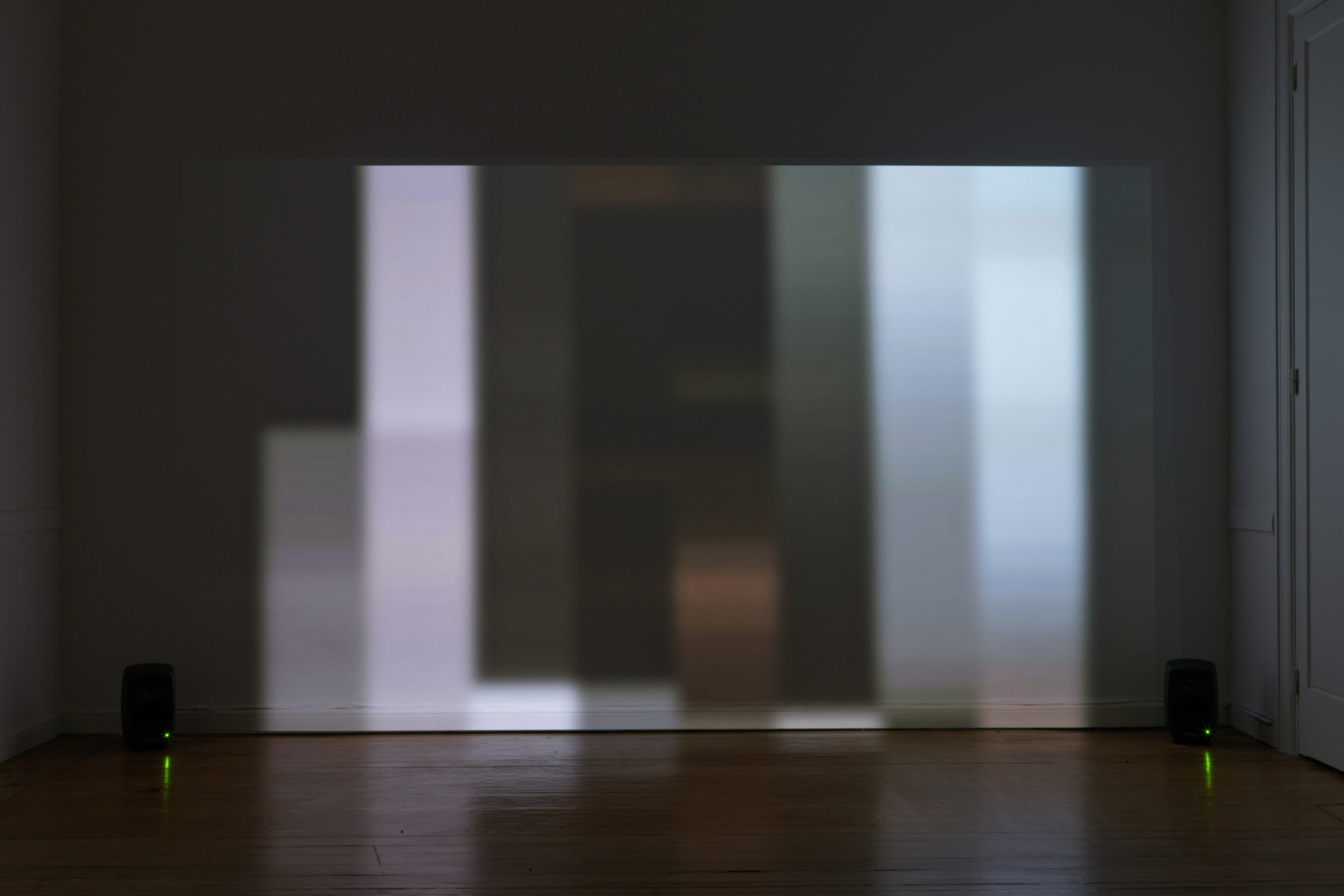
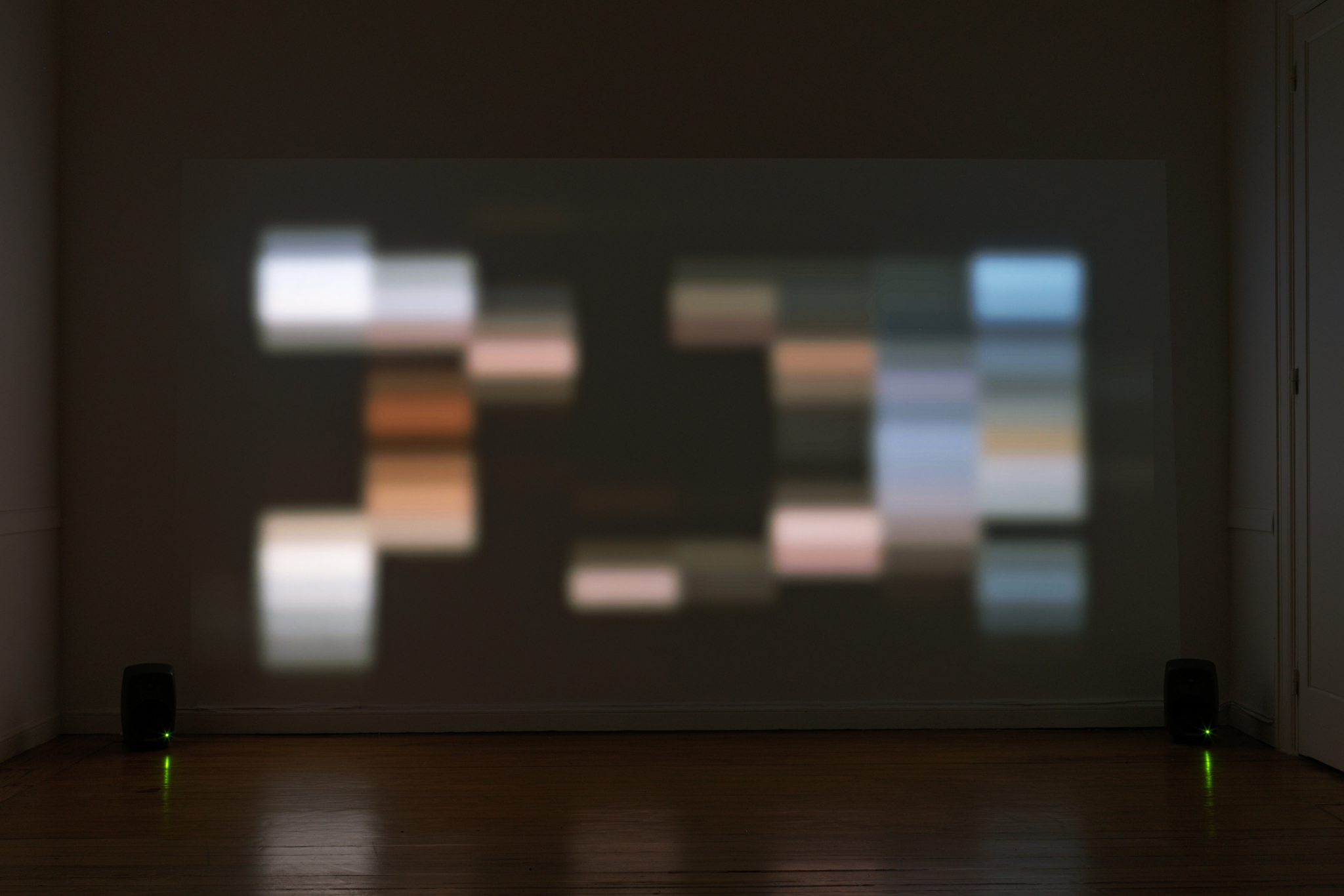
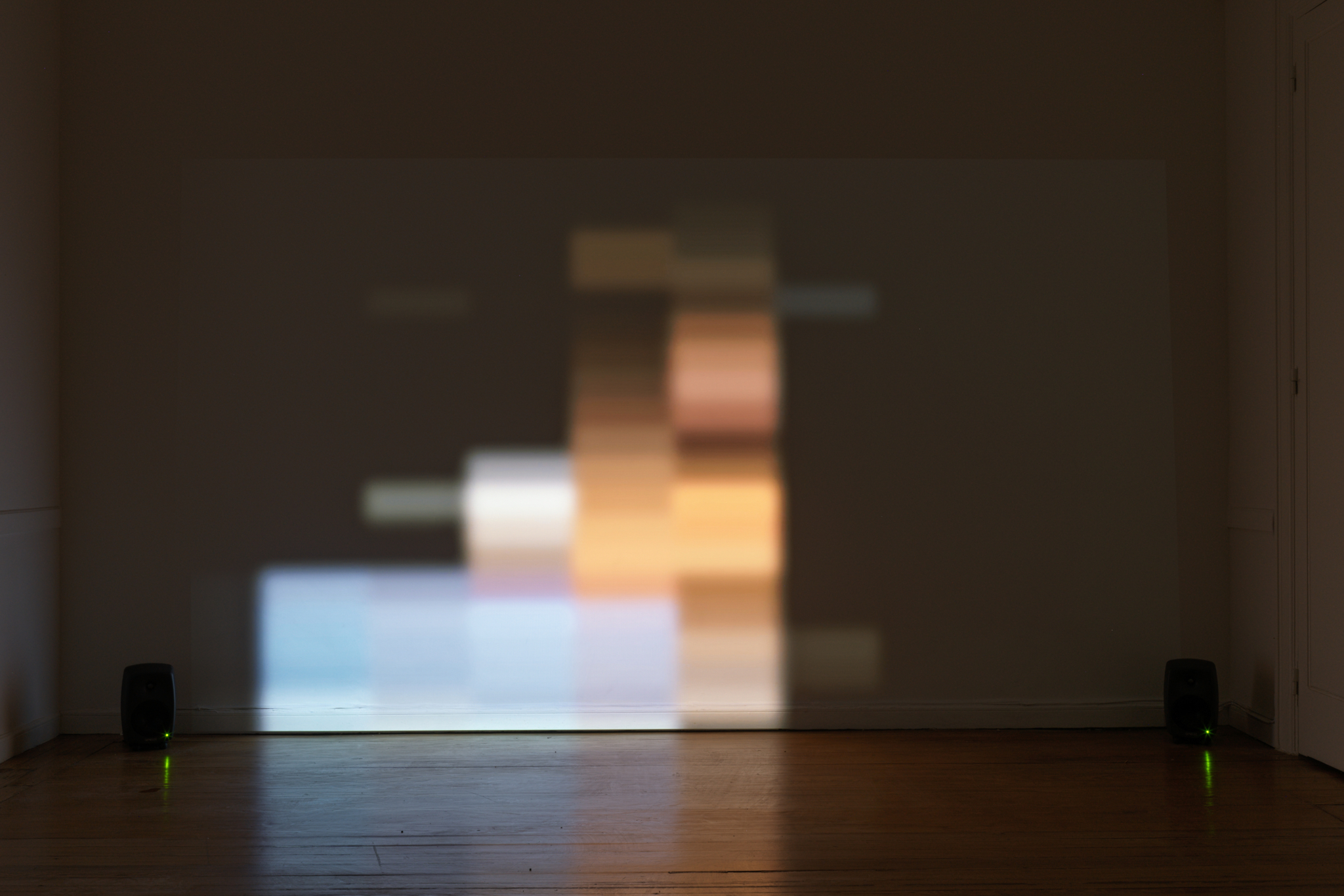
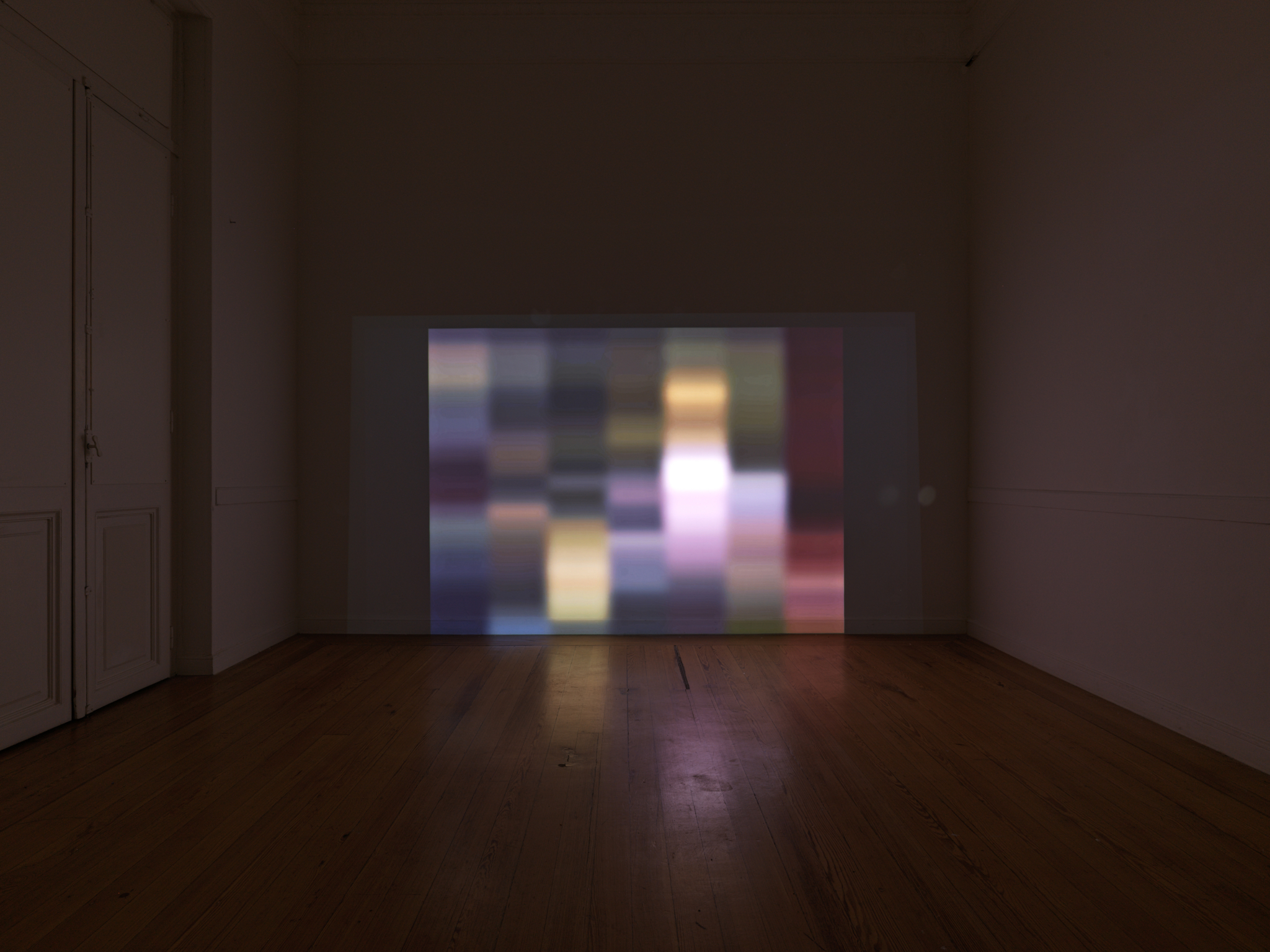
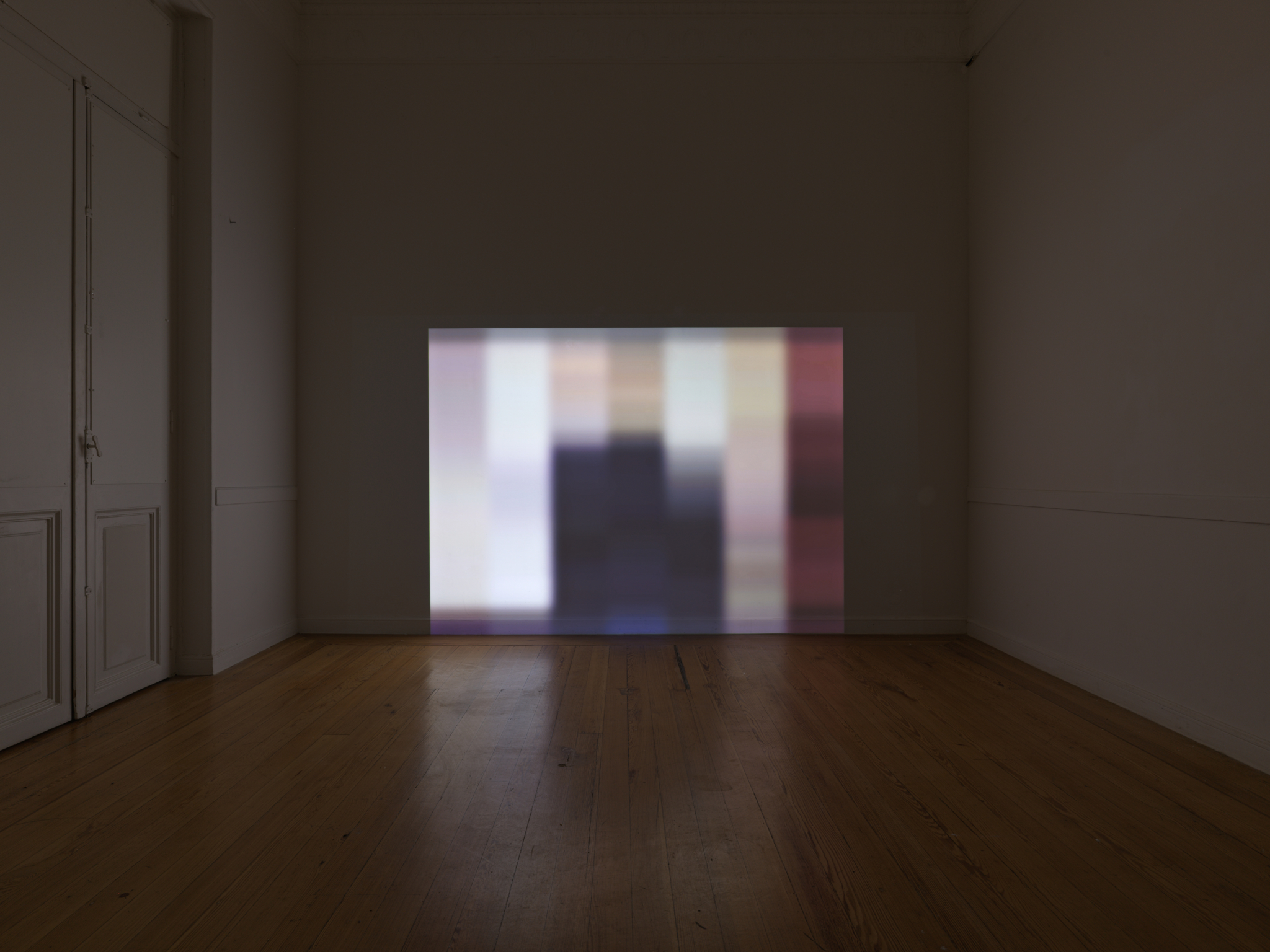
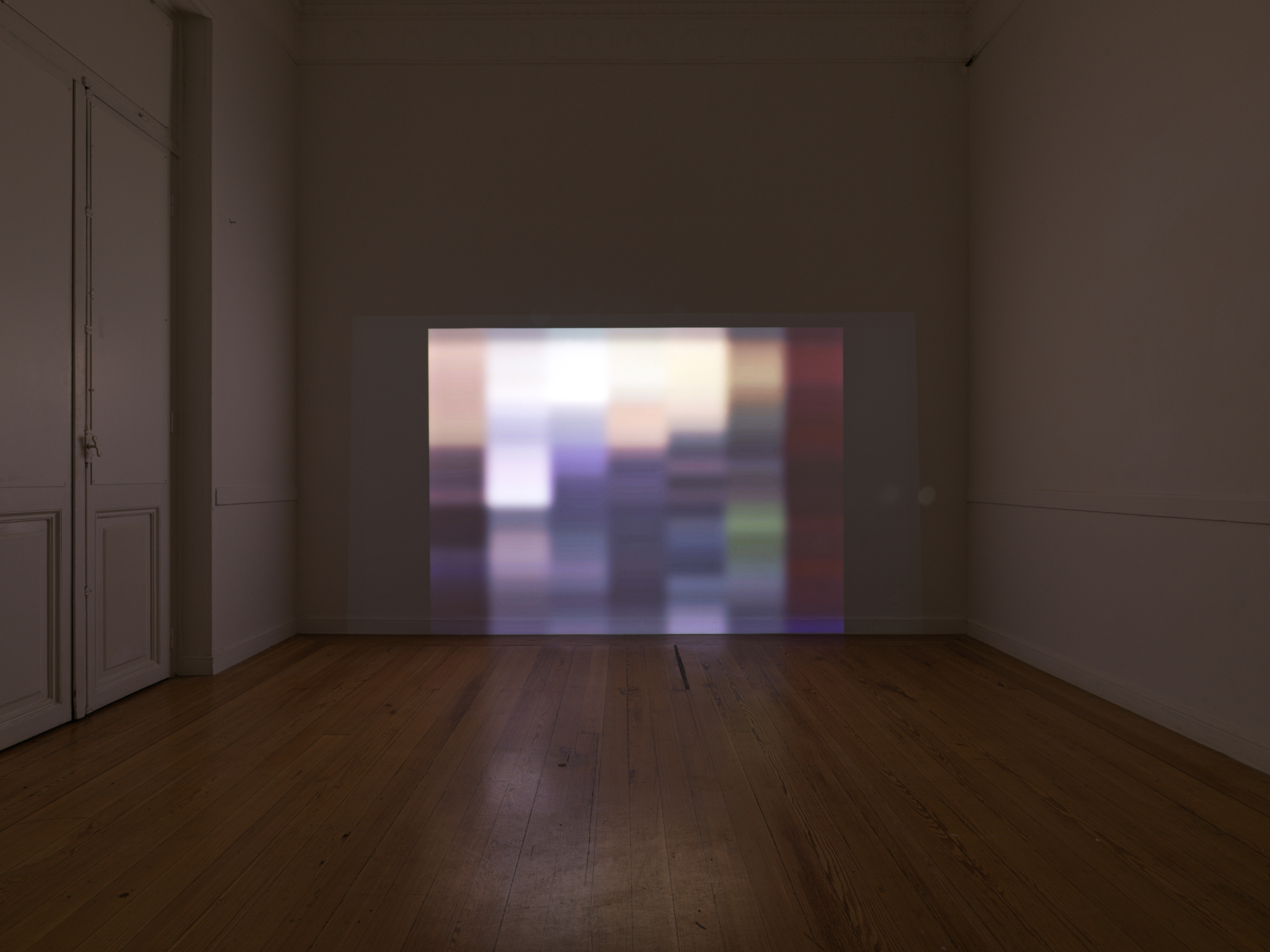
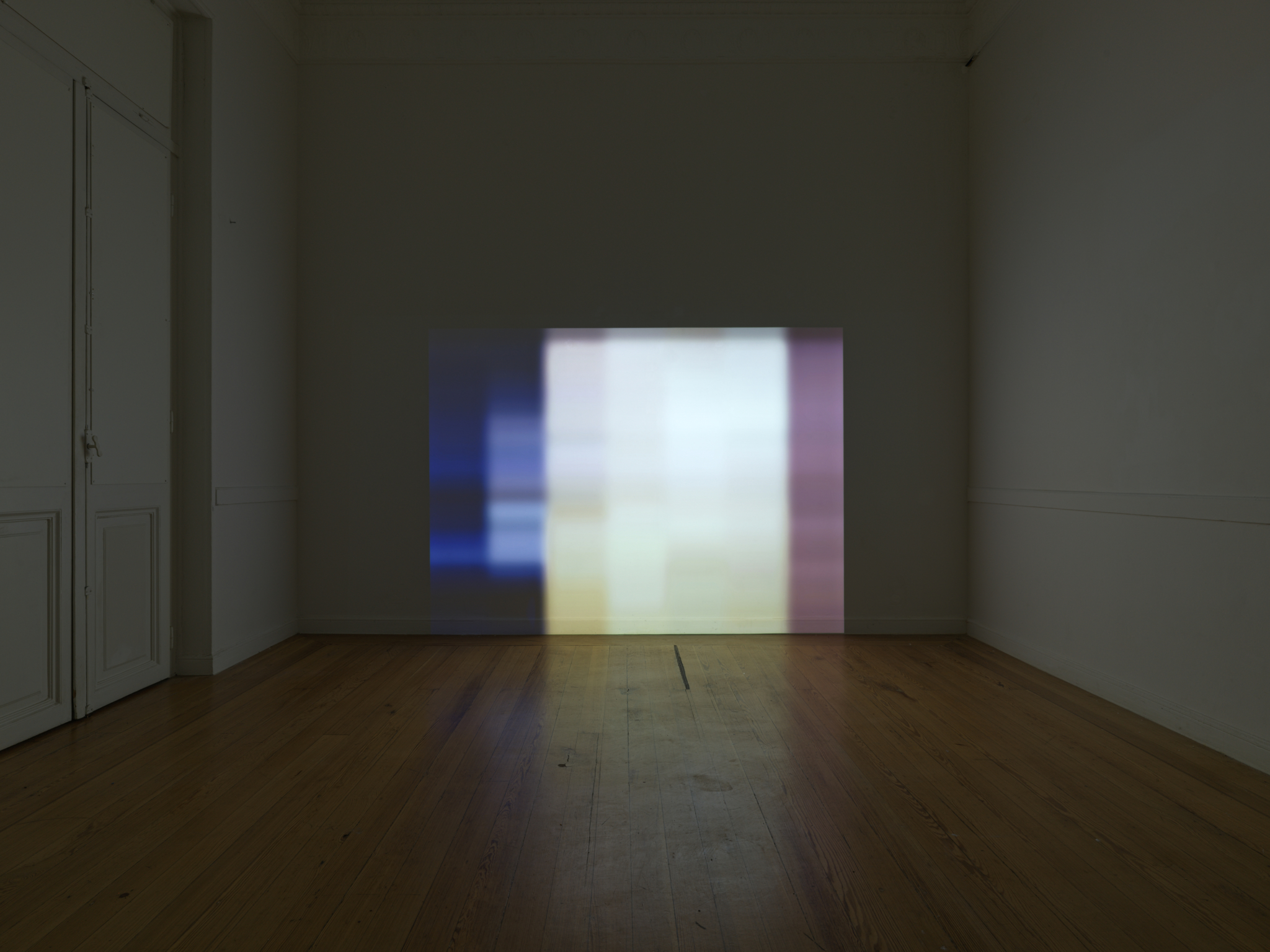
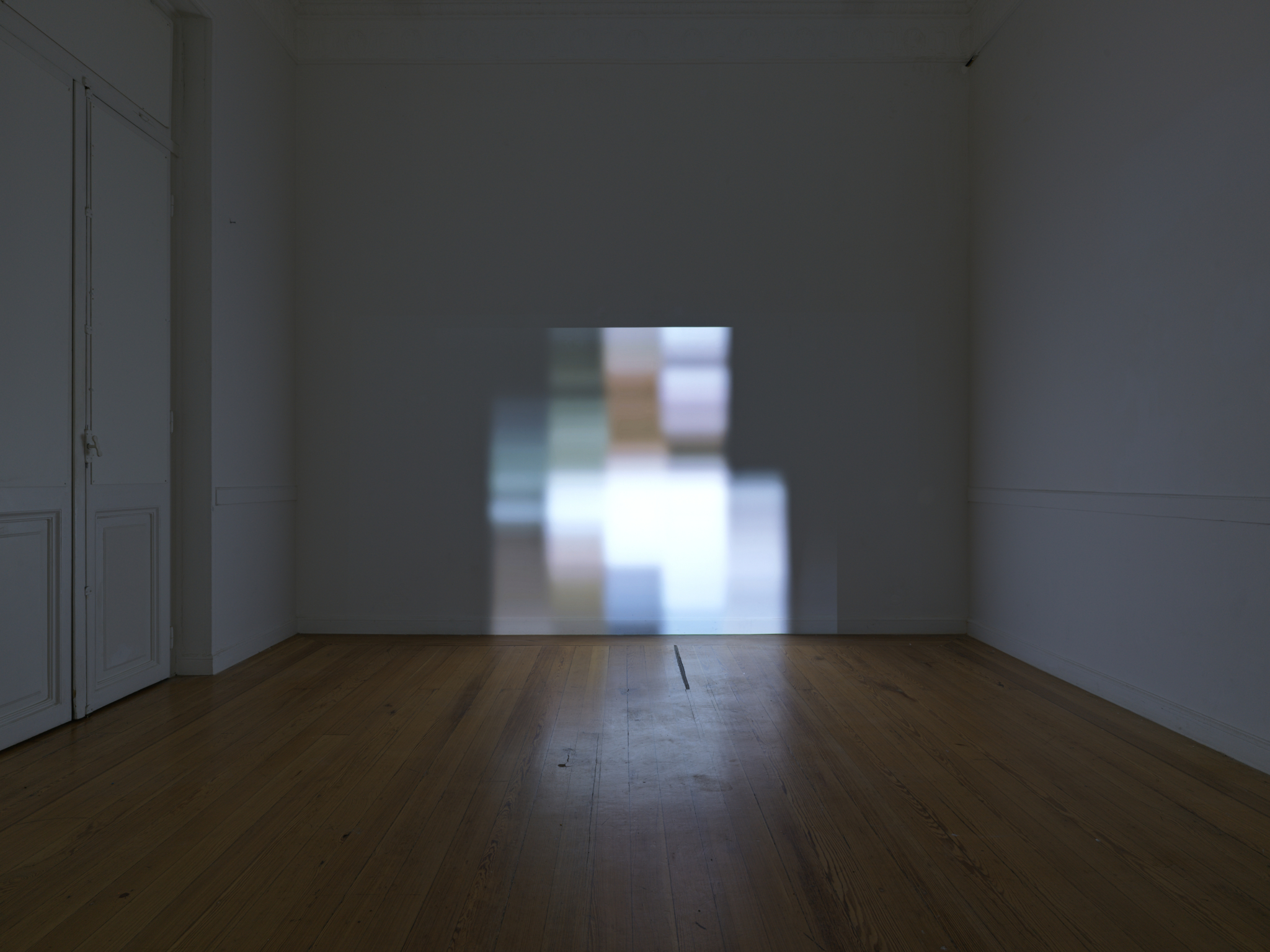
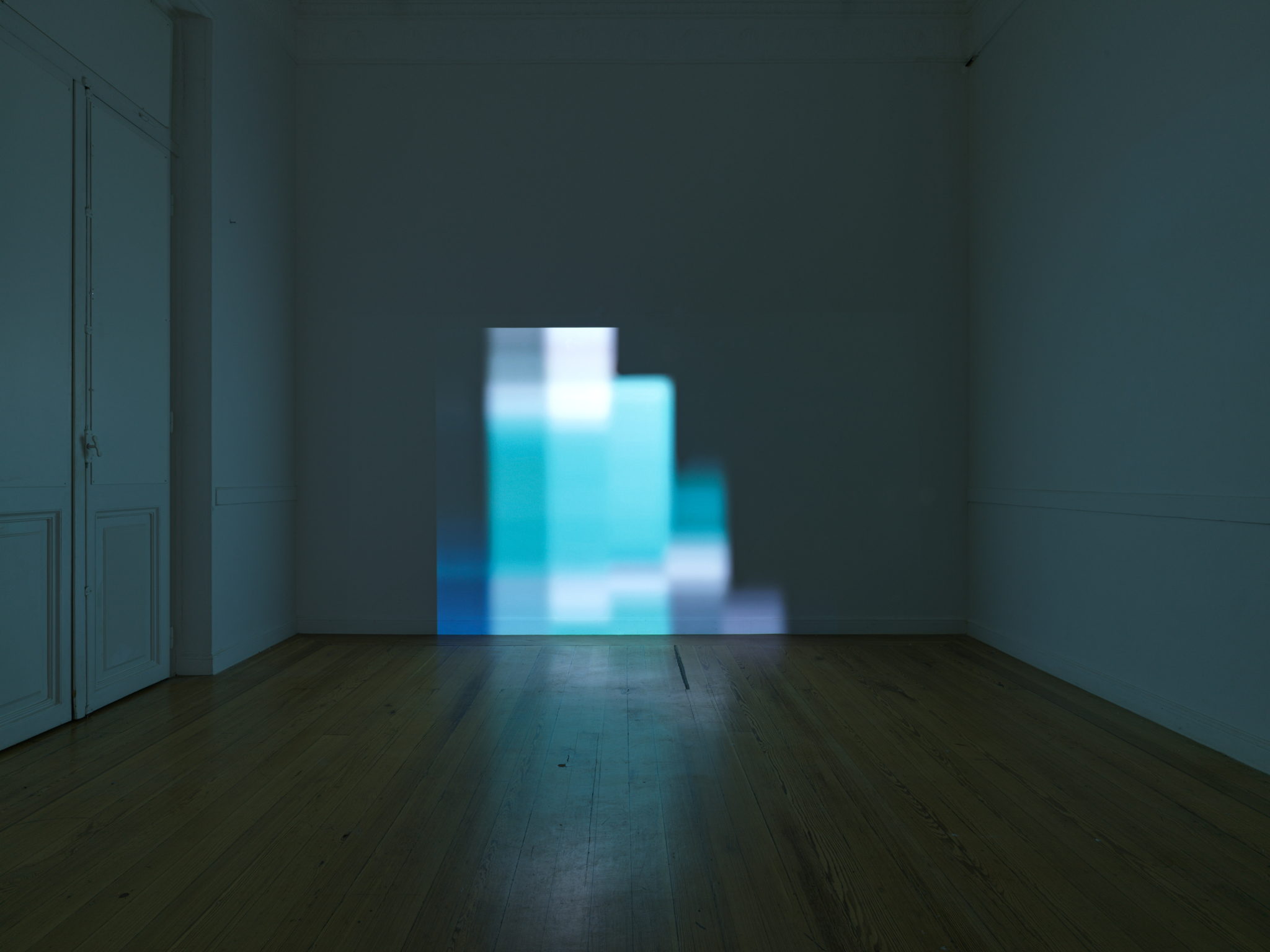
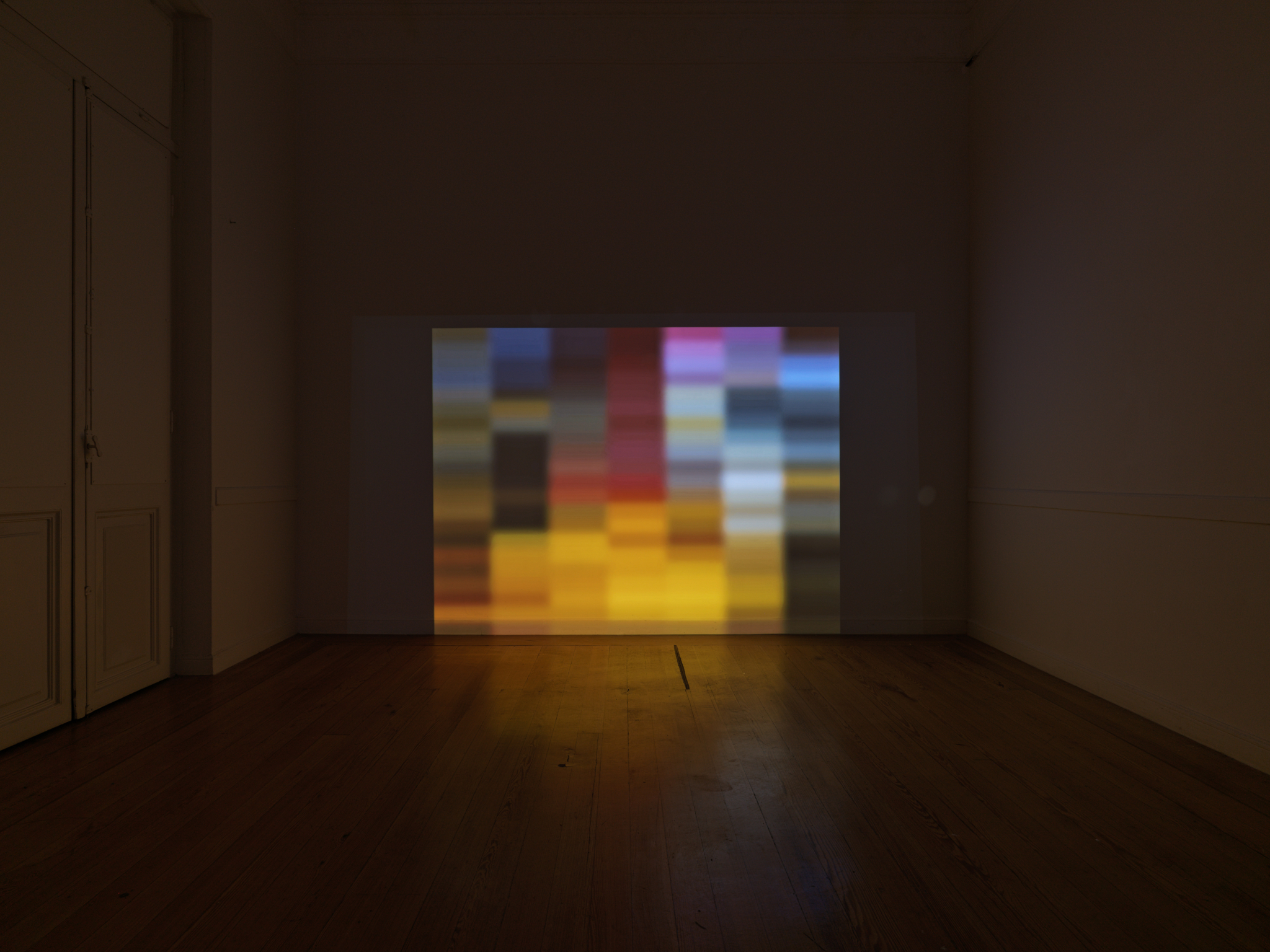
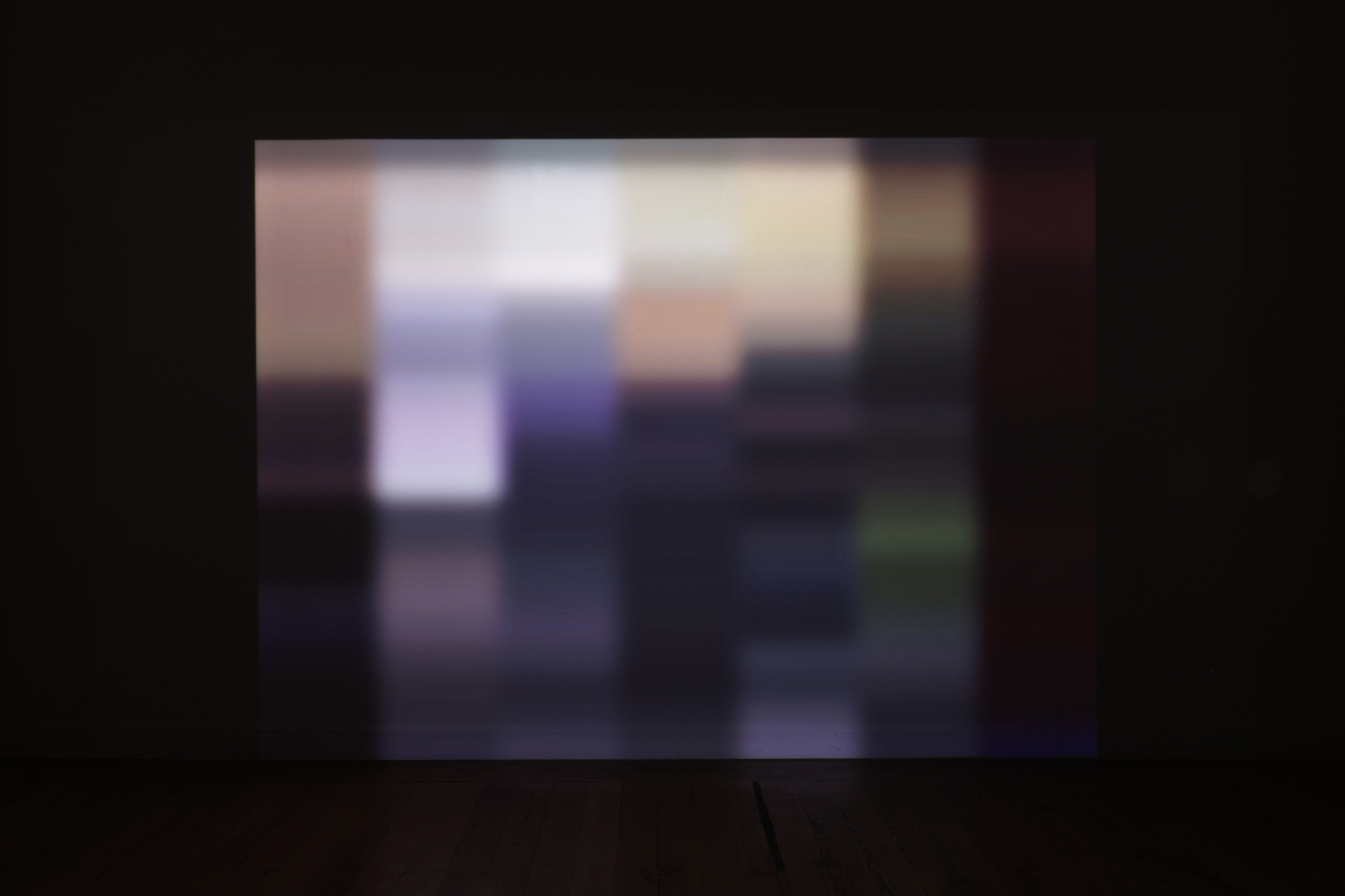
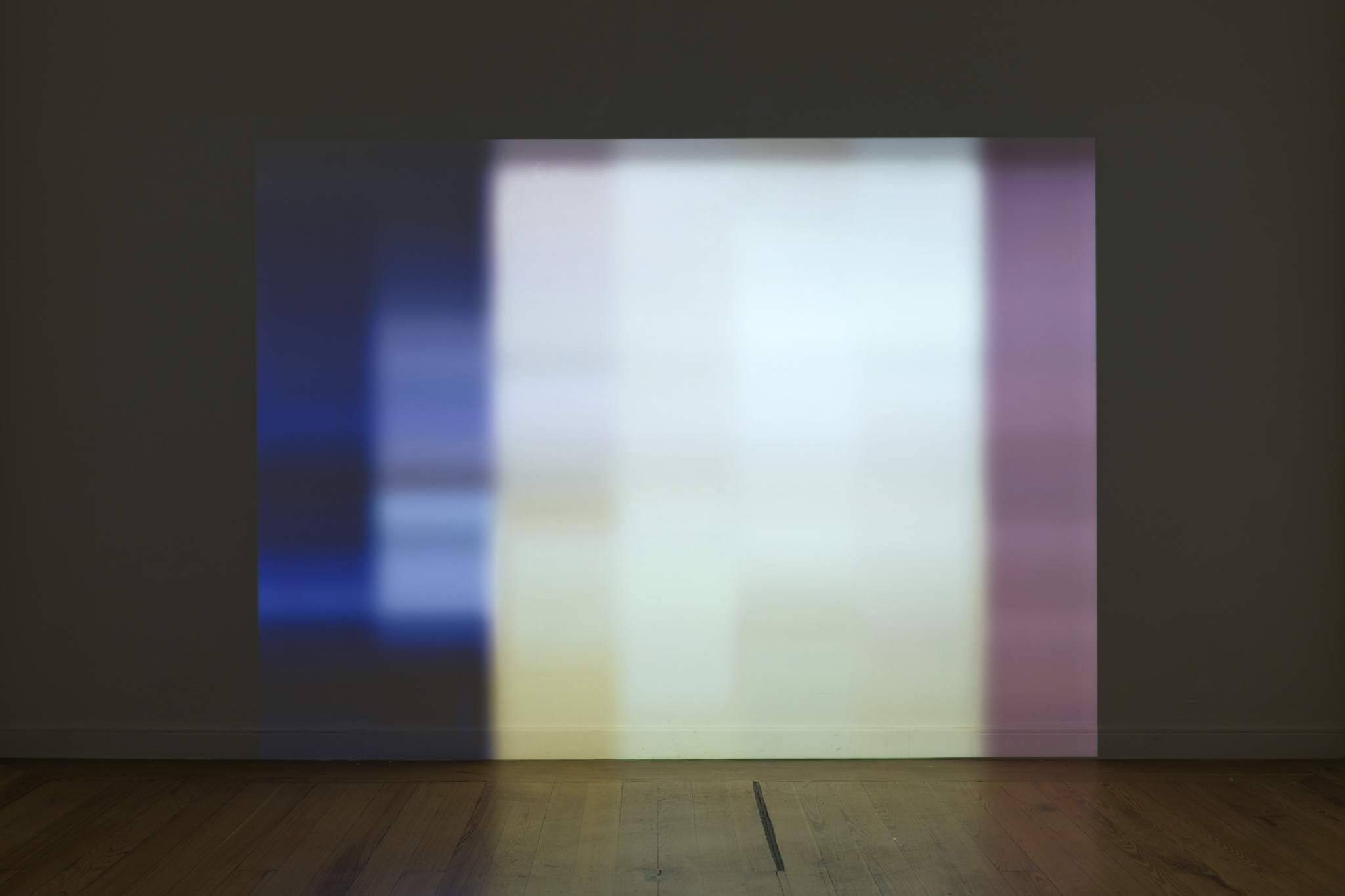
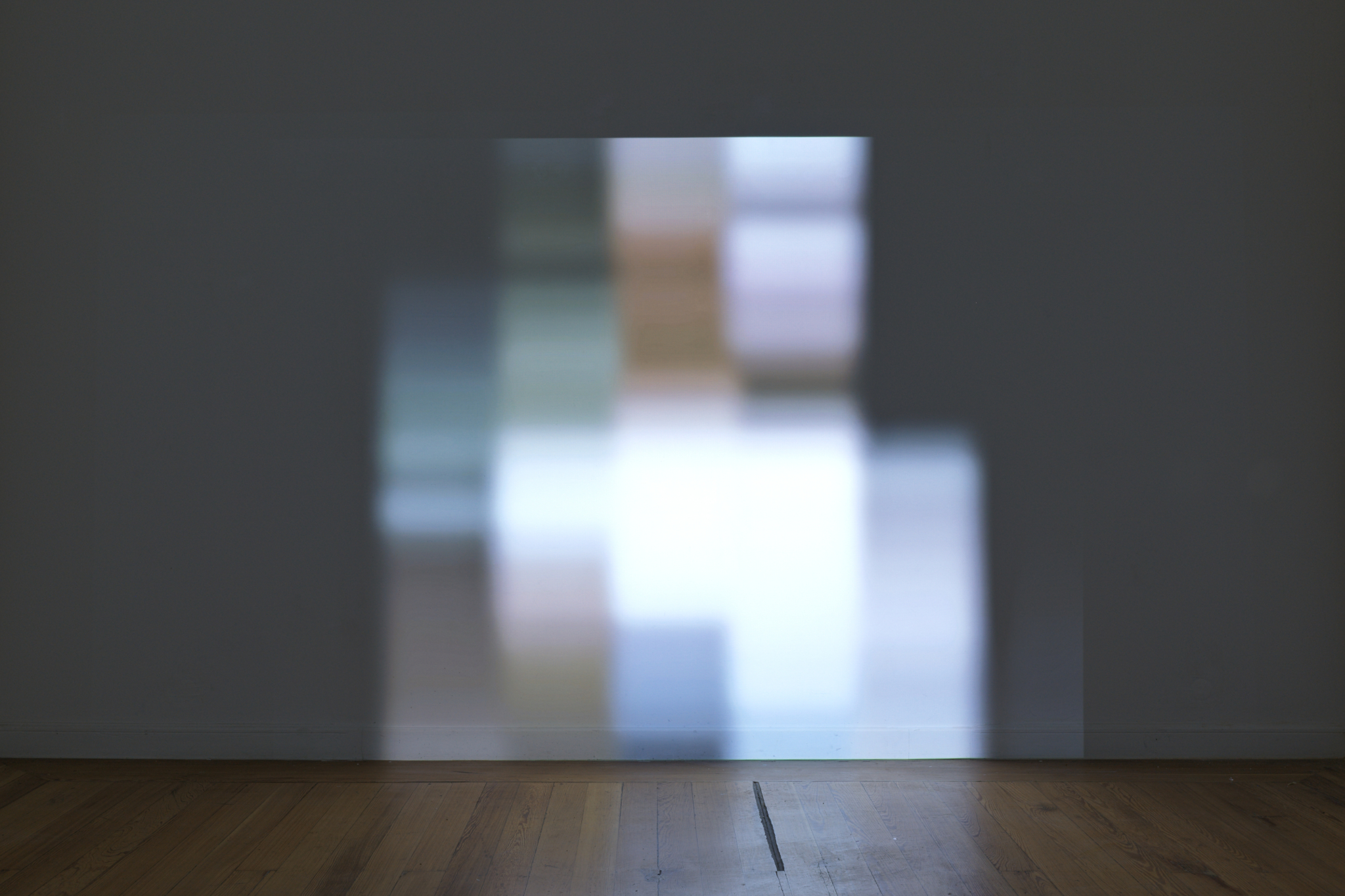
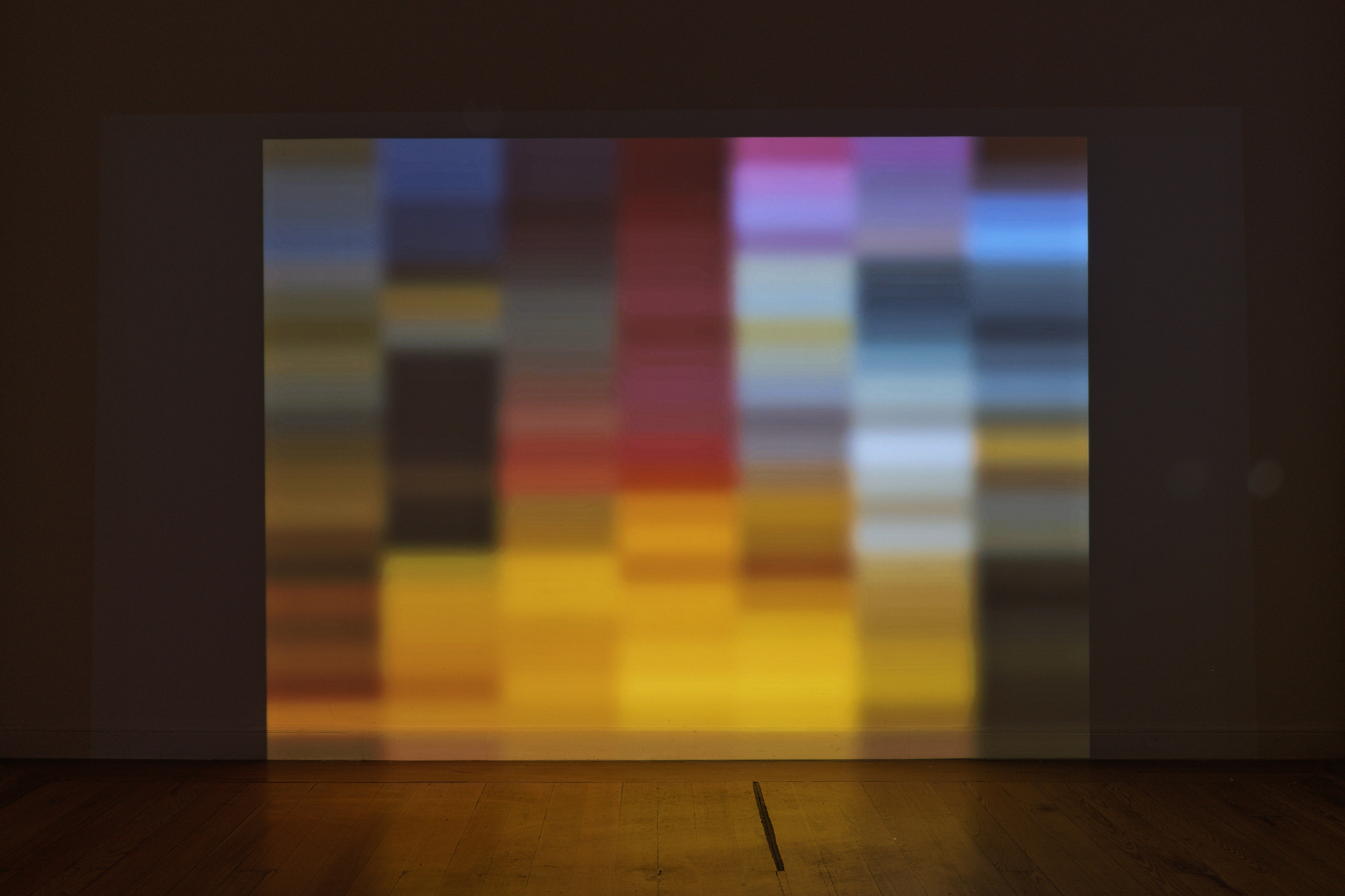
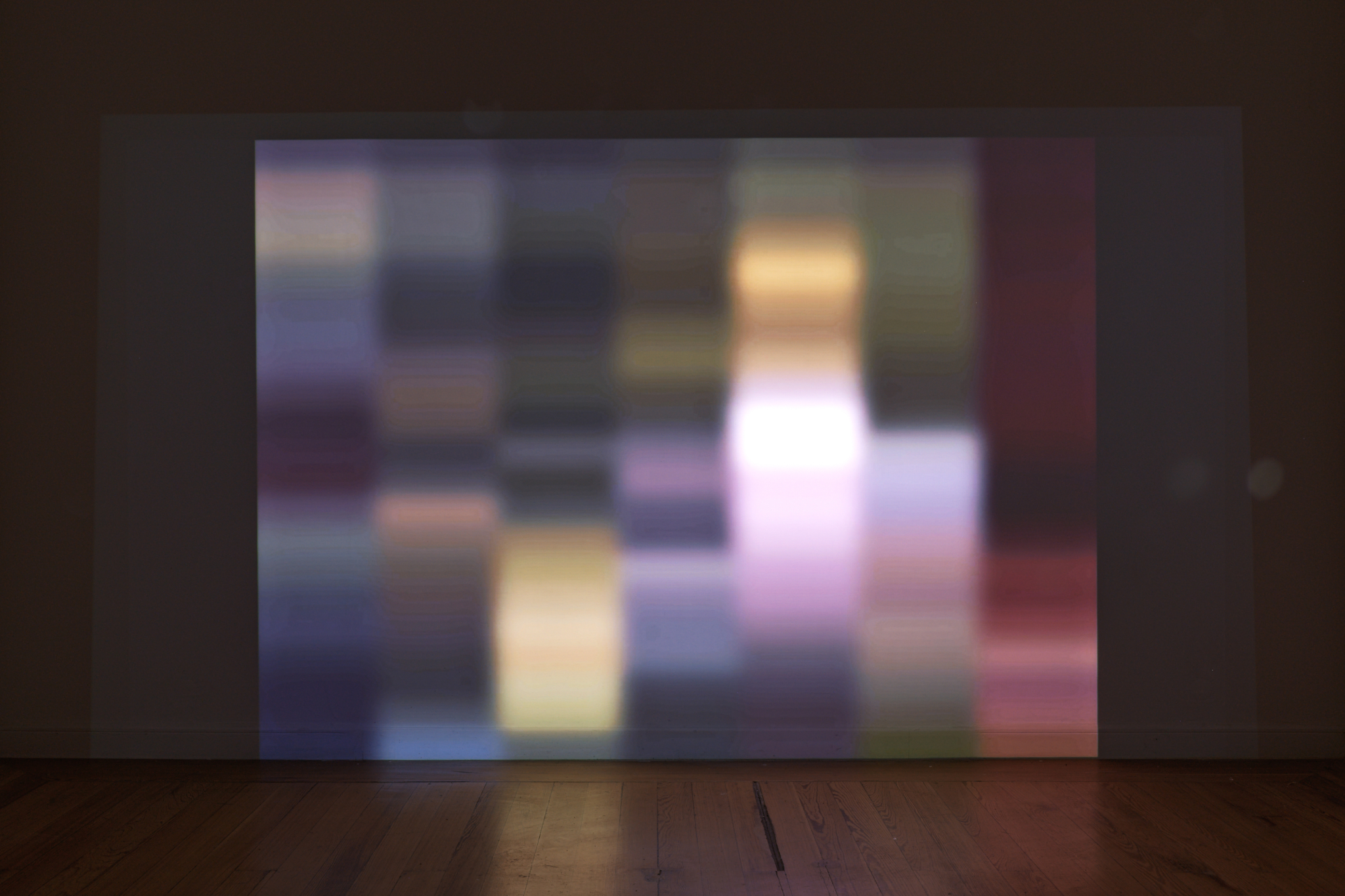
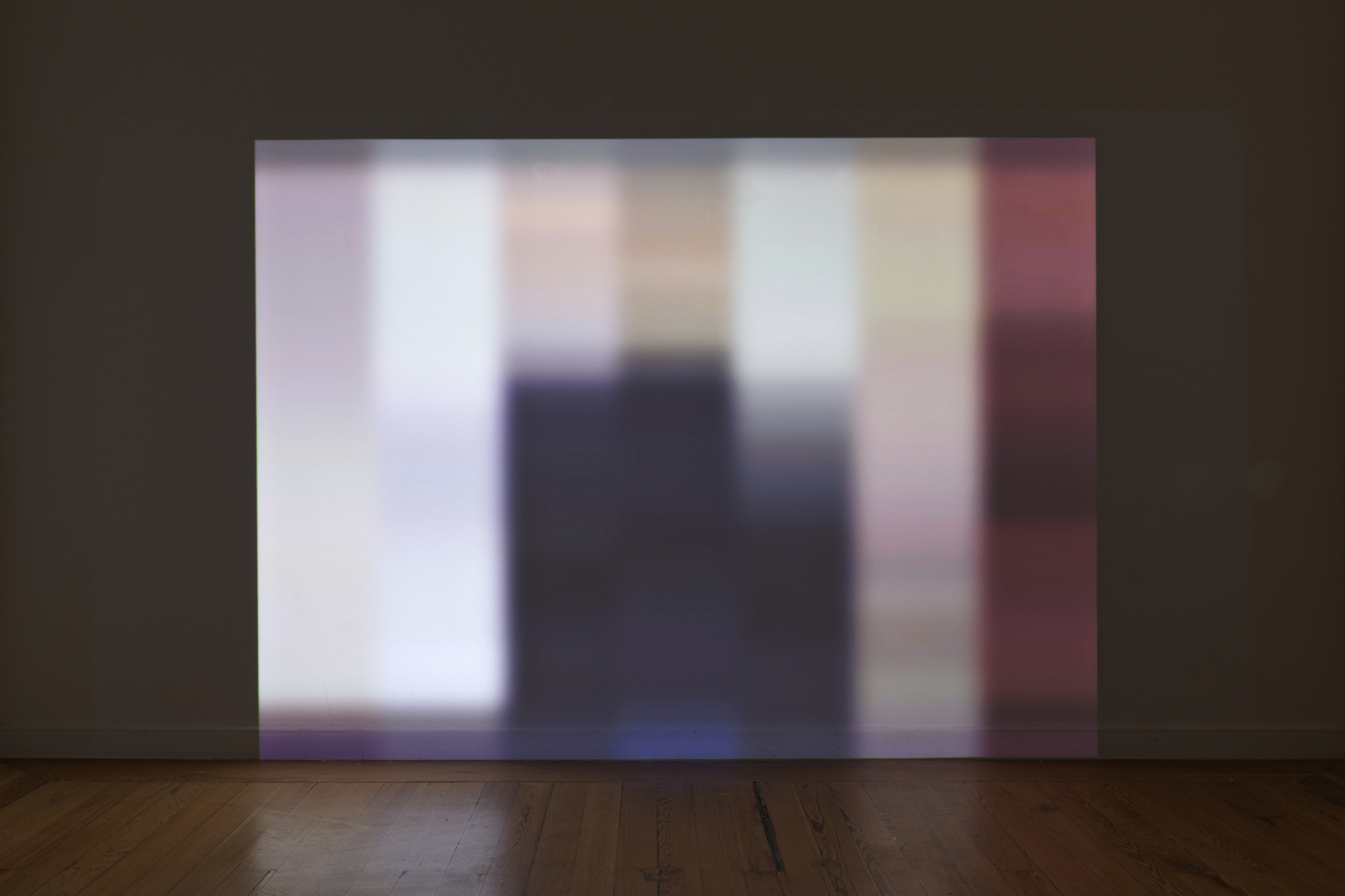
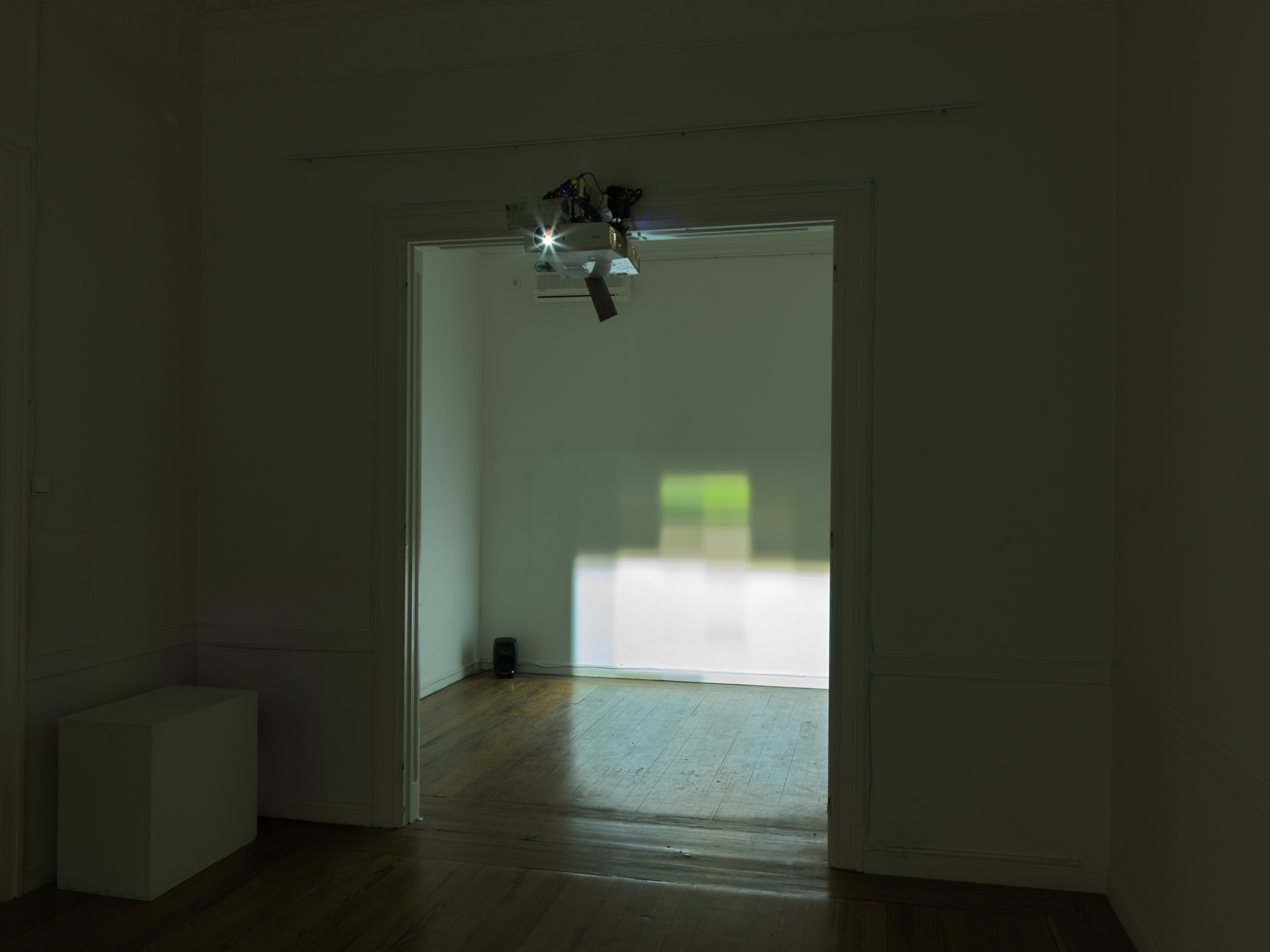
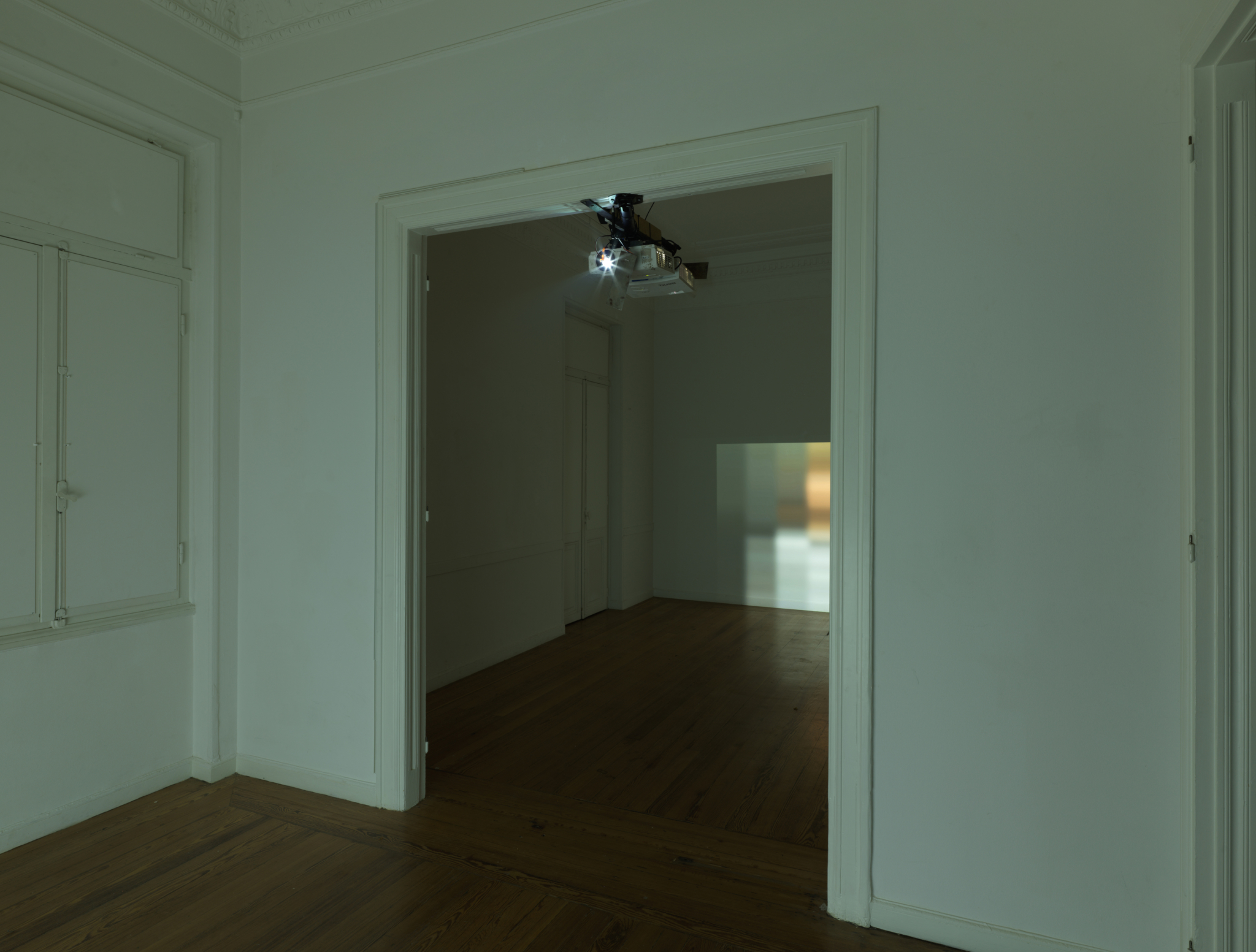
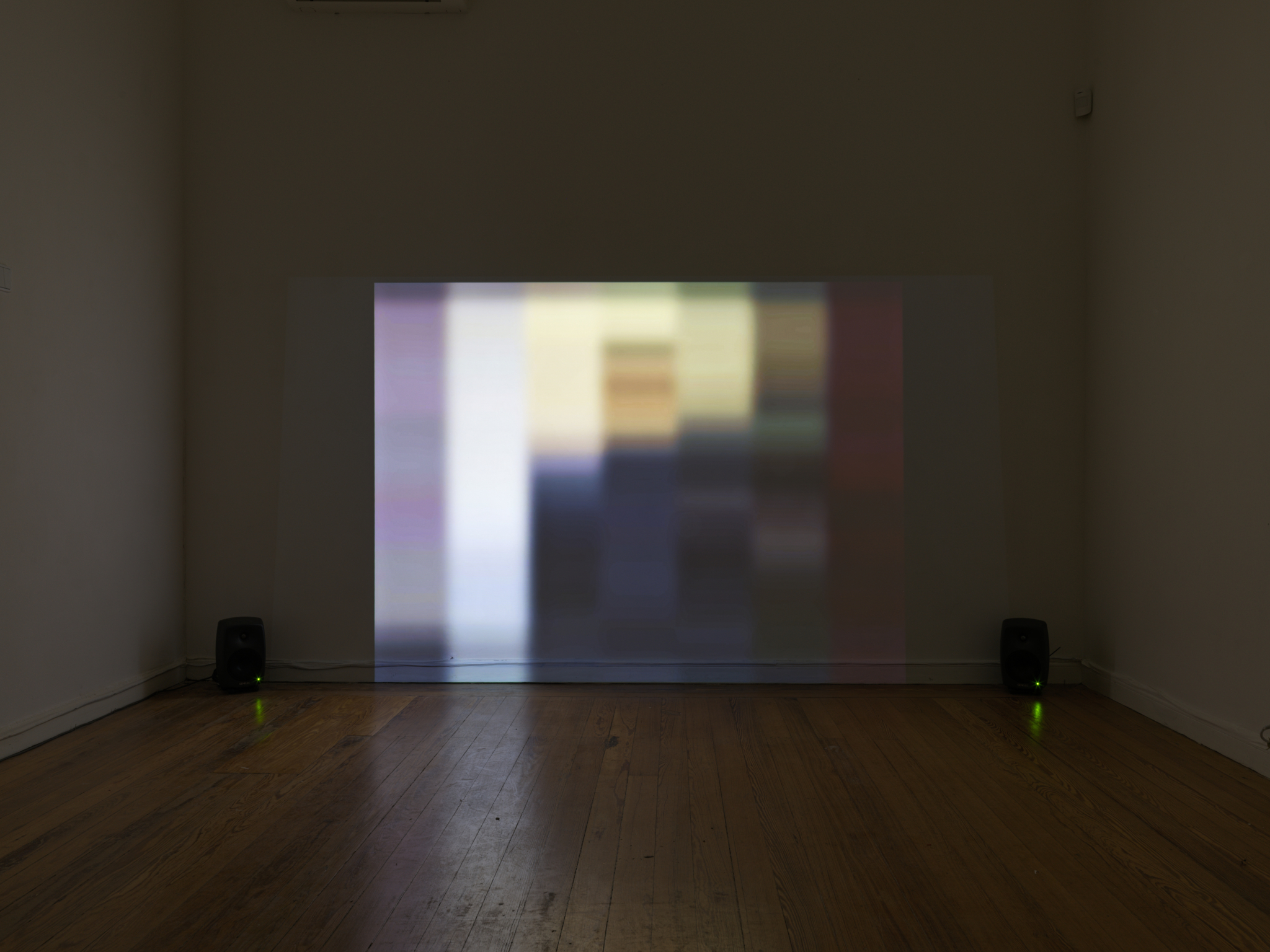
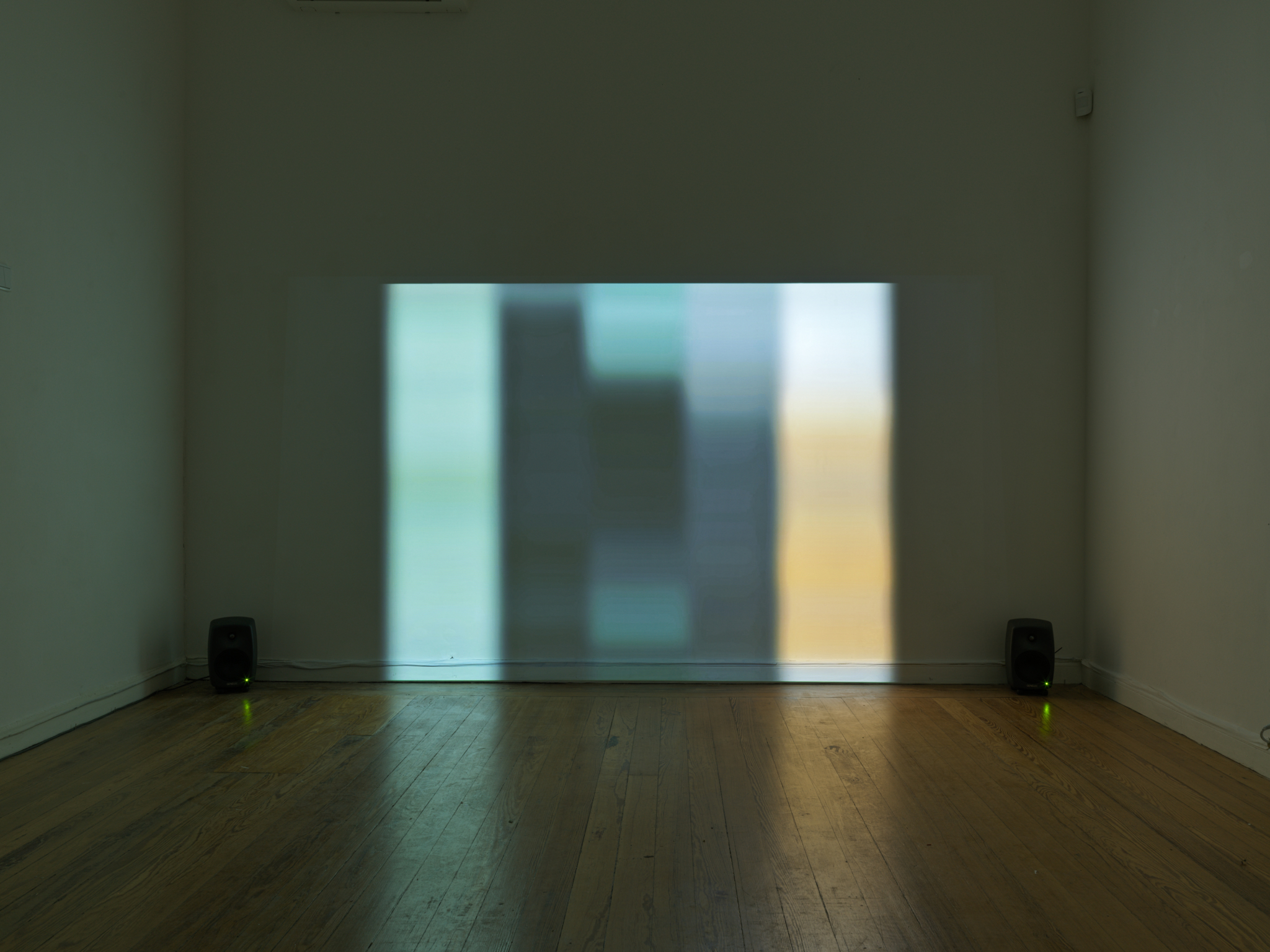
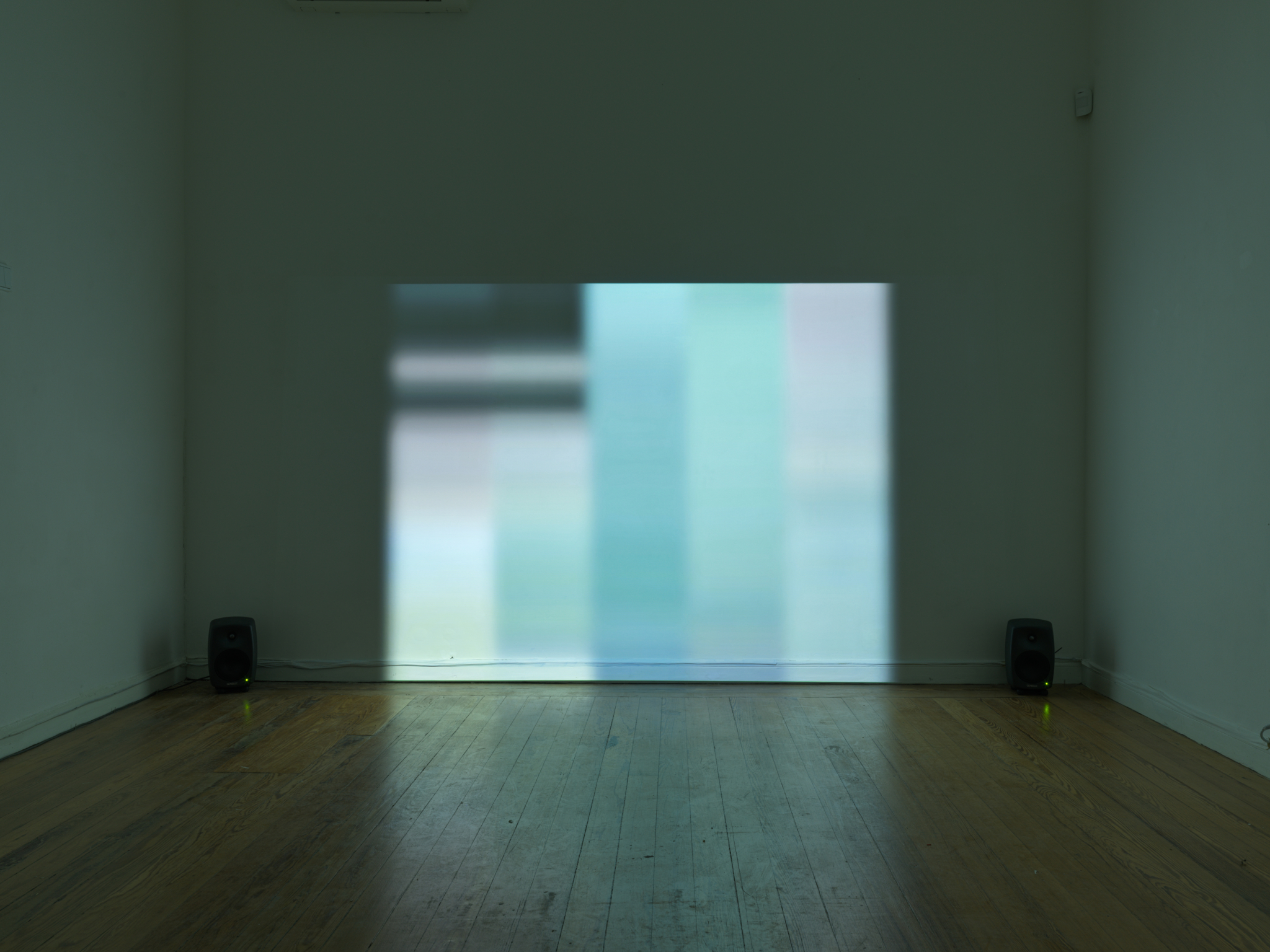
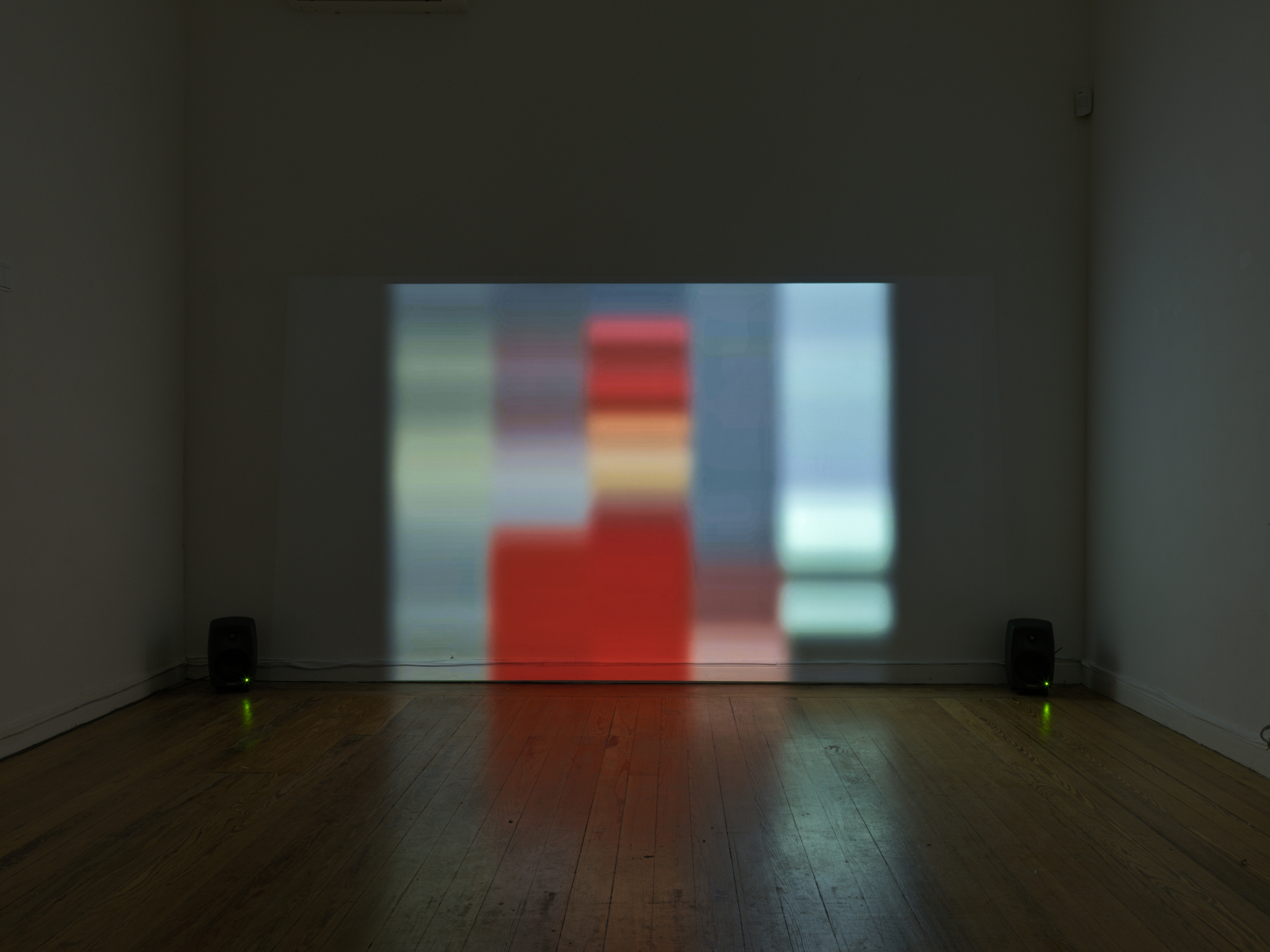
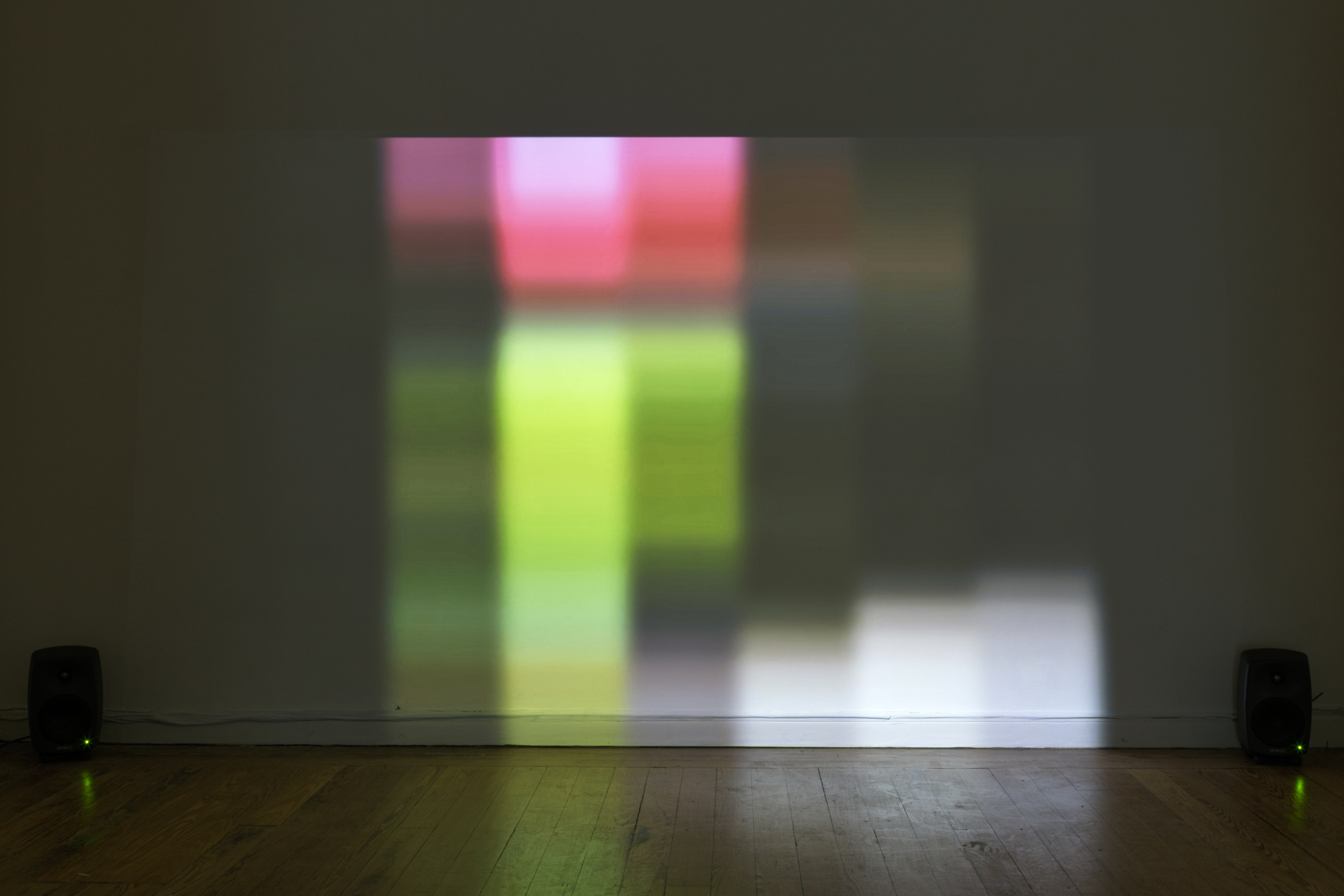
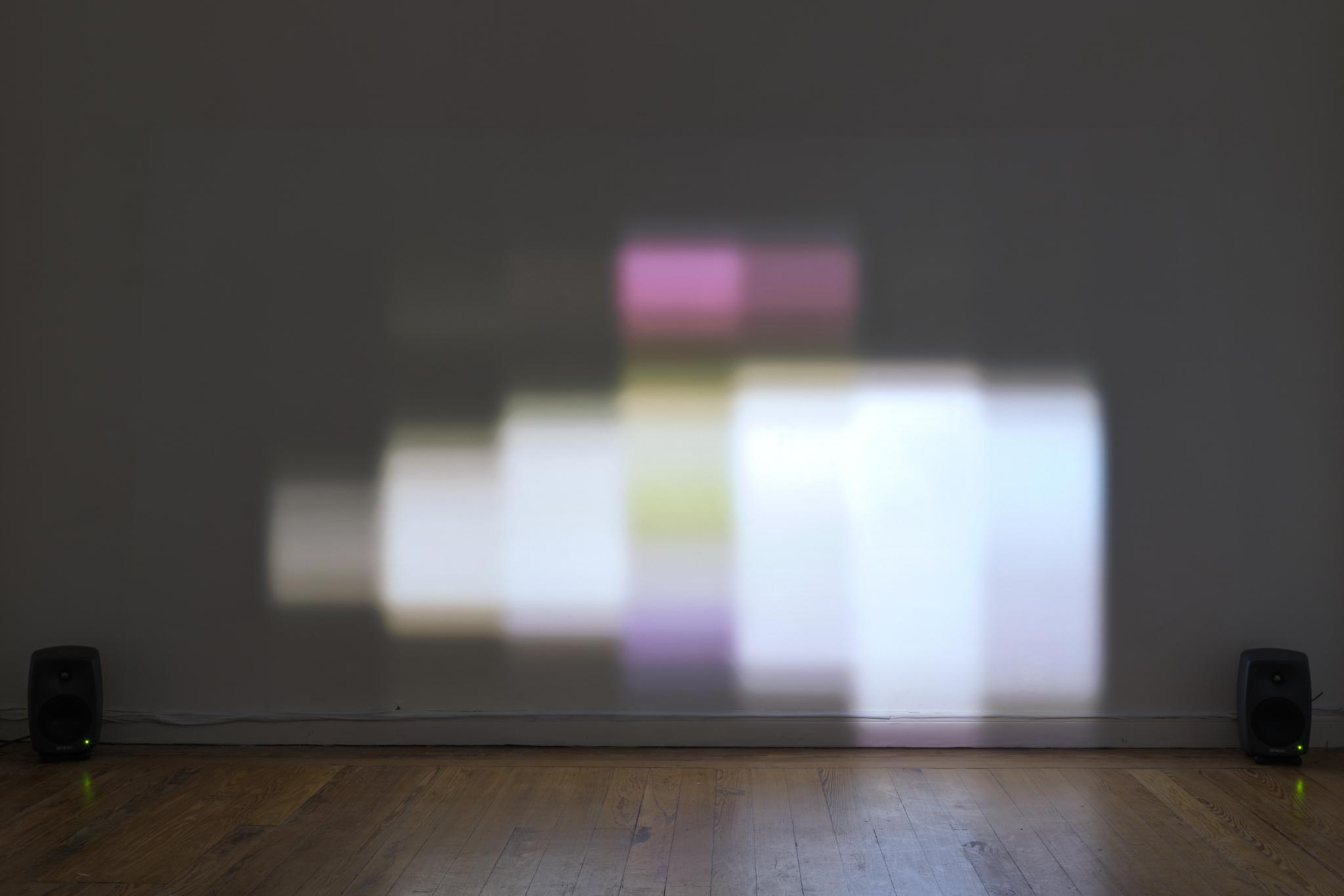
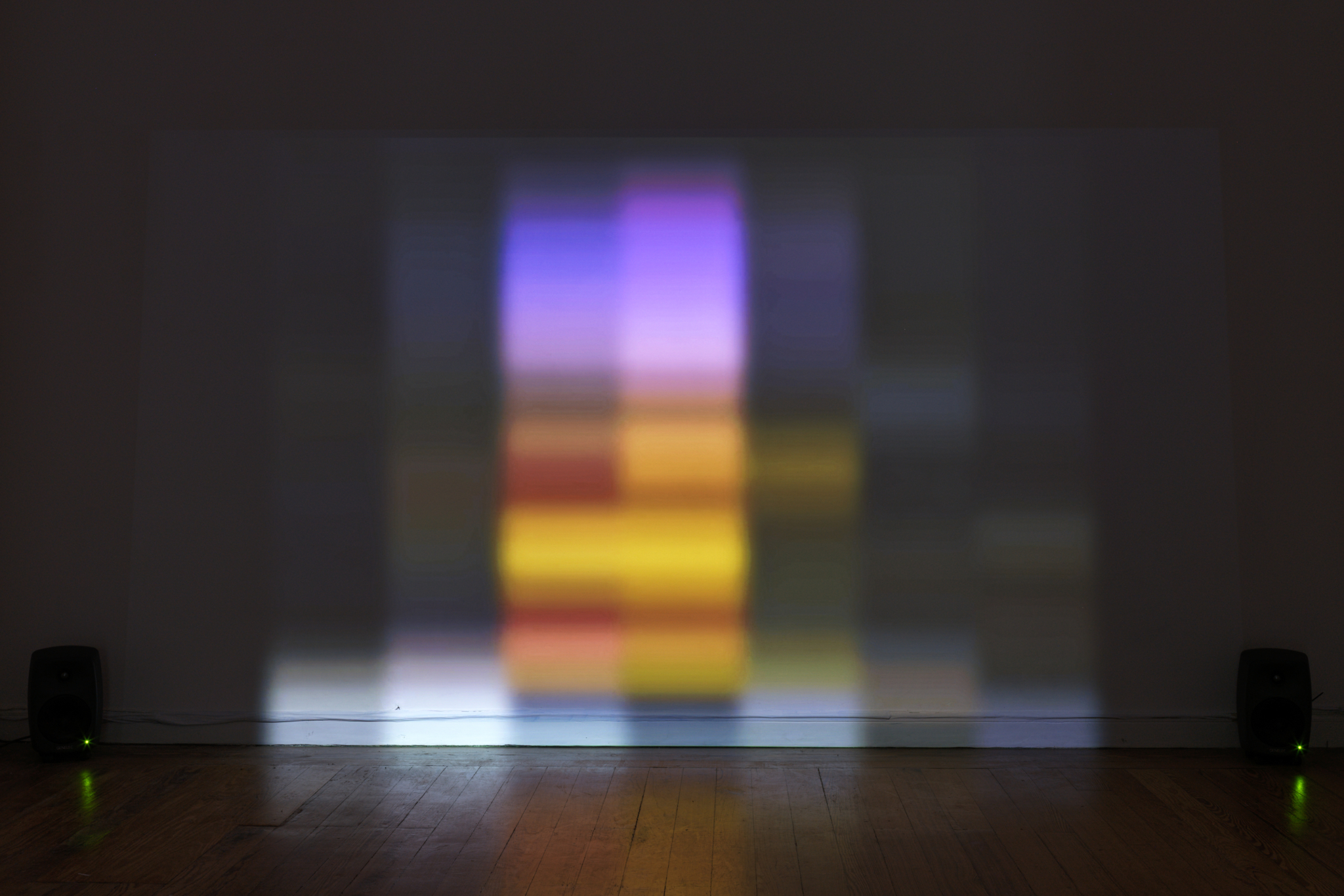
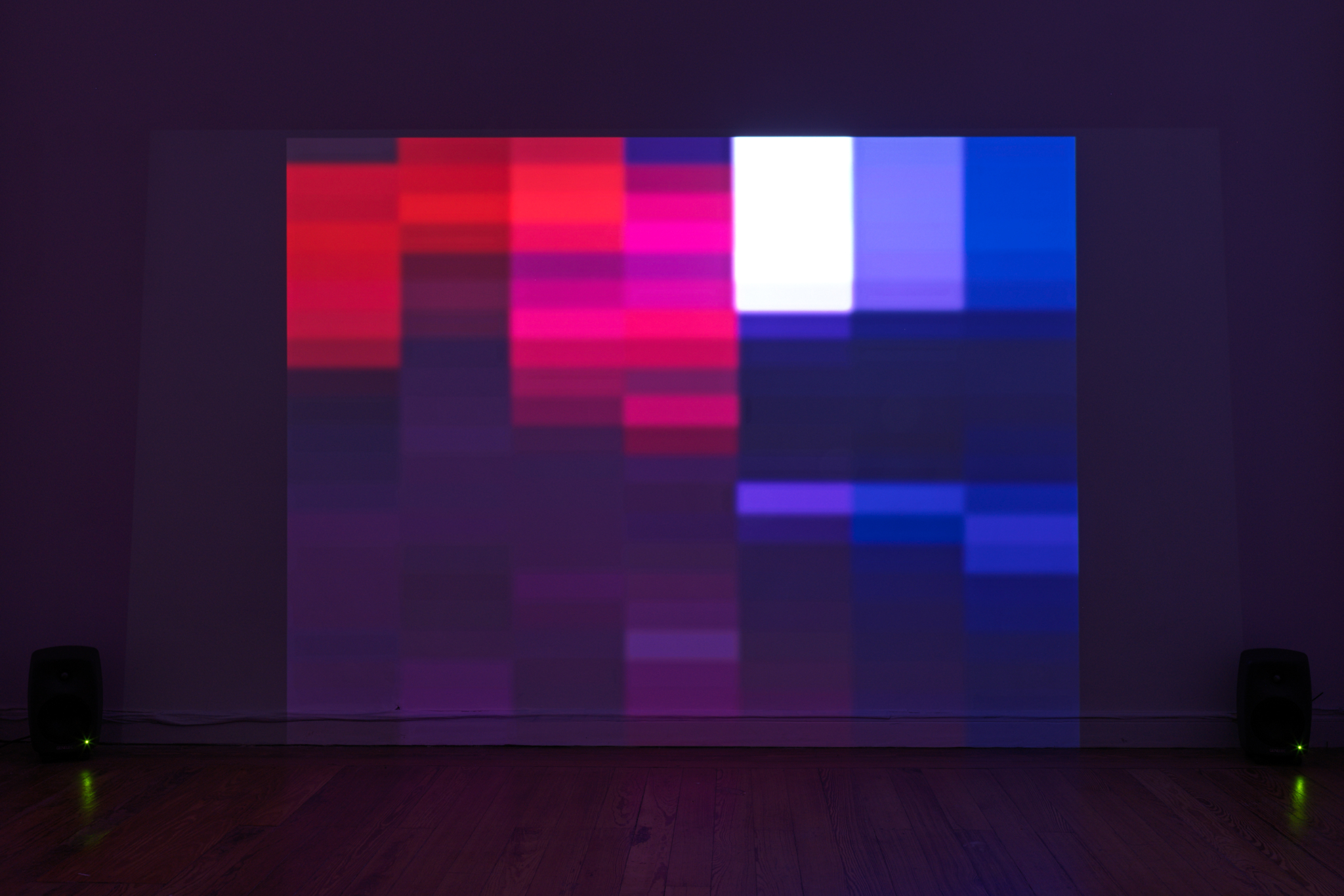
Valentina’s work suggests a similar temperament, one that finds its clearest expression in Provider, the video series that forms the heart of the exhibition at Akwa Ibom. In its current articulation, the work consists of three projections—two 4:3 and one 16:9—each hosting several videos. These are drawn exclusively from runway presentations spanning different moments in fashion image culture, from 1980s prêt-à-porter and haute couture shows to recent livestreamed presentations found online, sourced entirely from YouTube, where they circulate through fan uploads.
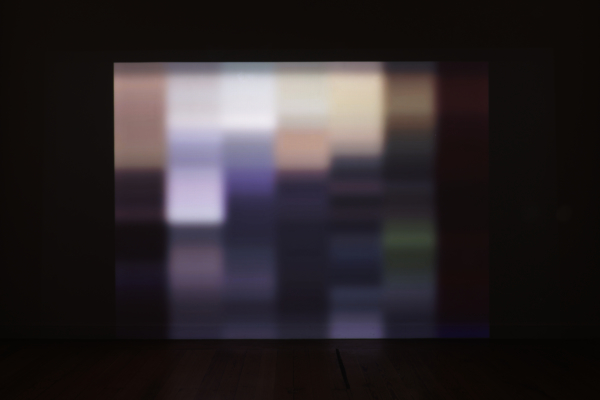
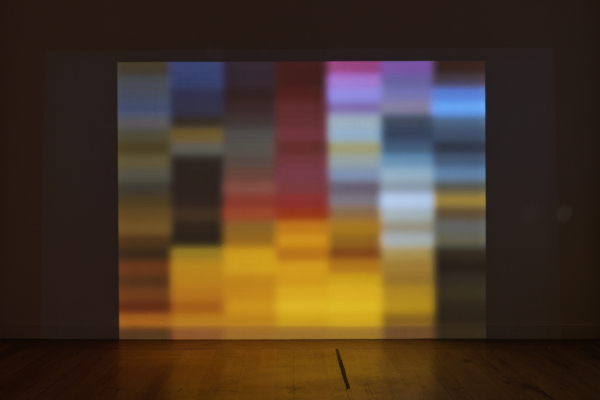
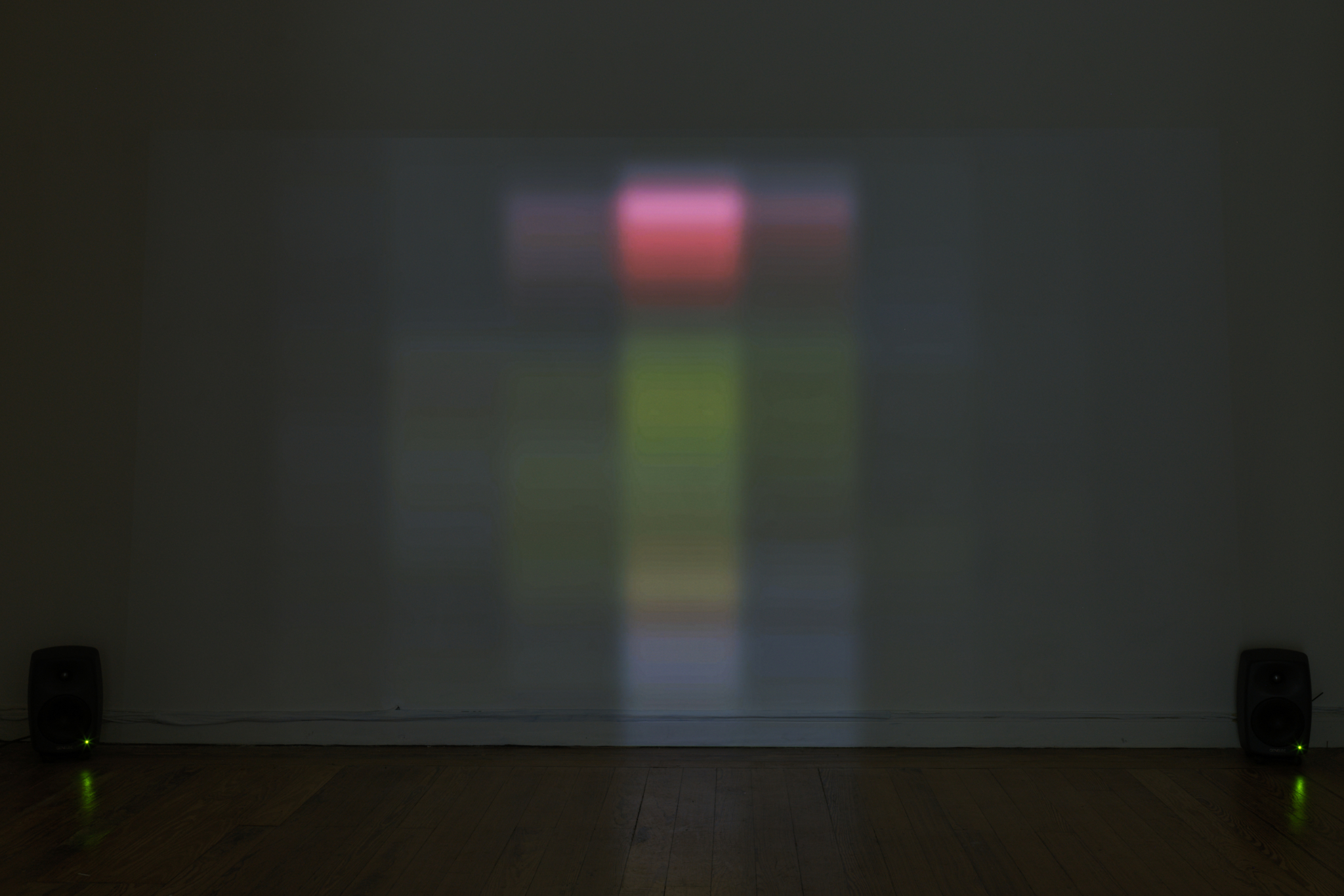
Their circulated images are transformed into diffuse visual fields while their original soundtracks remain intact. Silhouettes, fabrics, gestures, and narrative codes dissolve into patterns of colour, movement, rhythm, and sequence, as if to discover what kind of affect persists once representational clarity begins to fall away.
The effect recalls Zorns Lemma. Familiar hierarchies of meaning are disturbed through a process that is not quite erasure but comes close enough to it. The image remains, but its usual routes toward recognition begin to break down. One no longer arrives so easily at a particular model, a skirt, a season, a brand. Other words begin to present themselves instead: mauve, beige, fast, shimmering, dense.
Which is why the abstract drawing Valentina sent me to use for announcing the exhibition—an abstraction that near-approximates the median colour palette of the videos—feels more appropriate than a film still would have been. The work dissolves the runway image into colour and rhythm; the drawing dissolves it once more.
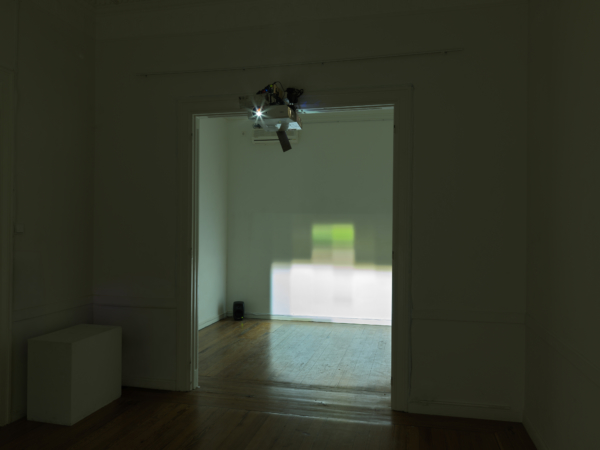
Provider has its own history of presentation and changing formats. Its first presentation took place in an apartment in Berlin in 2023 through Scriptings and oxfordberlin, where the videos appeared as stable projections. A more elaborate installation was subsequently presented at Kunsthalle Winterthur in 2024, where Valentina is from. There, the work introduced a choreographed system in which the projections alternated dynamically. Sound was emitted from a single source, meaning that at any given moment one soundtrack dominated while the others remained silent, preventing audio spill between the works but also producing alternative edits.
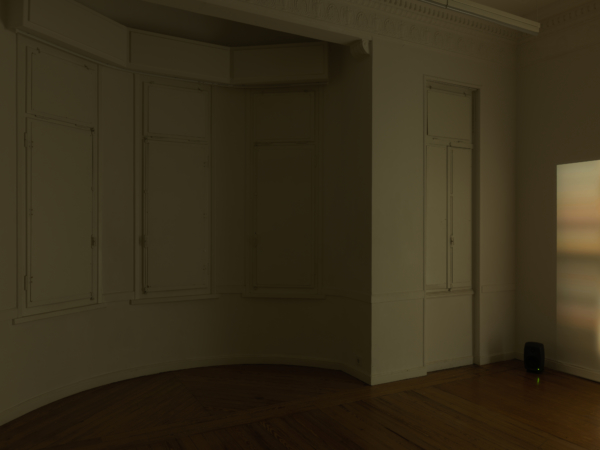
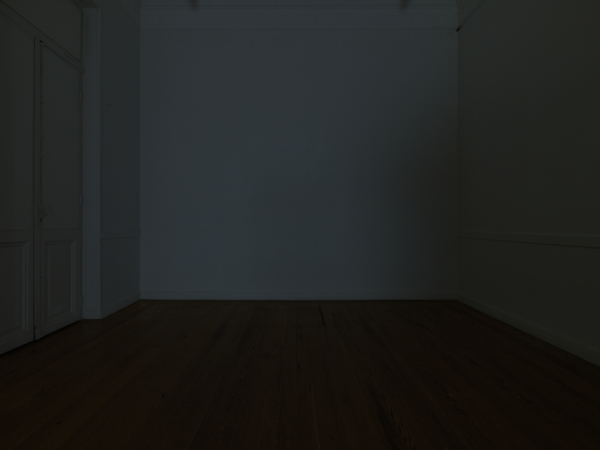
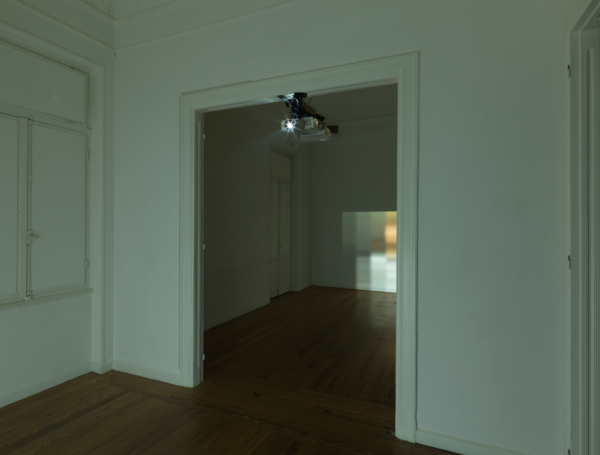
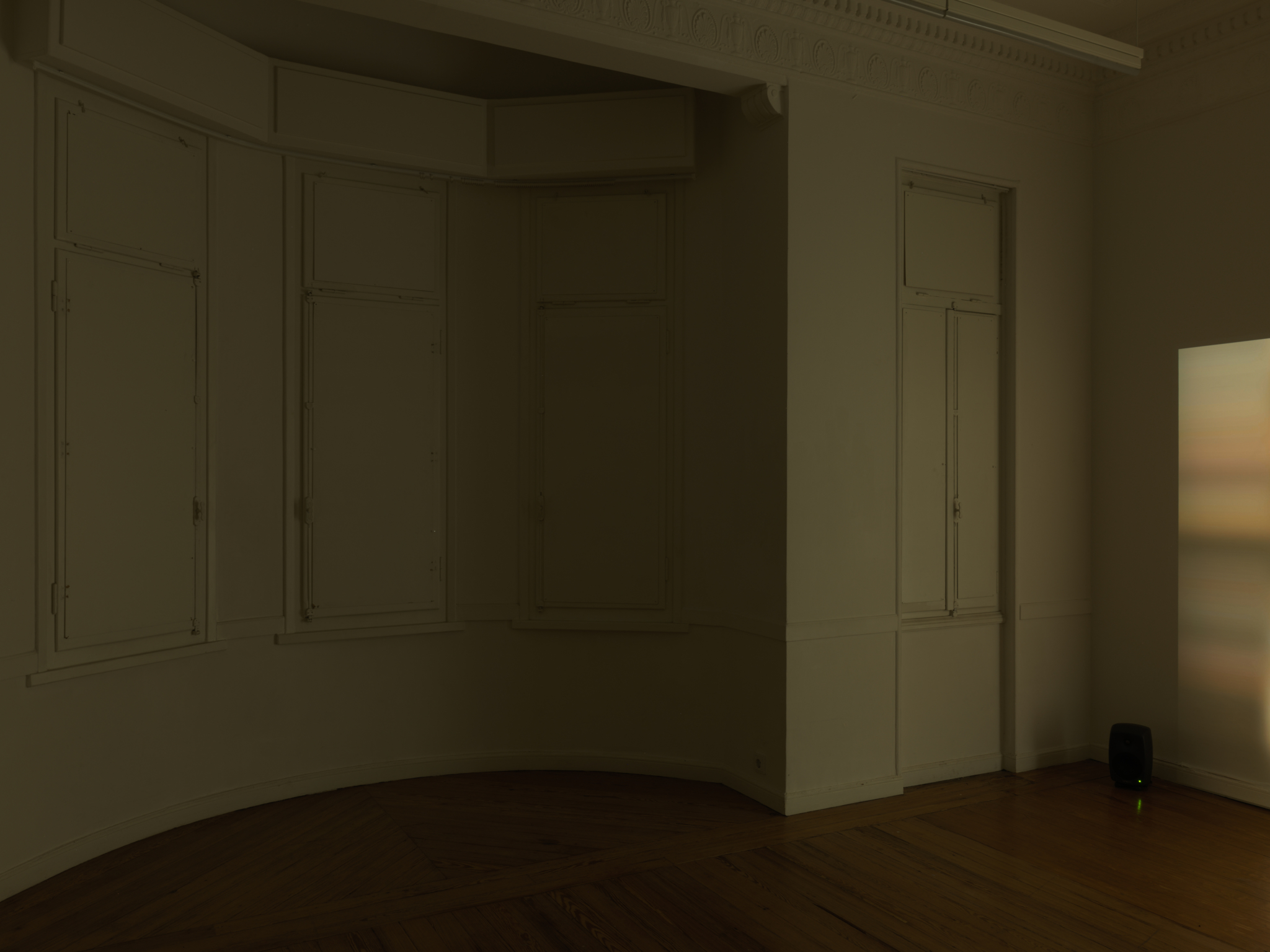
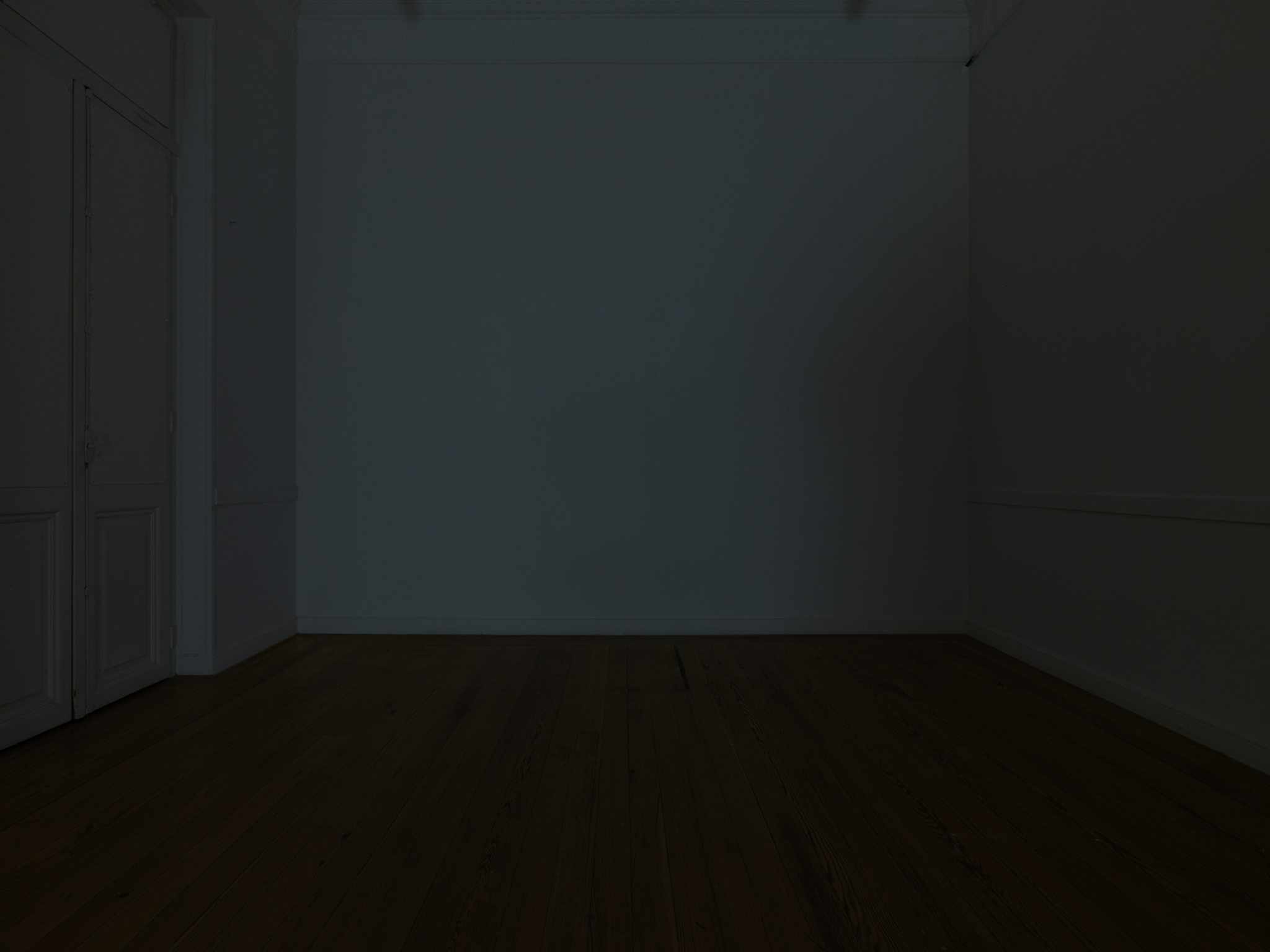
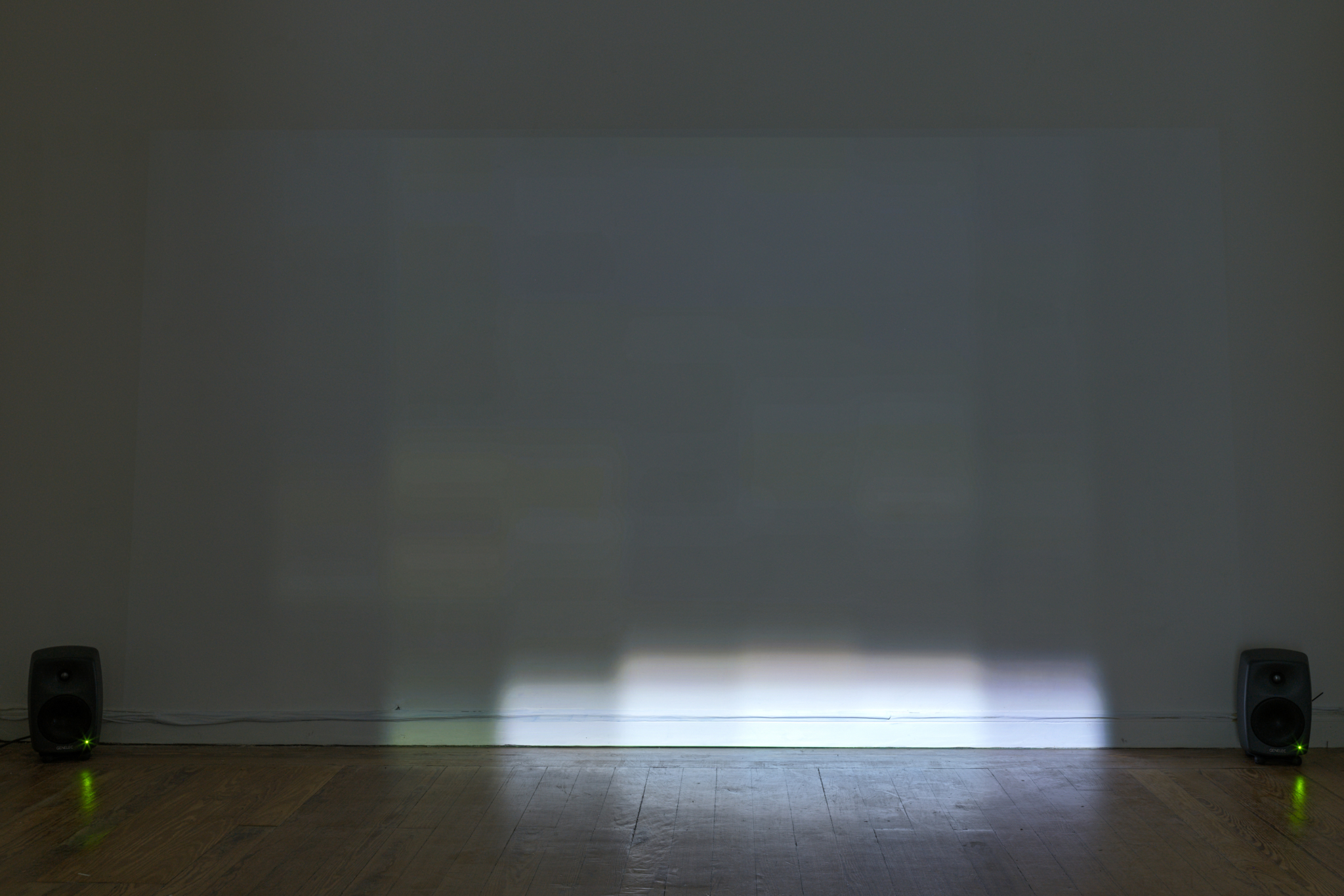
The presentation at Akwa Ibom retains this choreographic structure while introducing new videos into the sequence. It also introduces a custom system of external shutters developed by Aggelos Paitakis. Though not immediately visible as such, the system meaningfully alters the operation of the work. Responding to the projected image through light sensors, it activates and deactivates individual projections according to manually adjusted thresholds of brightness and darkness calibrated specifically for the conditions of the space.
The choreography is therefore not governed solely by a predetermined timeline. It is responsive. Changes in ambient light become part of the work’s operation, allowing external conditions to interfere with its sequence. The system remains programmed, certainly, but it is also exposed. In a modest way, it becomes weather-dependent.
If Frampton’s language dissolved into wind, water, fire, and snow, Provider now admits something of the weather back into its own structure.
The comparison between Frampton and Valentina itself follows this logic. Frampton entered the conversation because of an embroiderer writing in capital letters, or because a series of interviews transformed signage into sound. Another artist could have entered just as easily, with different consequences. The relations would have rearranged themselves accordingly. The connections established here are not necessary ones. They are contingent, provisional, and potentially endless.
Provider operates in a similar manner. Its parameters are precise, but they do not pretend to be exhaustive. The work isolates a particular set of relations—not because they are the only ones available, but because they are sufficient for something specific to happen. For a moment, at least, they allow us to observe these relations as though briefly photographed into stillness.
One might arrive just as readily at Straub-Huillet and their distinctive materialism. In their films, sound is not subordinate to image. Background noise is not subordinate to dialogue. Straub-Huillet eschew dubbing in favour of direct sound, to the extent that background noises, and even the static caused by wind rustling against a microphone, are preserved in their integrity. What matters is not simply fidelity, but a redistribution of attention. Things ordinarily treated as incidental are granted the same seriousness as things conventionally understood to carry meaning. Sometimes they are granted even more. On occasion, the duration of a shot is determined not by what is seen but by what is heard.
The same is true of Provider. Language, images, sounds, ideas: all appear as materials capable of passing into one another. It’s Galliano in the 1990s one moment and a field of colour the next. This is not to say that everything exists in equal relation, but rather that things exist through relations, and that those relations remain alive, provisional, and subject to change.
Zorns Lemma begins with words and arrives at images. Provider begins with images and arrives somewhere closer to colour, rhythm, and sound. In both cases, meaning seems less attached to any individual medium than to the movement between them.
It’s true, though not entirely true, that language, written or spoken, resists this kind of mobility more. Something of this resistance can be found in an excerpt by David Wojnarowicz from The Weight of the Earth: The Tape Journals of David Wojnarowicz, a collection transcribed from the audio diaries he recorded throughout the 1980s.
In the passage, he writes:
In these moments I hate language. I hate what words are like. I hate the idea of putting these preformed gestures on the tip of my tongue or through my lips or through the inside of my mouth, forming sounds to approximate something that’s like a cyclone, or something that’s like a flood, or something that’s like a weather system that’s out of control, that’s dangerous, that’s alarming. I hate language in this moment because it seems like so much bullshit. It just seems like sounds that have been uttered back and forth now over centuries. And it always boils down to the same meaning within those sounds, unless you’re more intense in uttering them, or you precede them or accompany them with certain forms of violence.
In a 1978 interview with Esther Harriot at the State University of New York at Buffalo, Frampton further qualified this distinction:
The difference between writing and speaking is the difference between carving in butter and carving in stone. If you talk, however well or poorly you may do it, it just drifts out in the air; you know it’s gone. But somehow there is that sense in writing that one is doing it for the record and indeed would prefer to do it with precision. People speak imprecisely all the time, and of course the spectator or the listener fills in the gaps more or less automatically. But writing isn’t like that, so I find it just a slow, unforgiving kind of process. On the other hand, I am told almost everybody who writes, except Norman Mailer, hates it.
What persists for me through this text—itself, ironically, a fossil of thought, or perhaps a reductive affront to it—is the sense that intimate engagement with any medium eventually produces familiarity, and that familiarity produces a peculiar mixture of feelings: some uncomfortable, others wonderful. The people quoted here seem united less by their distrust of language than by their proximity to it. They know it too well. If one is to make peace with that discomfort, which contaminates far more than language and extends perhaps even to thought itself, or to sensation as it passes into abstraction, then modulation becomes an important concept. Modulation allows paradox to remain in motion, and therefore no longer demands its resolution. The same might be said of categories of reverence or prestige. These, too, risk becoming unnecessarily rigid.
What I take from Valentina’s work instead is a willingness to move between things without prematurely deciding their value. To allow relations to remain active. In this regard, I am reminded that Frampton studied German, French, Russian, Sanskrit, Chinese, and mathematics, but never declared a major. When told he would need to take courses in speech, Western civilization, and music appreciation in order to receive a degree, he replied: “I already know how to talk, I already know who Napoleon was and I already like music.” He never received a bachelor’s degree. “I was very sick of school,” he later recalled.
Valentina’s interests seem similarly indifferent to the structures that ordinarily organize them. In conversation, references to Kōji Wakamatsu, Allan Sekula, Jean- Pierre Leloir, Pratibha Parmar, Devon Aoki, and The Upsetters’ Bird in Hand(1969) appear alongside one another naturally. The connections seem associative rather than disciplinary, moving freely between cinema, photography, music, fashion, and visual culture.
In this respect, she reminds me somewhat of Frampton, who could translate a medieval Latin text and then make a film that seems intent on dissolving language itself. In both cases, movement between subjects matters more than allegiance to any single domain.
For Valentina, I find myself thinking, it matters less whether something is carved in butter or stone. Her allegiance is neither to preserving a fixed record nor to disregarding one altogether, but to the possibility of moving between forms, references, and ways of knowing. By the end of the conversation, Of Manners, Of Trips sounded less like a title than a method.
Valentina Triet (born 1991 in Winterthur, Switzerland) is a contemporary visual artist known for her moving-image installations and video art. She currently lives and works between Vienna, Austria, and Zurich, Switzerland.
This project was produced in collaboration with Phileas – The Austrian Office for Contemporary Art. Phileas supports artists, curators, galleries and institutions in Austria and works to strengthen their voice on the international landscape of contemporary art. Through long-term partnerships with museums, biennials and art institutions around the world, Phileas enables the production and exhibition of new artworks and their donation to public collections. For more information, please see www.phileas.art The project also received support from Carved to Flow Foundation, with special thanks to Felix Gaudlitz Gallery and Part International Art Residency Austria. Technical production: Aggelos Paitakis.